

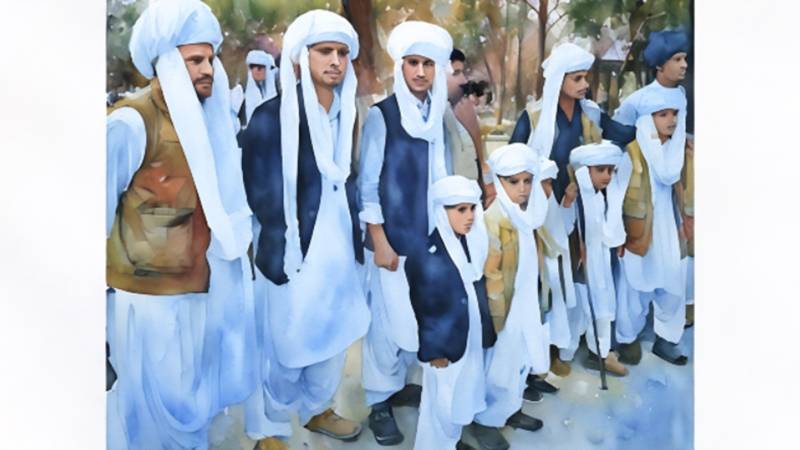
The untold story of the Bugti tribe, custodians of a rich and resourceful landscape, must finally be heard by the ruling class. The Bugti people have long inhabited Dera Bugti, a region named after their tribe, which was recognised as a tribal area prior to the 1980s. Nawab Akbar Khan Bugti played a pivotal role in transforming it into a district. The discovery of Sui gas during Ayub Khan’s era was seen as a turning point for the tribe, yet their economic condition remained stagnant. Only a handful of locals were employed in menial positions, such as helpers and linemen, by the gas company.
Subsequently, three more gas reserves—Pirkoh, Zain Koh, Loti, and Uch—were discovered in the 1970s, 1980s, and 1990s. These were managed by the Oil and Gas Development Company Limited (OGDCL), a semi-government entity. While this boosted the tribe’s economy to some extent, the lack of technical skills among the Bugti people limited their opportunities to low-level jobs, similar to those offered by Pakistan Petroleum Limited (PPL) during the Sui gas discovery.
Historically, the tribe’s economy relied heavily on agriculture, sustained by natural water sources like springs and rainfall. The cultivated lands were controlled by the tribal chief, who held significant influence over the tribe’s economic activities. Over time, the primary source of income shifted to jobs in gas companies. This prompted some tribe members to pursue education, with many traveling to Karachi for technical and graduate degrees. PPL facilitated this by allocating a few seats on their flights to transport officials and tribe members between Dera Bugti and Karachi.
Nawab Akbar Khan Bugti gained prominence at the federal level due to his intellectual prowess, political acumen, and control over the resource-rich region. He held various positions, including Chief Minister and Governor of Balochistan. However, his focus on improving the lives of his tribe was limited, possibly due to fears of losing his political standing. By the end of the century, he engaged in a tribal conflict with the Kalpar Bugtis, who supported the Pakistan Peoples Party (PPP). This war cost him the life of his son and shifted his focus from tribal welfare to federal politics.
The Bugti tribe’s living conditions remained unchanged, largely due to the lack of quality education. At the turn of the century, Nawab Akbar Khan Bugti’s conflict with General Pervez Musharraf culminated in a military operation that claimed his life and displaced the entire tribe. Many were forced to migrate, and a significant number lost their jobs in gas companies based on allegations of anti-state activities. While some allegations may have been valid, many Bugtis were unjustly stripped of their livelihoods simply for being part of the tribe.
Government buildings resemble relics of an ancient kingdom, roads are in deplorable condition. There are no parks for children or official grounds for youth
Although the military later facilitated their return, most jobs were not reinstated, and many were forced into early retirement. The agreements made between Nawab Akbar Khan Bugti and General Ayub Khan were disregarded, and new leaders were appointed without honoring past commitments. Nearly eight hundred families are still waiting for their jobs to be reinstated based on the agreement. Today, over 60% of the Bugti tribe lives below the poverty line. This is due to restrictions on herding their sheep and cows in certain areas due to security concerns, as well as the lack of job opportunities. Mostly uneducated youth are working as security guards in Karachi. Additionally, cultivated lands have been allotted to the grandsons of Nawab Akbar Bugti.
Following the military operation, new political figures emerged within the tribe, including Sarfraz Ahmed Bugti, the current Chief Minister of Balochistan. Despite his promises, little has been done to improve the lives of the Bugti people. During the PML-N government in 2013, hope was rekindled with the announcement of the Kachi Canal project, which promised to irrigate vast tracts of tribal land for cultivation. However, the project remains stalled, with a few announcements made but corruption creating hurdles to its functionality for the tribe.
Some 150,000 people are in danger by different means. In other words, 63,000 women voters are in danger. Tribalism, state-sponsored oppression, and unequal job and economic participation are prevalent. Honor killings are a grim reality in Dera Bugti, with 10 to 15 cases reported annually. Just this morning, four individuals, including two women, were killed in the name of "honour" in the Loti-B area. Such incidents are often brushed under the rug, dismissed as tribal customs, but they are a stark reminder of the dehumanisation of women in this region.
In the tribal system, women are often treated as property, their lives dictated by male honour and familial alliances. Early marriages, forced unions, and honour-based violence are rampant. Women who dare to defy these norms face brutal consequences, their lives snuffed out in the name of preserving family honour.
Today, Dera Bugti contributes approximately 5 billion rupees annually to the national exchequer, yet the state’s response to the tribe’s plight has been negligible. The literacy rate among the Bugti tribe is less than 20%, with female literacy being the lowest in the country. Educational infrastructure is in shambles, with buildings damaged during the military operation still unrepaired. Teacher vacancies remain unfilled. Out of more than three hundred primary schools, only twenty are functional, located near urban areas. Twenty thousand school-going children are out of school, and the dropout rate exceeds 85%.
The absence of gynaecologists has led to tragic deaths of women during childbirth. Since January 2024, seventy-six people, including women and unborn children, have died due to inadequate healthcare.
Government buildings resemble relics of an ancient kingdom, roads are in deplorable condition. There are no parks for children or official grounds for youth. While the Frontier Corps (FC) has made some efforts to encourage sports among the youth, these initiatives are insufficient. Only 30% of the population has access to clean water.
In 2022, in Pirkoh, the use of contaminated water led to the deaths of 28 people, followed by outbreaks of cholera and other epidemic diseases. After protests by the youth, Prime Minister Shehbaz Sharif took notice, and Mir Sarfraz Bugti approved the Pirkoh Water Project at a cost of 29 crore rupees. However, due to various governmental changes, the project faced significant delays. In 2023, water was successfully supplied from Dera Bugti to Pirkoh Top, and pipelines were laid in 80% of the neighbourhoods. Yet, corruption by OGDCL (Oil and Gas Development Company Limited) officials once again created obstacles, halting progress.
Gas connections are limited to a few hundred households near gas facilities. Nearly twenty percent have gas facilities. The majority rely on burning wood for their daily needs.
The government must take immediate and serious steps to improve the lives of the Bugti people. This includes rebuilding the district’s road infrastructure, reopening schools, establishing libraries, and prioritising healthcare to save the lives of women dying during childbirth. Access to clean water must be ensured, and equal opportunities must be provided to all citizens. The state cannot afford to ignore the plight of the Bugti tribe any longer. If it continues to turn a blind eye, the tribe may once again be exploited against external forces.
Policymakers must visit the region, identify areas requiring improvement, and implement a comprehensive plan for the betterment of the Bugti tribe. The progress of a nation is measured by the well-being of its most marginalised citizens. It is time to act before more lives are lost and the cycle of inequality perpetuates further.