

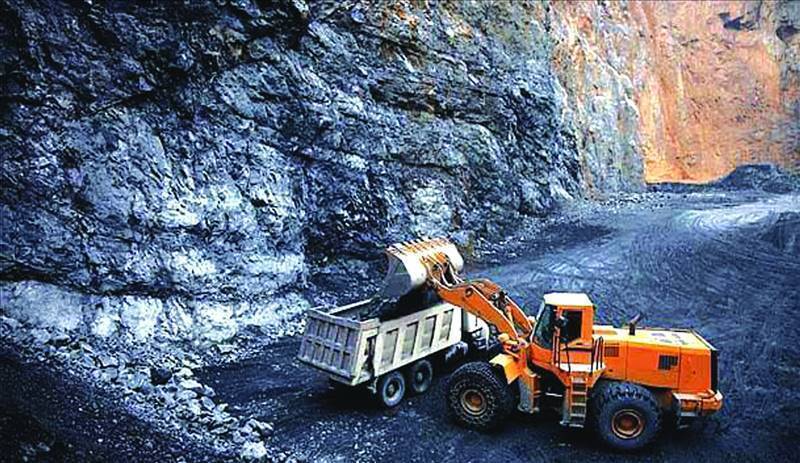
Something troubling is unfolding along the banks of the Indus River. In Kohat, Nowshera, and Swabi, thousands of excavators and sieves are tearing into the earth day and night, chasing gold in a modern-day gold rush. But this isn’t a tale of prosperity or shared wealth—it’s a story of what happens when governance fails, and public resources are handed over to private hands with little oversight and even less transparency.
At the centre of this brewing scandal is a gold mining lease covering over 41,000 acres—an area known for its rich mineral deposits. The lease, granted by the Khyber Pakhtunkhwa Mines and Minerals Department, is raising serious questions. A lucrative joint venture proposal that promised over Rs60 billion in profit-sharing was rejected, and in its place, a handful of companies secured a 10-year lease for just over Rs5 billion. Even more perplexingly, they weren’t asked to pay the full amount upfront—just 25 percent.
For a province like KP, struggling to raise revenue and deliver basic services, this is not a minor oversight. It’s a staggering missed opportunity, and potentially, a deliberate act of favouritism. One of the beneficiary companies is said to be linked to a special assistant to the Chief Minister—who also happens to oversee the mines portfolio. That overlap alone should have set off alarm bells.
But it gets worse.
When a private firm challenged the lease in court—arguing that it had submitted a higher bid in response to a public call for joint venture proposals—the Peshawar High Court ordered a stay until the matter could be resolved. That order came on 14 November 2024. And yet, in the months since, mining has not slowed down. It has accelerated.
The timeline of events paints a troubling picture. On 6 October 2023, the Mines and Minerals Department invited bids for two major mining blocks, KP1 and KP2. On 23 October, a Technical Evaluation Committee (TEC) declared that the highest bids came from Northwest Resources (Pvt.) Ltd.—a private firm offering a generous 60% share of profits for the provincial government, along with a dedicated 5% for corporate social responsibility (CSR). In contrast, the company that was eventually recommended for the lease grant—Apex Energy—had proposed just 10.5 percent profit share for the government, and a 3.5 percent CSR contribution.
Natural resources, if managed transparently and equitably, can drive development, reduce dependency on federal funds, and improve living standards
Then, only days later, a letter dated 27 October surfaced, allegedly from Northwest Resources, withdrawing their bid. The company insists the letter is fake—pointing out the obvious inconsistency that the TEC report confirming them as the highest bidder was issued before the date of this supposed withdrawal. Nevertheless, the Mineral Titles Committee used the document to recommend Apex Energy for the lease grant on 29 November 2023. That recommendation was later rejected by the Mineral Investment Facilitation Authority (MIFA) on 29 December 2023.
Meanwhile, Northwest Resources, still under the impression that its bid was valid, sent a follow-up letter on 13 November 2023, seeking clarity. They never received a reply. Instead, on 10 October 2024, a new auction notice was quietly issued—covering the same mineral-rich areas, but under rebranded block names. It was only after Northwest Resources submitted an information request on 18 October 2024 that they learned of these developments.
They filed a writ petition with the Peshawar High Court on 6 November 2024. The court responded swiftly, issuing a stay order on 14 November to halt all mining activity until the matter could be resolved. And yet, operations on the ground have not stopped.
Locals say the companies on site are charging Rs200,000 per week for each excavating machine—more for outsiders. Reports suggest these operations are pulling in over a billion rupees per month as over 1,200 excavator machines are actively engaged in mining, all while the government receives just a fraction of what it could have earned. The operators themselves don’t bear the cost of machinery, fuel, or manpower. Those risks are passed on to local contractors, who are effectively renting the right to work their own land.
The implications are stark. This isn’t just about a bad deal or an underpriced contract—it’s about a pattern of decision-making that puts political loyalty above public interest. And it’s not an isolated case. Across the country, we’ve seen how resource wealth, when poorly managed, becomes a magnet for corruption and a curse for communities. KP, with its untapped minerals and immense development needs, is no exception.
What makes this situation even more alarming is the environmental angle. In a separate petition, former provincial minister Amjad Khan Afridi and a group of concerned citizens raised alarm over the use of mercury in gold extraction—especially around Khushal Garh in Kohat. Mercury is toxic, and its effects are long-lasting. If it’s being used carelessly—and dumped into rivers or farmland—the consequences could be devastating for both public health and agriculture.
The Peshawar High Court has directed the KP Environmental Protection Agency (EPA) to investigate. A report is expected soon, and it may well expose a second crisis hiding beneath the first.
So far, the government’s silence has been deafening. No clear explanation has been offered for why the more profitable joint venture proposal was discarded. No action has been taken against those openly defying the court’s orders. And no public statement has been made on the health and environmental risks associated with the ongoing mining operations.
This isn’t just bad governance—it’s a breakdown of public accountability.
Adding to the concern is a conflict of interest buried in plain sight. According to documents from the Securities and Exchange Commission of Pakistan (SECP), Musawar Khan (Elected MPA PTI & Advisor to CM on Climate Change, Forestry, Environment & Wildlife) owns majority shares in one of the companies that was granted a mining lease. It’s a detail that, under any reasonable governance framework, should have triggered an immediate investigation.
KP deserves better. The province has immense potential, but time and again, it finds itself at the mercy of short-term thinking and political expediency. Natural resources, if managed transparently and equitably, can drive development, reduce dependency on federal funds, and improve living standards. But when they’re treated as personal fiefdoms or political rewards, they leave behind scars: damaged ecosystems, deepened inequality, and growing public distrust.
There’s still time to turn this around—but only if KP’s leadership is willing to act. The court’s orders must be enforced. The environmental assessment must be taken seriously. And the entire leasing process should be reviewed with full transparency.
At the very least, the people of KP deserve answers. They deserve to know who benefited, who looked the other way, and what will be done to prevent this from happening again. Because in the end, the gold in the Indus River may be valuable—but the trust of the people, once lost, is far harder to recover.