

"True decolonization means confronting power everywhere, not just in the Global North. Otherwise, postcolonial theory becomes a shield for new elites rather than a tool for liberation." Franz Fanon
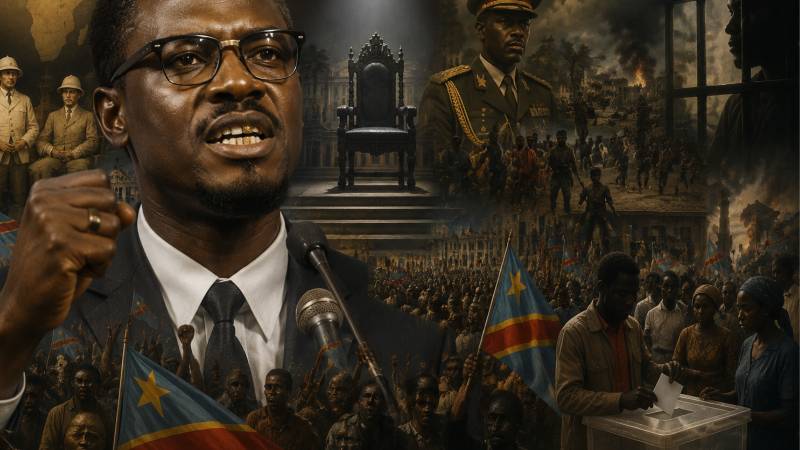
A gold-crowned tooth is all that remains of Patrice Lumumba’s physical body, the Democratic Republic of Congo’s (DRC) first Prime Minister and a revered anti-colonial leader. In 1961, after being in power for only a few months, he was removed and brutally killed by mercenaries of his former colonial masters, Belgium. His body was hacked to pieces and dissolved in acid. In a historic ceremony in 2022, the Belgian government formally handed over the gold tooth to Lumumba's descendants.
Patrice Lumumba remains one of the most tragic yet enduring figures of twentieth-century anti-colonial struggle. To many in Africa and the Global South, he symbolizes the promise of genuine independence betrayed by imperial interests, internal disputes and authoritarian politics. His short political life and brutal assassination (he was only 35) illustrates how colonialism does not simply end when the coloniser leaves. Instead, colonial structures often survive through economic dependency, ethnic manipulation, military intervention and elite capture of the state.
Belgian colonial rule of Congo was one of the harshest in modern history. Congo was treated as a vast extraction zone for rubber, minerals, and labour. The Belgians deliberately prevented the development of a politically conscious middle class. By the time of independence in 1960, there was almost no local administrative infrastructure to govern such a vast country.
Lumumba envisioned a united Congo free from both colonial domination and tribal divisions. He emphasised inclusive nation building. His famous independence speech in June 1960 directly challenged Belgium and the violence of colonial rule. He spoke of dignity, sovereignty, and political independence, emphasizing that colonialism had not been a civilizing mission but a system of organized exploitation- words that resonated across Africa and many colonized countries.
But within weeks of independence, Belgian operatives started undermining the new government and Congo descended into crisis. Foreign powers helped the mineral-rich Katanga province to secede. Lumumba tried to preserve national unity, but he was up against powerful Western powers, who portrayed him as a Soviet puppet and he was overthrown by a military coup led by Mobutu Sese Seko and supported by Western powers. This effectively ended the democratic nationalism by military authoritarianism. Lumumba’s imprisonment, torture and assassination became one of the defining political crimes of the post-colonial era because it demonstrated that independence alone did not guarantee freedom. Political elites, military establishments, and foreign powers could reproduce colonial domination in new forms. His tragedy reveals how difficult genuine freedom can be.
True decolonization means confronting power everywhere, not just in the Global North. Otherwise, postcolonial theory becomes a shield for new elites rather than a tool for liberation.
Lumumba believed that civilian political leadership should always define the nation’s future. His removal demonstrated how the military, once empowered politically, rarely remain neutral. While militaries often justify intervention in the name of national stability, the long-term effect is the weakening of political institutions, erosion of public trust, and narrowing of democratic space. Mobutu stayed in power for almost 40 years.
Lumumba’s experience carries important lessons for other colonized countries. The 200-year British colonial rule, in South Asia was designed primarily for control, extraction and order rather than democratic participation. After independence in 1947, there were immense hopes that Pakistan would be a forward-looking democratic nation. Unfortunately, it inherited weak institutions, regional inequalities, and a powerful security apparatus. Many of the colonial structures remained intact. Laws, policing methods, centralized administration, and security doctrines continued with limited transformation. The country struggled to establish democratic processes. Instead, power started to concentrate in unelected centres- the military establishment and bureaucracy.
Today, Pakistan faces a disgruntled populace, religious and sectarian intolerance, and centralized power. Attacks on dissent, spreading of fear, authoritarianism and labelling critics as traitors and threat to stability is common. The breakup of East Pakistan in 1971 demonstrated the catastrophic consequences of denying people their democratic rights. Sadly, no lessons have been learnt. A stable nation cannot be built solely through security narratives; it requires social justice, political inclusivity and tolerance for long term stability.
Lumumba’s story illustrates that post-colonial nations cannot achieve genuine sovereignty if colonial structures survive under the guise of nationalist rhetoric. Nationalism without democratic accountability can become vulnerable to authoritarian capture. He also offers a lesson that political independence means little without economic independence. Congo’s immense mineral wealth became both a blessing and a curse, attracting foreign intervention but empowering corrupt elites. Similarly, Pakistan’s economic challenges- chronic debt, poverty, inequality, and uneven development, shows how weak economic justice undermines democracy. When people lose faith that democratic institutions can improve their lives, authoritarian alternatives become more attractive.
Lumumba’s story poses a fundamental question: what does independence truly mean? Is it merely the existence of a national flag and an anthem with parades and flypasts on national day or does it require genuine democratic participation, social equality, and freedom of thought and expression? True freedom demands political consciousness. Democratic institutions must be strengthened before crises emerge, not after authoritarianism consolidates itself. Civilian supremacy, constitutionalism, pluralism, and economic justice are not luxuries but safeguards against the slow erosion of freedom.
Patrice Lumumba continues to live in our collective consciousness because he represented a rare combination of nationalism and democratic idealism. He believed that liberation should empower citizens rather than entrench new ruling classes and when authoritarianism overshadows democracy and nationalism becomes detached from justice, nations risk reproducing the very forms of colonisation they fought against.
His solo gold-crowned tooth is a potent symbolic reminder that the battle against colonialism does not end with independence. It continues wherever power seeks to silence dissent, concentrate authority, and subordinate citizens to the machinery of the state.