

While there are hundreds of straits, only a few of them are real chokepoints due to their size or strategic importance for global trade and military movement. The Strait of Hormuz and Bab al-Mandab are the two most important straits. Roughly 30 million barrels of oil per day, around 20 per cent of global LNG shipments, and a bulk of non-energy export cargoes were passing through these two routes before the US–Israel and Iran conflict.
Therefore, it was a big shock for energy supply and international trade when the Strait of Hormuz was closed after the US–Israel attacks on Iran. As a result, it disrupted the flow of goods and energy worth trillions of dollars to developed and developing countries.
The closure significantly affected Pakistan because 90 per cent of Pakistan’s LNG and 81 per cent of its petroleum imports transited through the Strait of Hormuz. Similarly, Pakistan’s major exports to the United States ($5.61 billion), the United Kingdom ($2.14 billion), Spain ($1.47 billion), and Italy ($1.13 billion) pass through Bab al-Mandab. Therefore, trade disruption through Bab al-Mandab will be another shock to Pakistan’s trade and economy. Trade history suggests that the free flow of goods across the two straits is of vital importance for Pakistan. Past events also suggest that the simultaneous closure of these two straits can choke Pakistan’s economy.
The closure of the Hormuz Strait curtailed Pakistan’s access to vital energy supplies from the Middle East and caused inflation. It has severely disrupted the fiscal and external balance of Pakistan by predominantly affecting Pakistan’s imports. On the other hand, any disruption of trade through Bab al-Mandab is going to dent the Pakistani economy by hitting exports.
The closure of Bab al-Mandab means that EU-bound global shipping firms will be compelled to reroute vessels around the Cape of Good Hope, increasing transit times by 14 to 20 days and raising freight costs by 150 to 200 per cent. The less competitive Pakistani firms are unable to incorporate such costs and absorb the hit. Therefore, Pakistan needs to diversify its import and export markets.
Literature suggests that in an increasingly interconnected yet geopolitically uncertain world, economic resilience depends on market diversification, supply chain integration, and transit routes. Countries that position themselves as a hub of connectivity can gain significant strategic and economic advantages. Hong Kong, Singapore, and the UAE are a few examples that have used connectivity to develop.
The recent tensions in the Strait of Hormuz serve as a powerful reminder that reliance on a single corridor or a narrow set of partners is increasingly risky in today’s geopolitical environment
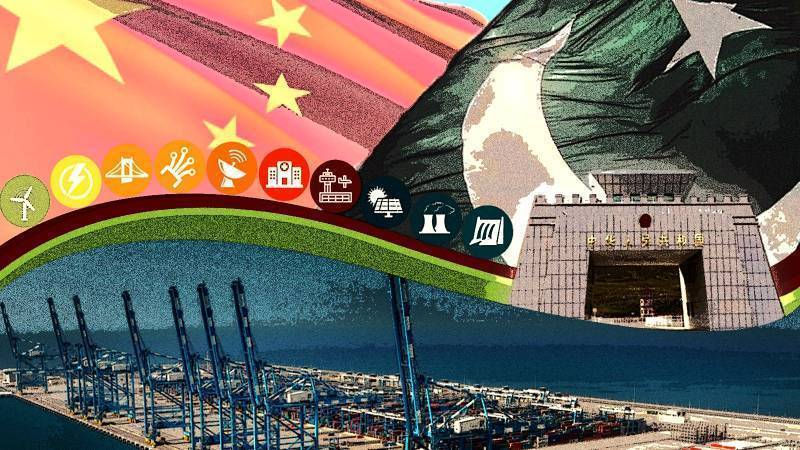
Though Pakistan is going through a tough time, it has a wonderful opportunity to use the China–Pakistan Economic Corridor (CPEC) for reorienting its economy and for diversifying trade. CPEC can help Pakistan reduce its reliance on risky trade routes and explore new markets.
CPEC is primarily viewed as a bilateral infrastructure project between Pakistan and China, but in reality, CPEC’s broader significance lies in its ability to transform Pakistan into a hub of regional connectivity and economic integration. The corridor’s network of highways, railways, pipelines, and digital infrastructure connects Pakistan’s southern ports with China’s western regions while creating linkages with neighbouring economies across Central Asia and Southeast Asia.
CPEC is also connected to other maritime and hinterland corridors under the Belt and Road Initiative and thus can give Pakistani products a wide reach. In simple terms, CPEC can enhance Pakistan’s economic resilience in the face of repeated crises and growing tension around the Straits of Hormuz and Bab al-Mandab.
The Middle East crisis has made maritime trade dangerous and rendered ports in the Persian Gulf dysfunctional. In this backdrop, Pakistan can offer Gwadar Port, a major CPEC connectivity project, as an alternative to cater for transshipments and cargo. Gwadar is strategically located near the entrance of the Persian Gulf.
Gwadar has the potential to become a major connectivity hub. Pakistan can transform Gwadar into a gateway connecting South Asia, the Middle East, Central Asia, and inland Eurasia by developing modern logistics infrastructure, storage facilities, and transport networks.
CPEC can directly connect Pakistan to China and can help Pakistan gain access to an ever-growing and expanding Chinese market. Through CPEC, Pakistani firms can reach Russia and Central Asia. However, to secure these benefits, Pakistan has to modernise its exports and better understand the nature of Chinese, Central Asian, and Southeast Asian markets.
CPEC will also help Pakistan tap the Russian and Central Asian markets. Pakistan’s chronic energy shortages have long hindered industrial growth. Pakistan heavily relies on oil and LNG imports from the Middle East. The current crisis shows that this risky pattern is not sustainable. Pakistan has to diversify its energy imports and promote the production of indigenous green energy.
CPEC has the capacity to address this issue by building new power plants and transmission networks. The development and functioning of Special Economic Zones (SEZs) under CPEC can promote manufacturing, attract foreign investment, and integrate Pakistan into regional supply chains. CPEC can improve regional connectivity within Pakistan and can unleash the regional potential of Pakistan’s special economic zones.
Digital connectivity and innovation are another area where Pakistan’s exports lag. The world is changing; digitalisation and green investment are becoming more important for exports. CPEC can help Pakistan build a strong digital structure by developing cross-border fibre-optic networks linking Pakistan with China and neighbouring regions.
This will create the foundations for digital trade, data services, and technology cooperation and will support important sectors such as e-commerce, fintech, telemedicine, and online education. If used properly, these developments can diversify Pakistan’s economy beyond traditional trade sectors.
However, the success of these initiatives depends on how Pakistan addresses several persistent challenges. Security concerns, political instability, bureaucratic delays, and financing constraints can potentially wipe out the possible gains of CPEC, and therefore, they need fixing. Effective governance, transparent investment policies, and regional cooperation are essential for translating infrastructure development (under CPEC 1.0) into long-term economic growth (under CPEC 2.0).
Pakistan’s geography places it at the crossroads of South Asia, Central Asia, and the Middle East. However, Pakistan has not used this advantage. Now CPEC 2.0 provides Pakistan with a historic opportunity to transform Pakistan from a peripheral trading state into a central node in regional commerce.
The recent tensions in the Strait of Hormuz serve as a powerful reminder that reliance on a single corridor or a narrow set of partners is increasingly risky in today’s geopolitical environment. By strengthening regional connectivity through CPEC 2.0, Pakistan can diversify its trade relationships, enhance energy security, and reduce its exposure to global trade chokepoints.
In an era where geopolitics shapes economic outcomes, connectivity is no longer optional. It is a strategic necessity. Therefore, if implemented effectively and used properly, CPEC 2.0 can help Pakistan transition from trade vulnerability to growth resilience.