

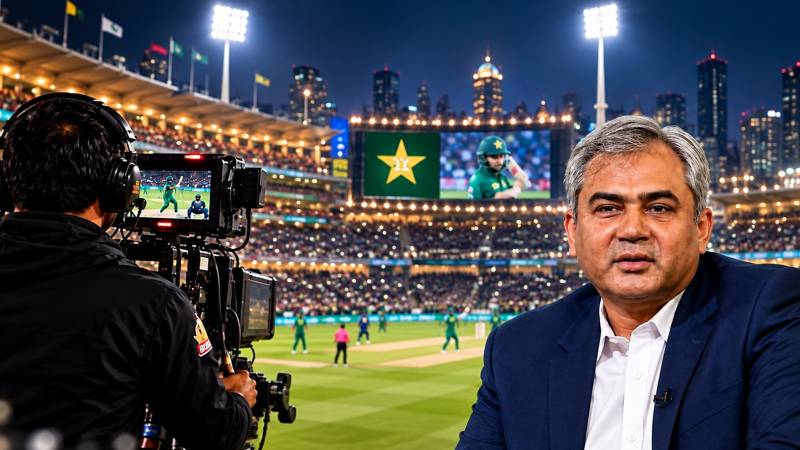
When the Pakistan Cricket Board (PCB) put the domestic broadcasting rights for its international home cycle on the auction block, it envisioned a lucrative bidding contest driven by premium commercial valuations. Instead, the corridors of Gaddafi Stadium were handed an unvarnished reality check. With a reserve price ambitiously set at PKR 60 crore, the tender closed without commercial frenzy, without competing private broadcast giants, and without a single counter-bid. State broadcaster PTV Sports emerged as the solitary participant, walking away with the rights for PKR 35 crore—barely 58% of the board’s baseline valuation.
The transaction is far more than a minor administrative compromise; it is an indictment of the commercial decay quietly hollowing out Pakistan cricket. By lodging a bid of PKR 35 crore, PTV Sports did not merely keep live cricket on screens across the country—it held a mirror directly up to the PCB, reflecting an uncomfortable truth about a compromised product that has fallen behind modern standards.
At the heart of this market collapse is the broadcast product itself, which has suffered from chronic underinvestment. While global networks deliver slick, high-definition presentations complete with cutting-edge ball-tracking, ultra-motion cameras, and crisp audio engineering, domestic home broadcasts have frequently looked dated and amateurish. Glitchy graphics packages, flat camera angles, and substandard commentary panels composed of recycled voices who offer little technical insight have turned what should be a marquee spectacle into a visual chore. When international and domestic viewers tune out because the broadcast lacks energy, advertisers pull back their budgets, leaving broadcasters unable to justify inflated rights fees.
This technological complacency is compounded by a catastrophic vacuum of genuine crowd-pulling superstars. For decades, Pakistan cricket sold itself on charismatic match-winners who could command prime-time eyeballs regardless of the scoreboard. Today, frequent selection upheavals, internal politicking, and disjointed team structures have failed to cultivate a single generation of universally bankable icons. Without magnetic figures who can drag casual viewers to their screens and fill stadium seats, the emotional leverage that historically forced networks to bid aggressively has simply evaporated.
Commercial equity cannot be conjured by high reserve prices or nostalgic self-importance. It is earned through world-class production, sharp analytical storytelling, charismatic stars, and stable governance.
The auction result also exposes the profound failure of Pakistan’s narrow "one nation, one sport" obsession. For generations, corporate sponsors, public funds, and state machinery poured almost exclusively into cricket, actively starving volleyball, hockey, squash, and kabaddi of basic infrastructure. The unspoken pact behind this monolithic focus was that cricket would remain an infallible, self-sustaining goldmine. Yet the moment on-field results soured and administrative instability took hold, the entire house of cards wobbled. By cannibalizing all other sporting ecosystems to feed a single sport, policymakers left the country’s sports economy completely vulnerable and now, even cricket cannot sustain its own artificially inflated bubble.
PTV Sports stepping in is a familiar ritual in Pakistan’s sporting landscape. As a taxpayer-funded entity operating under a public mandate, the state broadcaster routinely functions as the emergency parachute when the open market retreats. But PTV’s conservative valuation was the most stinging rebuke of all. Even with state backing, the network refused to sign a blank check to massage administrative egos. Offering PKR 35 crore was not an act of charity; it was a ruthless commercial appraisal of a deflated asset, pricing in the reality of dismal viewership, pedestrian commentary, and lackluster production.
Accepting a 42% haircut on a package featuring 25 home fixtures including visits from tier-one sides is an embarrassing devaluation that no press release can disguise. Commercial equity cannot be conjured by high reserve prices or nostalgic self-importance. It is earned through world-class production, sharp analytical storytelling, charismatic stars, and stable governance. PTV Sports did not devalue the PCB’s crown jewel; it merely held up a mirror to show the board what its neglect has created. Whether the decision-makers in Lahore have the humility to look closely at that reflection is another matter entirely.