

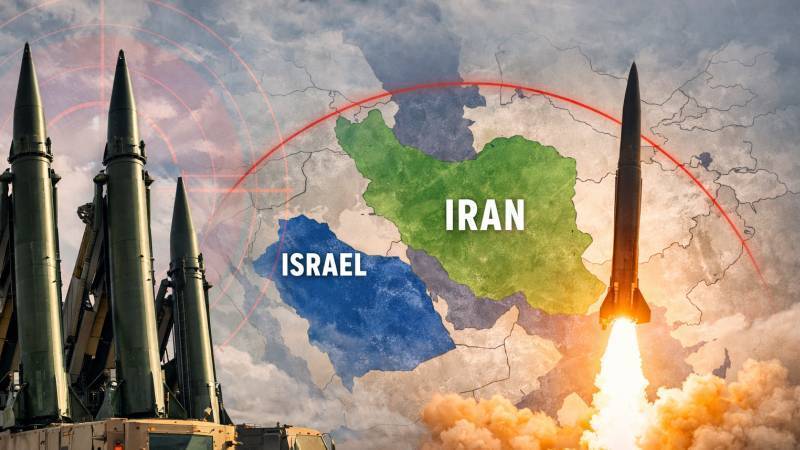
This world is becoming increasingly unrecognisable. The very individual who presides over what is ironically called the “board of peace” is now orchestrating a brutal and unrestrained war against a sovereign nation. What makes the situation even more surreal is the clarity of the objectives behind it: there is nothing hidden, nothing subtle, and nothing ambiguous.
The intentions are laid bare for the world to see — ‘obliteration of Iran’ — and yet the global response remains fragmented, hesitant, and often complicit. That is perhaps the most disturbing element of this entire crisis: the normalisation of actions that would once have been universally condemned.
Israel’s ongoing strikes on Iran, carried out with American-made bombs, illustrate the contradictions at the heart of this conflict. On one hand, the weapons used to devastate Iranian territory are supplied by the United States; on the other, the missile defence systems Israel relies on to protect its own skies are also American-made.
It is a cycle of destruction and defence powered by the same source, a paradox that exposes the geopolitical entanglements shaping this war. The idea of “rules of engagement” feels almost antiquated now, a relic from a time when warfare, though still horrific, was at least governed by some shared principles. Those principles have long since eroded.
The conflict is no longer confined to conventional boundaries. It is expanding outward, drawing in regional actors, global powers, and ideological factions. Each escalation increases the risk of miscalculation. Each retaliatory strike pushes the world a little closer to a point from which it may not be able to return.
The spectre of nuclear confrontation, once considered unthinkable, now looms in the background of every strategic decision. The danger lies not only in deliberate action but also in the possibility of an unintended chain reaction triggered by fear, pride, or misinformation.
What makes this moment particularly volatile is the absence of credible mediation. Traditional diplomatic channels are strained or outright dysfunctional. International institutions that were designed to prevent exactly this kind of spiral appear powerless or unwilling to intervene decisively.
The world is witnessing a transformation like warfare, one that is faster, more technologically advanced, and more unpredictable than anything seen before
Meanwhile, global powers are divided, each calculating its own interests rather than prioritising collective stability. The result is a geopolitical vacuum where aggression thrives, and restraint becomes a liability.
The human cost of this conflict is already staggering. Civilians, who have no say in the decisions of governments or military leaders, bear the brunt of the violence. Families are displaced, cities are reduced to rubble, and entire communities are left traumatised. Yet the suffering on the ground is often overshadowed by the grand narratives of power, deterrence, and national security. The world watches the destruction unfold in real time, but the empathy it generates rarely translates into meaningful action.
The psychological impact on the global population is also profound. People everywhere are living with a sense of uncertainty, a feeling that the world is teetering on the edge of something catastrophic. The constant barrage of news, images, and commentary creates a climate of anxiety that is difficult to escape. It is as if humanity is collectively holding its breath, waiting to see whether reason will prevail or whether the worst-case scenario will become reality.
At the same time, there is a growing awareness that the old frameworks for understanding international conflict are no longer adequate. The lines between offence and defence, between deterrence and provocation, and between security and aggression have blurred.
The world is witnessing a transformation like warfare, one that is faster, more technologically advanced, and more unpredictable than anything seen before. And yet, the moral questions remain the same: How much destruction is too much? How many lives must be lost before leaders reconsider their path? What does victory even mean in a conflict that threatens the survival of millions?
If this trajectory continues unchecked, the world may find itself facing a disaster of unimaginable scale. The combination of advanced weaponry, entrenched political hostility, and the erosion of diplomatic norms creates a perfect storm with nuclear implications. This conflict must be halted, not only for the sake of the nations directly involved but for the stability of the entire planet.
The international community cannot afford to remain passive or divided. It must reclaim its role as a force for de-escalation, accountability, and peace. The alternative is a future defined by fear, devastation, and irreversible loss — a future no one should be willing to accept.