

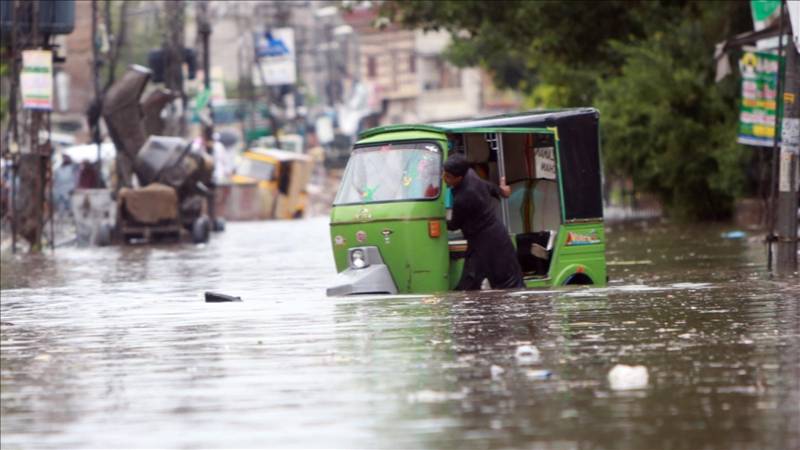
The monsoon came early this year, like an uninvited guest who barges in before the host can prepare. It arrived on the heels of a snowless winter and a blistering heatwave, soaking the land that had already cracked under the weight of drought. There was no gentle overture only thunder, flash, and water. In the north, glacial lakes swelled ominously; in the plains, rivers rose, twisting through villages and farmlands. The rains didn’t pass quickly either. By early July, they had settled in, and forecasters warned that this year’s monsoon could linger well into October.
With the extended spell came destruction. Flash floods swept through Khyber Pakhtunkhwa, Punjab, and Balochistan. Dozens died. Homes collapsed. The Swat River, usually a draw for tourists this time of year, turned into a roaring beast, claiming lives and property as it rushed past washed-out roads and shattered bridges. In Gilgit-Baltistan, unprecedented temperatures peaking at 48.5°C triggered a wave of glacial lake outburst floods (GLOFs), adding another layer of urgency to the crisis.
But is this only a story of climate chaos? Or are we witnessing something else — something older, deeper, and long overdue?
The River Remembers Its Path
To those who see rivers only as utilities, this may look like vengeance. But those who understand their nature see something more powerful at play — ecological memory.
Long before dams and dykes came to define Pakistan’s water management, the Indus flowed like a living artery. Each year, it would rise with the summer rains and slip beyond its banks, spilling across a vast, breathing floodplain. This was not destruction; it was a seasonal ritual. The water spread into forests and grasslands, recharged aquifers, replenished wetlands, and carried nutrients downstream to the Indus Delta. The air turned thick with moisture. The clouds returned to the mountains, and the glaciers received their share of snow. The basin worked like a great ecological loop — glacier to delta, rain to snow, flood to recharge.
This cycle endured for centuries. It wasn’t broken by nature. It was broken by design.
This is not just a climate problem but a design failure built into the foundation of our modern water system and now being corrected by nature on her terms
The Age of Control
When colonial engineers arrived, they saw the river as something to be tamed — an unpredictable force to be turned into a tool. They built barrages and carved canals, turning the Indus into a grid. Later, Pakistani planners went further: raising embankments, pushing farmland into floodplains, and diverting flows into vast irrigation networks. The delta dried out. Forests vanished. Wetlands shrank to puddles. The floodplain — once the river’s memory bank — became a command-and-control zone, regulated by rules written far from the silt and current.
What was once a rhythm became a rupture. The river no longer had room to flood. So when it does, it lashes out — not because it is angry, but because it is lost.
The Myths We Cling To
Even today, official policy rests on myths that no longer hold water. That water flowing into the sea is a waste. Floods must be stopped at all costs. That dams alone can secure the country’s future. These ideas have driven us to build more walls, divert more flows, and drain more life out of the Indus system.
But every time we cut off the river from its natural course, we erase a part of the monsoon-glacier link. The forests and floodplains that once captured monsoon rains and sent vapours back into the sky are gone. Dust now drifts from dead riverbeds into the high mountains, settling on glaciers and hastening their melt. The monsoon, disconnected from the land, now arrives erratically — either not enough, or all at once.
This is not just a climate problem but a design failure built into the foundation of our modern water system and now being corrected by nature on her terms.
A Flood That Heals
When bunds break and waters spill into fields, it’s tempting to view it as a failure. But what if these floods are nature’s way of healing? By reclaiming its floodplains, the river is trying to reopen the corridors it once flowed through. It is trying to remember what we’ve worked hard to forget.
In the delta, saltwater intrusion now creeps inland, killing crops and poisoning wells. Fish populations have collapsed. Mangroves — once thick and resilient — are thinning. All this because we refuse to let fresh water flow through the estuary. But if the river is allowed to complete its journey, the delta can breathe again. Soils can be flushed clean. The monsoon, rebuilt through moisture recycling, may find its rhythm again.
Walk with the River
There is still time, but not much. The Indus doesn’t need to be dominated. It needs to be respected. That means restoring floodplains, reforesting riverbanks, and ensuring environmental flows to the delta. It means shifting from a mindset of control to one of coexistence.
Pakistan cannot engineer its way out of climate breakdown. The river will not obey blueprints forever. We can build higher embankments, but the water will rise higher still. We can pour concrete over deltas, but the sea will find its way through. Or we can walk by the river. Let it spread. Let it flow. Let it breathe.
Because the river remembers what we’ve forgotten. And this monsoon, it’s asking us to remember too.