

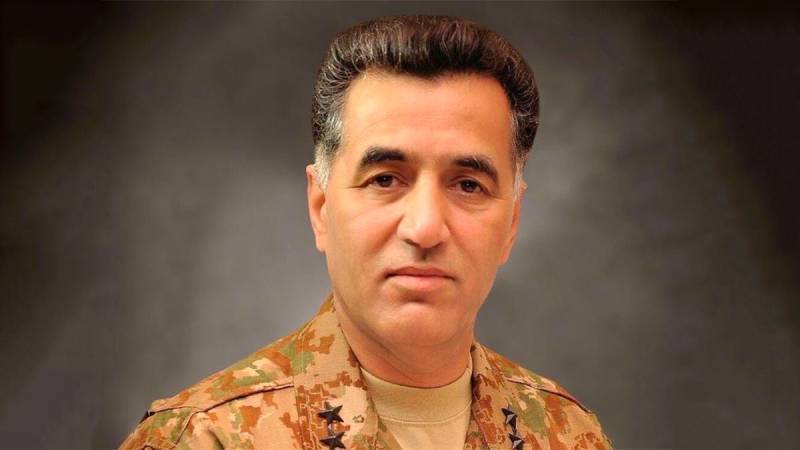
The fourteen-year sentence handed to retired Lt Gen Faiz Hameed by a military court is unprecedented: a former ISI chief court-martialled and imprisoned. The establishment has presented the verdict as evidence of robust internal accountability. However, as details and allegations continue to surface, a more complex and concerning picture emerges. Rather than reflecting effective self-auditing, the case points to a prolonged period of institutional oversight failure—one that unfolded over more than a decade and was addressed only after a civilian’s petition brought the matter into formal scrutiny.
Within days of the verdict, senior political figures began making extraordinary claims. Former Balochistan Chief Minister Nawab Sanaullah Zehri alleges that Hameed, in coordination with then Army Chief Gen Qamar Javed Bajwa, engineered the collapse of his elected provincial government in January 2018 through forced defections and the overnight creation of the Balochistan Awami Party.
Defence Minister Khawaja Asif went further, alleging that Faiz Hameed played a central role in sustained political engineering beginning in the mid-2010s. He claims Hameed was instrumental in the events leading to Nawaz Sharif’s ouster in 2017, the manipulation of the 2018 elections, and the subordination of parliament to intelligence influence during Imran Khan’s tenure. Asif has also alleged that the violence of May 9, 2023, was not spontaneous but the outcome of prior planning involving senior actors.
Alongside these political allegations sits the 2017 Top City case, in which a civilian property developer accused Faiz Hameed, then DG ISI, of orchestrating an unlawful raid and extortion attempt. That case ultimately triggered the investigation. Taken together, the allegations suggest a consistent pattern: systematic political interference, abuse of authority, and criminal conduct spanning many years either undetected or deliberately ignored by the military’s internal oversight mechanisms.
What is especially striking is not only the seriousness of the allegations but the extended period over which they are said to have unfolded. If even some elements of this account are accurate, it suggests that a senior intelligence officer may have operated across several sensitive domains—ranging from political engagement and interactions with elected representatives to the exercise of state authority and post-retirement networking—without timely or effective institutional checks.
What the Faiz Hameed case ultimately reveals is that Pakistan’s accountability mechanism remains reactive rather than preventive. It depends on scandal, exposure, judicial intervention, and institutional embarrassment
Alleged interference intensified around the 2017–2018 political transition, culminating in the reported dismantling of a provincial government in early 2018. In the years that followed, parliament is said to have operated under diminished autonomy. Despite these claims, Faiz Hameed retired in 2022 without consequence. After retirement, he allegedly retained classified documents, maintained extensive political contacts, and disregarded repeated warnings, yet no formal action appears to have been taken. It was only when the Top City petitioner approached the Supreme Court in 2023 that the matter moved forward, leading to a Field General Court Martial in 2024 and a conviction in 2025.
This sequence raises serious questions about post-retirement oversight. Modern militaries typically enforce strict compliance regimes, including security debriefings, document recovery, and clear limits on political engagement. Whether such mechanisms existed in this case, were properly applied, or proved inadequate remains unclear. If they were followed, their effectiveness warrants scrutiny; if they were not, responsibility cannot rest solely with the individual. Any credible review must therefore assess not only personal conduct but also the systems and officials charged with enforcing and verifying post-retirement compliance.
The most damaging aspect of the case is that civilian oversight mechanisms were effectively absent. Article 199(3) of the Constitution bars High Courts from entertaining petitions against members of the armed forces, leaving victims with virtually no remedy. That the Supreme Court’s Human Rights Cell intervened was exceptional. One must ask how many others—politicians pressured to defect, opponents, targeted, or citizens allegedly extorted—lacked the resources or courage to pursue such an extraordinary legal route.
Transparency has also been limited. The trial was conducted through a Field General Court Martial, with the ISPR statement offering only skeletal information. It remains unclear whether Faiz Hameed was tried for political engineering itself or only for narrower offences such as violations of the Official Secrets Act, misuse of authority, and wrongful loss.
The Dr Abdul Qadeer Khan case offers a sobering parallel. In 2004, Khan publicly confessed to supplying nuclear technology to foreign states. Whether coerced or accurate, the episode revealed a catastrophic failure of oversight. A scientist with access to the country’s most sensitive secrets allegedly ran an international proliferation network for years without detection.
The military has demonstrated its capacity for swift justice. The May 9 trials illustrated this clearly, with rapid proceedings and quick convictions of PTI workers. Yet if current allegations are accurate, the individual accused of having a role in planning those events remained free for over a year, disregarding warnings without consequence.
What the Faiz Hameed case ultimately reveals is that Pakistan’s accountability mechanism remains reactive rather than preventive. It depends on scandal, exposure, judicial intervention, and institutional embarrassment. This is not self-auditing; it is crisis management.
Calls for proceedings under Article 6, which addresses constitutional subversion, therefore merit serious consideration. Yet the charges appear carefully framed to avoid confronting the broader issue of constitutional sabotage. This selective accountability risks punishing an individual while insulating institutional practices.
The real question is whether this verdict will mark a genuine turning point or remain a rare exception. Will other senior figures face scrutiny? Will political engineering itself be acknowledged as a punishable offence? Will post-retirement monitoring be enforced? And will civilians finally be given accessible complaint mechanisms without fear of retaliation?
Until such reforms are implemented and independently verified, the Faiz Hameed verdict is likely to resemble the Dr Abdul Qadeer Khan case—an exception that underscores a broader pattern. Senior officers continue to operate within a protected sphere where accountability tends to arrive late, under external pressure, and on carefully limited terms. Whether the institution is willing to confront this reality remains an open question.
Experience shows that no accountability system can ever be flawless. The purpose of this analysis, therefore, is not to paint a negative picture of the system, but to highlight critical observations that may assist in honest self-assessment—particularly for those entrusted with safeguarding institutional integrity and who, in this instance, did not fully meet the standards expected of them.