

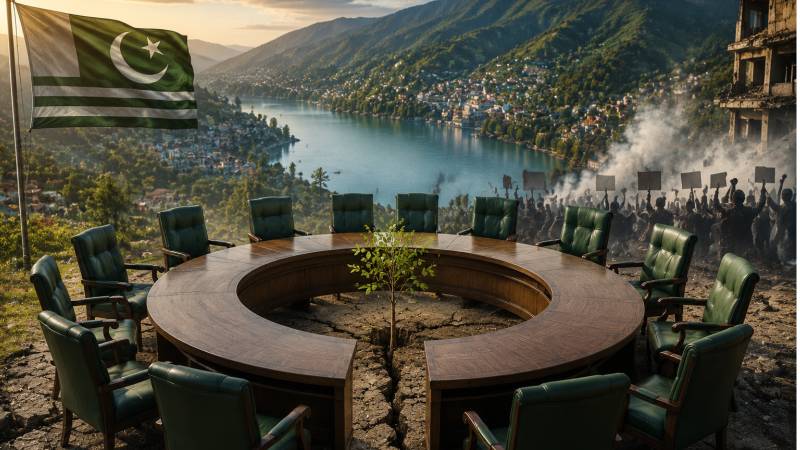
Azad Jammu and Kashmir, a disputed territory where, recently elections intended to strengthen democracy, unfortunately the situation took a different turn. The use of tear gas, live bullets on protestors, and horrific scenes of people lying dead on the streets were witnessed. The story began in June when the Joint Awami Action Committee (JAAC), a civil society organization consisting of students, lawyers and traders, rather than a registered political party, was reportedly banned under anti-terrorism laws which intensified the situation.
The earlier demands were subsidized flour and cheaper electricity that later expanded to the abolition of 12 legislative assembly seats. The AJK Legislative Assembly comprises of 53 seats, including 33 seats for Kashmir residents that requires around 80,000 voters and 12 seats reserved for Kashmir Refugees who are settled in Pakistan. These seats require only 1000 seats but many significant ministries are elected from these refugee seats who have little understanding of the issues faced by the people of AJK. The protestors argued that those who do not live in Kashmir should not have a right to govern them but the issue remained unresolved. The government stance is that seats politically represent Kashmir refugees and cannot be considered unconstitutional. These arrangements were done through laws in 1964 and reinforced under the 1974 Interim Constitution. If these seats are meant to represent Kashmir refugees, then they should be reduced to four based on the current refugee population.
Azad Jammu and Kashmir, a disputed territory where recently elections intended to strengthen democracy, unfortunately the situation took a different turn. The situation in AJK must be resolved through ballot, not bullets.
On 27th July, 2026, elections took place and JAAC staged the protest, urging to boycott the electoral process. During the march, security forces reportedly used tear gas, straight fires and shelling to disperse the protesters. JAAC claimed that 30 people were killed during the clashes between protestors and the forces. Pakistan has frequently criticized for what they have done in Indian-administrated Kashmir including restrictions on civil liberties, internet put down and use of bullets against the protestors. Pakistan has long described Kashmir as its “Jugular vein” but it has adopted same tactics that previously India has used.
The current crisis cannot be resolved through the use of force, instead, the government should reduce tensions by doing negotiations with the Jammu Kashmir Joint Awami Action Committee. Peaceful protest is a democratic right and if protestors remain peaceful, the ban on JAAC should be lifted for meaningful engagement. The communication shutdown which damaged the public trust and made the verification of information difficult should also be lifted. The grievances of 12 seats are complicated but it should be addressed by continue giving political representation to refugees in a way that they do not have a voice in determining the government.
All administrative powers should reside in AJK to strengthens the local self-governance and safeguarding the Kashmiris’ political rights. Internal referendum must be held on the issue of refugee seats to address the public concerns and strengthening the constitutional reforms. In addition, amendments must be made to ensure that AJK receives fair share of revenue generated from its natural resources, especially, hydropower. The situation in AJK must be resolved through ballot, not bullets. If sustainable policies and reforms are not introduced, they will deepen the public mistrust and will further exacerbate the instability. The rights of both AJK residents and Kashmir refugees must be respected to prevent further political crisis.