

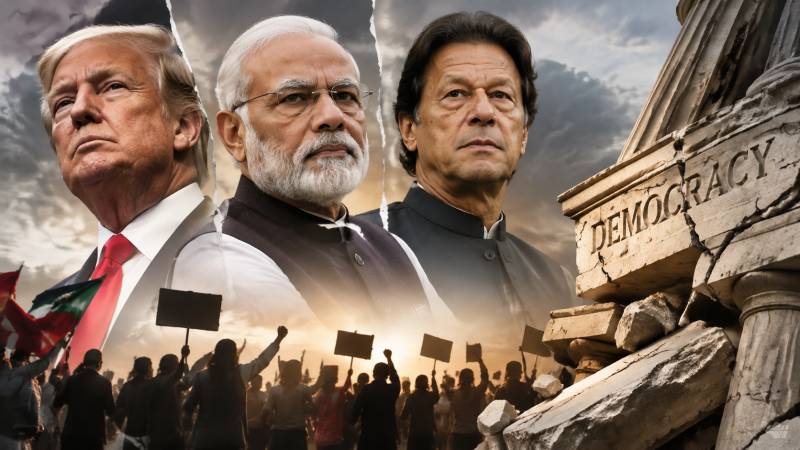
Democracy used to fall to the roar of tank treads and the midnight knock on the door. Today, it collapses to the roar of a stadium, ushered out through the ballot box by citizens who mistake performance for policy. Across the globe, the script is grimly familiar: a charismatic demagogue steps into the vacuum left by broken economic systems, promises absolute salvation, and leaves behind institutional rubble. But populism is no modern novelty; it is history's oldest con game, and its contemporary toll is pushing the world to the brink.
History reminds us that populism is not a new invention. From Adolf Hitler and Mussolini in the mid-twentieth century to authoritarian figures down the decades, the playbook has always been identical: promise absolute national renewal, demonize opposition, and treat institutional checks as personal insults. The endgame of those historical figures was sheer ruin, fractured nations, devastated economies, and deep collective trauma.
Today, we are witnessing the exact same script play out across key nations, with devastating consequences for both global security and domestic stability. In the United States, Donald Trump captured power on the wings of anti-corruption rhetoric and "America First" pledge. Yet, the reality of his leadership has proved dangerously volatile. Far from avoiding foreign entanglements, his impulsive, ego-driven foreign policy has dragged global stability into Middle Eastern quagmires and dangerous escalations with Iran. By substituting long-term diplomatic strategy with personal opportunism, his brinkmanship has rattled global energy markets and placed the international economy on a knife-edge.
In India, Narendra Modi’s majoritarian project is facing an unprecedented wave of public backlash. While his early tenure was defined by ideological arrogance and state overreach, the public has finally tasted the bitter fruits of his populist promises. Today, the myth of his governance is being exposed on the streets by a frustrated youth driven by student movements and political groups like the Cockroach Janata Party. Protesters are surging toward New Delhi, converging at Jantar Mantar to reject majoritarian rhetoric and demand genuine public policy, economic delivery, and the Rule of Law. The Indian youth no longer wants another populist savior; they want a functional republic.
In Pakistan, the tragic cost of engineered populism offers a textbook study in institutional decay. In the recent past, the story of Imran Khan was not an organic political phenomenon; it was a carefully cultivated messianic persona bred in the political nurseries of figures like General Retd. Shuja Pasha and General Retd. Zaheer-ul-Islam after 2011. To deliver this "savior" to power, the judicial apparatus was systematically managed through the era of Chief Justices Saqib Nisar and Asif Saeed Khosa, clearing the path for the managed elections of 2018.
Across the globe, the script is grimly familiar: a charismatic demagogue steps into the vacuum left by broken economic systems, promises absolute salvation, and leaves behind institutional rubble.
Khan entered office promising an anti-corruption crusade, a "Scandinavian welfare state," and the Rule of Law. Yet, behind the charismatic rhetoric lay a total vacuum of policy and ideology. Despite holding power in Khyber Pakhtunkhwa for thirteen years and at the Center for nearly four, his administration delivered no structural reforms. Governance was reduced to moralizing lectures, political vendettas, and extreme polarization. Crucially, the current reaction to Khan's legacy is equally concerning. The state's antidote to Khan’s populism has itself relied on reactionary, populist maneuvers seen in the hollow, vision-less decisions of Maryam Nawaz and the broader ruling setup. Neither the current political dispensation nor the military establishment appears to possess a coherent long-term vision for structural reform. Fighting populism with counter-populism only traps the nation in a perpetual cycle of political instability.
Adding to this institutional paralysis, Pakistan is currently gripped by a dizzying debate over administrative restructuring from carving out new provinces and decentralizing power to debating whether the country should transition toward a presidential system or retain a parliamentary framework. Yet, beneath these loud proposals lies a profound sense of confusion and uncertainty. Lawmakers and policymakers themselves appear anxious, fragmented, and visibly unsure of the future. It remains an open question whether these sweeping structural debates stem from a genuine, policy-driven effort to deliver public welfare, or if they are merely another wave of reactionary political posturing.
This leaves developing nations like Pakistan in an exceptionally vulnerable position. In an era dominated by the strategic competition between great powers like the United States and China, Pakistan desperately needs diplomatic credibility and foreign investment to stabilize its economy. While recent diplomatic maneuvers may have temporarily polished Pakistan’s international image, the country remains acutely fragile. To attract global capital and navigate foreign influence without sacrificing sovereignty, a nation cannot rely on manufactured political messiahs or authoritarian shortcuts.
The way forward requires a fundamental reckoning. Rebuilding democracy; both in Pakistan and globally, demands that we break free from the illusion of the savior. Societies must move away from performative slogans and return to genuine policy-driven governance, institutional accountability, and the absolute supremacy of the Rule of Law. Until nations rebuild strong, transparent institutions that deliver real material dignity to their citizens, the hollow promises of demagogues will continue to haunt global democracy.