

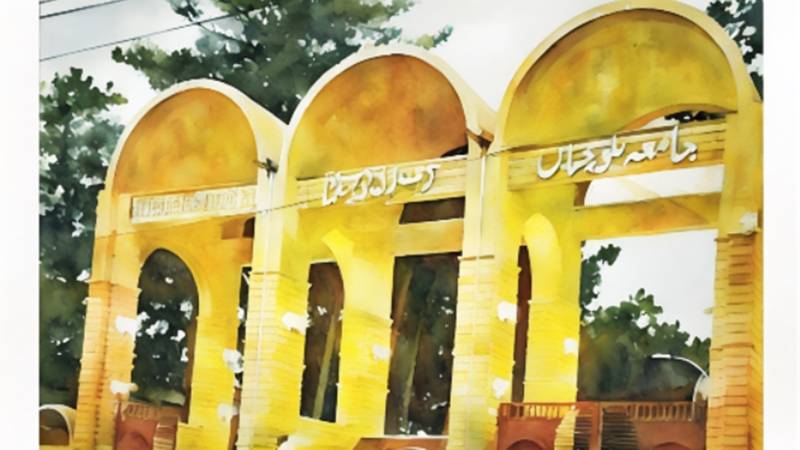
While the Chief Minister of Balochistan announces ambitious AI initiatives and scholarships to elite institutions like Oxford, Aitchison School Lahore, Lawrence College Murree, and Sadiq Public School Bahawalpur, a stark contradiction unfolds back home. The province's own educational institutions—from primary schools to universities—are being systematically shut down, exposing the hollowness of these lofty declarations.
Meanwhile, the relentless exploitation of Balochistan's natural resources continues unabated, with corruption eating away at development budgets. Infrastructure projects remain incomplete, jobs are doled out to political favourites, and election-driven rhetoric dominates governance—all while education, the most critical sector for the province's future, collapses into ruin. Security concerns, often cited as justification for school and university closures, cannot mask the deeper rot of mismanagement and neglect that has brought Balochistan's education system to its knees.
Over 90% of Balochistan lacks reliable internet access, making virtual learning impossible for most. When students protest, they are met with indifference or empty promises
Balochistan, Pakistan's largest yet most neglected province, is witnessing the systematic dismantling of its education system over the last couple of years. From primary schools to universities, institutions are shutting down, forcing students into uncertainty while authorities offer hollow justifications. The narrative pushed by the provincial government—that closures are due to "security threats"—is a smokescreen hiding deeper failures: administrative incompetence, financial mismanagement, and deliberate neglect.
The University of Balochistan, once a beacon of hope, now stands paralyzed. Despite exorbitant fee hikes, its classrooms, hostels, and transport services remain locked. Sardar Bahadur Khan Women's University and the University of Turbat face similar fates, with academic activities suspended indefinitely. Even Bolan Medical College Quetta and schools like Govt High School Quetta and Girls' School Panjgur have shut their doors, citing vague "security risks."
Yet, the government's claim that online education is a viable alternative is a cruel joke. Over 90% of Balochistan lacks reliable internet access, making virtual learning impossible for most. When students protest, they are met with indifference or empty promises. The Balochistan administration has failed to prioritise education. Funds are misallocated, infrastructure crumbles, and policies lack long-term vision. The recent fee hikes at the University of Balochistan—without restoring basic facilities—only compound the injustice.
Universities should be safe zones, but ensuring their security is the duty of the provincial government. Closing them is not the solution. Every shuttered college and university deepens Balochistan's marginalisation. Students who once dreamed of becoming doctors, engineers, and scholars now face a dead end. The anger is justified—when education is denied, resistance grows.
The path forward is clear:
- Immediate reopening of all educational institutions with guaranteed security.
- Transparent audits of education budgets to end corruption.
- Federal-provincial collaboration to restore infrastructure and ensure internet access.
- Accountability for officials who have failed Balochistan's youth.
The only recent positive development has been the posting of teachers—though on eighteen-month contracts, a temporary fix for a permanent crisis.
Balochistan's future hangs in the balance. If education continues to collapse, the province will not just lose a generation—it will fuel a rebellion born from betrayal. The time for excuses is over. The time for action is now.