

In an unprecedented move, Israel launched a massive attack on Iran on Friday morning, utilising 200 fighter jets and drones to target nuclear programmes, military bases, and multiple cities, including Tabriz, Kermanshah, Hamedan, Qasr-e Shirin, and Kangavar. The attack resulted in the deaths of top military leaders and nuclear scientists, including General Hossein Salami, Commander-in-Chief of Iran's Revolutionary Guard, and Major General Mohammad Bagheri, Iran's highest-ranking military officer, as well as six nuclear scientists. These attacks stunned the entire country in particular and the rest of the world in general, catching Iranian officials off guard and revealing severe lapses in the country’s air defence system. According to Faisal Warraich, a prominent YouTuber, Iran has been facing betrayals from within for many years, with alleged Israeli collaborators facilitating the elimination of key officials and scientists.
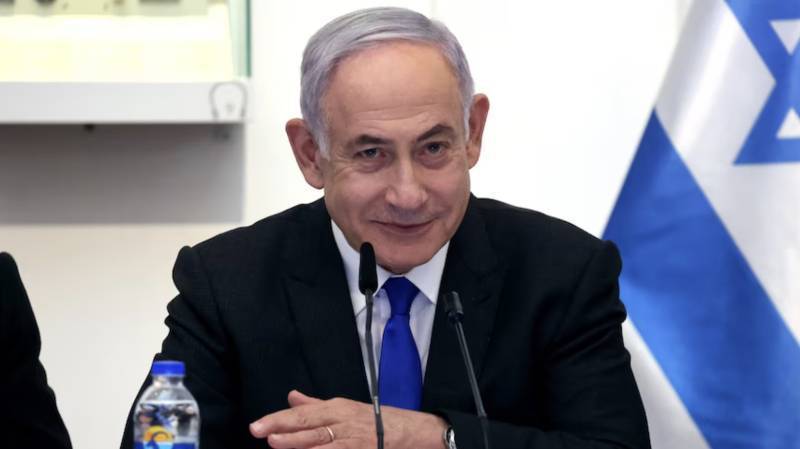
In response to Israel’s attack, Iran fired around 100 missiles to safeguard its sovereignty, showcasing its preparedness for potential aggression, although most were intercepted by Israel’s air defence system. Israeli Prime Minister Benjamin Netanyahu indicated that the conflict could last several days. However, the situation remains dicey, with potential implications for regional stability.
Following the attack on Iran, reports indicate heightened security measures for Benjamin Netanyahu. Meanwhile, US President Donald Trump has cautioned Iran to ratify a nuclear deal, warning of severe consequences if they fail to comply. Trump emphasised the urgency, stating, “No more death, no more destruction, just do it before it’s too late.” Recent developments suggest Trump’s administration is pushing for a diplomatic agreement with Iran to curb its nuclear programme, while Netanyahu has expressed scepticism and advocated for military action.
According to an Israeli official, Benjamin Netanyahu is expected to meet President Donald Trump to discuss the situation and determine the next course of action, although the exact timing of the meeting remains unconfirmed. While speaking to CNN, Donald Trump said he had given Iran 60 days to consider and sign a deal, but it didn’t comply, and today marks the 61st day.
Iran’s President Masoud Pezeshkian has urged citizens to remain calm, unified, and trusting of Iran’s leadership at this critical juncture as crowds of protesters rally on Tehran’s roads, calling for a robust attack on Israel. Meanwhile, Iran’s Supreme Leader Ayatollah Ali Khamenei cautioned that since Iran didn’t initiate the conflict, the ramifications will be disastrous for Israel. Iranian Foreign Minister Abbas Araghchi also described Israel’s attack as a “declaration of war.”
As Israel, with the blatant support of America, continues to divide and conquer the Muslim Ummah, Muslim countries must put aside sectarian, caste, and ideological differences and unite against the looming war that is knocking at their doorsteps
It’s worth noting that President Pezeshkian recently emphasised Iran’s determination to support the Palestinian nation and oppose Israeli actions in Gaza. He stated that the Islamic Republic would continue to defend the oppressed people around the world, especially the Palestinian nation.
Israel has consistently pursued its nefarious agendas by taking strategic initiatives to advance its interests while navigating complex geopolitical dynamics. However, its actions in Gaza and the occupied West Bank have been widely criticised, with many countries and observers deeming its conduct genocidal and in violation of international law.
Last year, Israel targeted Iran’s embassy in Syria, highlighting vulnerabilities in Iran’s defence systems. On 1 April 2024, at least eight senior Iranian officials were killed in an apparent Israeli airstrike, including General Mohammad Reza Zahedi, a senior commander of the IRGC’s Quds Force.
According to a famous astrologer, Syed Haider Jafri, the years from 2024 to 2027 hold immense significance in numerology, indicating wars and a new start. He claims the beginning of the end has started, and the upcoming years will bring more devastation in the Middle East, especially in Muslim countries.
Iran is a fundamentalist sovereign state rooted in Islamic ideology, and Israel considers it a significant threat and a major obstacle to its expanding tentacles in the Middle East. Iran’s influence in the region stems from its 1979 revolution, which had a profound impact on the Middle East. The country’s ideological stance has led to tensions with the US and Israel. Iran’s Supreme Leader Ayatollah Ali Khamenei has significant influence over the country’s foreign policy, often prioritising ideological goals over national interests.
Iranian President Masoud Pezeshkian has vowed a “powerful response” to Israel’s recent attack, emphasising unity and preparedness among the Iranian people. Given the complex geopolitics, reactions from major nations will significantly influence the conflict’s trajectory.
The escalating tensions in the Middle East could potentially lead to a full-blown nuclear conflict, impacting neighbouring countries and forcing them to take sides or endure the spillover. It’s crucial to monitor reactions from key players like Russia, China, and Muslim countries, particularly Pakistan and Saudi Arabia, as the situation unfolds.
Prime Minister Muhammad Shehbaz has also condemned the attacks on Iran and said that at this critical juncture, Pakistan stands in solidarity with Iran. He also expressed his sympathy over the deaths of top officials, scientists, and other nationals following the Israeli attacks.
A few hours ago, Iran launched its operation “True Promise III” in response to Israel’s attack and annihilated Zionist positions in Tel Aviv. It has also targeted two Israeli jets and shot down one drone, remaining true to its response. Iran’s Supreme Leader Ayatollah Khamenei said the blood of the martyrs will not go unavenged and Iran will not show any kind of clemency in bringing Israel to its knees. As Iran didn’t initiate the war, it will certainly end it.
As Israel is on a killing spree, I’d like to pose a question to the Muslim world and urge them to learn from it. Have they ever heard of a Jew being killed by someone anywhere in the world without Israel reacting strongly? The answer is likely no. If such an incident were to occur, see how Israel would react forcefully and bring the perpetrator to justice. Similarly, Muslims should adopt a comparable stance, bringing perpetrators to justice for harming innocent people. After Israel has killed thousands of Palestinian women and children and now initiated its killings in Iran, Muslim countries should have sent a strong, unified response to it about the consequences of harming an innocent Muslim, let alone killing them.
As Israel, with the blatant support of America, continues to divide and conquer the Muslim Ummah, Muslim countries must put aside sectarian, caste, and ideological differences and unite against the looming war that is knocking at their doorsteps. The United Nations, Organisation of Islamic Cooperation (OIC), and League of Arab States (LAS) have a significant responsibility to fulfil, as they were founded on the principles of preventing aggression, injustice, and breaches of international law and holding perpetrators accountable.
The Iran-Israel conflict has a decades-old hostility, with skirmishes continuing intermittently. But the early morning attack on Iran by Israel was one of the most unexpected and unprecedented in the line of previous attacks, which compelled Iran to carry out a reciprocal attack on Israel. Muslim countries have denounced and called Israel’s attack reprehensible and should bring about an armistice between the two states as soon as possible, as issuing statements won’t work this time. It is high time Muslim countries took robust action and deterred Israel from any imminent aggression on Iran. If they still show indolence in taking strong action and the war starts, then all bets will be off.