

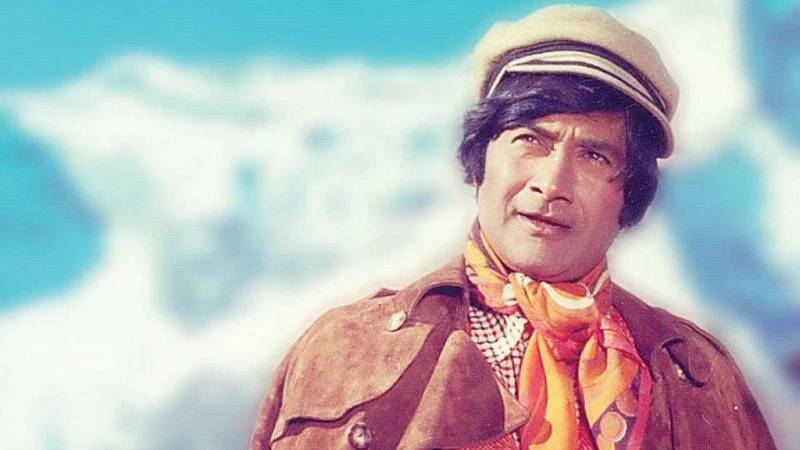
It was a time before the partition of India, when Shakargarh was still part of Gurdaspur. A quiet town, unhurried by the pace of modern life. Among its residents was a well-known lawyer, Pishori Lal Anand, father of three sons. By a strange twist of destiny, all three were destined to shine in Bombay’s film industry. The eldest, Chetan Anand, and the youngest, Vijay Anand, would be remembered as gifted directors, while the middle son, Dharam Dev Pishori Lal, would come to be known to the world as Dev Anand. For six decades he reigned supreme—not merely as an actor and producer, but as a presence that captured hearts. The clothes he wore, the tilt of his head, the brisk rhythm of his speech, all became the subject of imitation. His jacket, his scarf, his muffler, each sparked new fashions. This is the story of Dev Anand.
His early schooling was in the town itself, but he completed matriculation at Sacred Heart School in Dalhousie. From there, he moved on to Government College Dharamshala, and finally to Lahore, the city of his dreams, where he joined Government College to study English Honours. He loved the English language passionately. Four years at Government College gave him opportunities to participate freely in co-curricular activities, enriching his confidence and refining his personality. Already a self-assured youth, he left even more poised, his fluency in English, nurtured in Dalhousie, now polished to brilliance in Lahore.
At home, his father was stern and distant, a man before whom the children felt awe and fear. His mother, by contrast, was gentle, and Dev adored her. When she fell ill, he devoted himself entirely to her care. He would rise at four in the morning, travel thirty-five miles to Amritsar to fetch medicines and necessities, and return under the blazing June sun. On one such day, exhausted and thirsty, he stopped at a cart selling almond sherbet. As the vendor handed him a glass, he gazed intently at Dev’s forehead and said in Punjabi: “Beta, I see a sun shining there. One day you will be a great man.”
Sitting by his mother’s bedside on another occasion, Dev asked anxiously, “Mother, what will become of me if you leave?” Smiling tenderly, she said, “Foolish boy! I will never leave you.” But the words were only comfort. A few months later, she passed away, leaving Dev’s world desolate. Yet he remembered her telling his father, “You will see, my Anand will become a great man.” Reflecting in later years, he would often say, “Perhaps I did not become great as she had foreseen, but I did succeed in life, and that is because of her prayers.”
Music was always central to his films, reflecting his own deep love for it. He would sit for hours with composers, involved in every nuance
After completing his BA Honours, Dev walked out of the college gates feeling suddenly alone. His mother was gone; his father offered no companionship. Why not try Bombay, he thought. In an interview years later, he recalled arriving in the city without a single acquaintance. One day on Hornby Road, by sheer chance, he encountered a college friend who invited him to share his lodgings. They would gather in the evenings at a milk shop, in the company of others. It was there that Dev heard that Prabhat Films was looking for a young actor. With characteristic confidence, he introduced himself to Babu Rao, declaring himself a graduate of Government College Lahore and convinced he was the one they sought. Struck by his bright eyes and cheerful smile, Babu Rao arranged for an audition in Poona. Dev was given a first-class ticket. He passed the test, and the gates of the cinema opened before him.
His debut came with Hum Ek Hain (1946). During its shooting, he met Guru Dutt, a novice director then, and their acquaintance grew into a deep friendship. His next milestone was Vidya, opposite the famous actress Suraiya. While filming the song Kinare Kinare Chale Jayein Ji, the two grew close, and their companionship deepened through several films: Jeet (1949), Shair (1949), Afsar (1950), Neeli (1950), Sanam (1951), and Do Sitare (1951). Dev became a frequent visitor to Suraiya’s home, warmly welcomed by her family. Affection turned into love, and during the filming of Afsar, Dev proposed formally, sending her a diamond-studded ring. But Suraiya, bound by tradition, could not decide for herself. Her grandmother, the family’s authority, rejected the match and flung the ring into the river. Suraiya was forbidden from meeting Dev or working with him again. Thus, Do Sitare became their last film together. For Dev, it was a shattering loss, compounded by the challenge of proving himself without the support of a famous co-star.
Yet he persevered. With his elder brother Chetan, he founded Navketan Films in 1949. Their first production, Baazi (1951), was a resounding success. In 1954, he married actress Kalpana Kartik, who soon left films to devote herself to home and family, while Dev, though a devoted husband, never truly forgot Suraiya. She, too, remained unmarried. He went on to star with Madhubala, Waheeda Rehman, and others, giving unforgettable performances in CID (1956), Kala Pani (1958), Bombai Ka Babu (1960), Sharabi (1964), Guide (1965), and Jewel Thief (1967). For Kala Pani, he won his first Filmfare Award. Known as a romantic hero, he also broke ground as an anti-hero in films like Jaal (1952), Dushman (1957), and Kala Bazar (1960).
Music was always central to his films, reflecting his own deep love for it. He would sit for hours with composers, involved in every nuance. Many stories, too, he wrote himself, and he introduced new faces to cinema. His autobiography, Romancing with Life, tells of a man whose very mannerisms became fashion, whose admirers spread across continents, and whose life brimmed with vitality.
By now, Dev had scaled the heights of fame and fortune. Yet he often looked back to the Lahore of his youth, where he had once dreamt of an MA in English but had to give it up when his father withdrew support. He remembered the day in 1943 when, only nineteen years old and with thirty rupees in his pocket, he boarded the Frontier Mail to Bombay, unaware that one day he would need a visa to return to Lahore. More than five decades later, in 1999, he finally returned, accompanying Prime Minister Vajpayee on a historic visit. The city’s greatest pull for him was his old college.
Professor Asghar Nadeem Syed later recalled that day. It was a Sunday, and the campus was nearly deserted. Dev walked slowly, gazing at the tower, the Oval Ground, and the Principal’s office. Softly, he whispered, “Everything is just the same.” Then he asked his companions to stop: “Please, let me go on alone.” He ascended the familiar staircase, running his hand along the walls as though they were living things. In his old classroom, he saw names carved into desks and wondered where those boys might be now. His heart filled, and he rushed out. A little later, sounds of sobbing were heard. They found him clinging to a pillar, weeping uncontrollably, whispering through tears: “Everything is the same, even the desks, but...” His voice broke, and silence fell upon them all.
This is the story of Dev Anand, the boy born in Shakargarh, who came of age in Lahore, who conquered Bombay’s cinema, and who returned after half a century to his beloved college, where he wept like a homesick youth beside its silent pillar.