

The Indus Waters Treaty (IWT), signed in 1960 between India and Pakistan under the auspices of the World Bank, has often been hailed as a rare example of cooperation in a region fraught with historic animosities. A technically crafted agreement to divide the waters of the Indus River system, the IWT has endured wars, cross-border skirmishes, and icy diplomatic standoffs. But as the ecological and geopolitical landscape shifts, the treaty faces pressures it was never designed to withstand—most notably, climate change, water scarcity, and exclusionary governance.
What if the future of this treaty, long reduced to engineering blueprints and bureaucratic silence, could be reimagined through a more inclusive, women-centered lens?
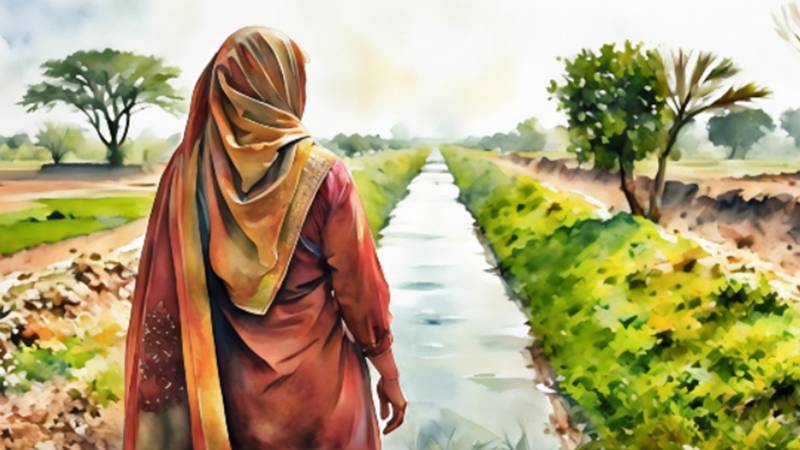
South Asia’s water story is gendered. Women, particularly in rural areas, bear the brunt of a failing water infrastructure. They walk miles to fetch water, irrigate family plots, and manage domestic needs in conditions made harsher by erratic rainfall and depleted aquifers. Yet despite being the primary stewards of water in practice, women remain absent from water governance in principle. The IWT, like most transboundary water agreements, was negotiated in closed rooms devoid of women’s voices, and continues to operate without them.
If the Indus River is the lifeblood of this region, then women are its pulse. A treaty that fails to include their voices is a treaty out of time
A women-centered approach to the Indus Waters Treaty would not only recognize women as agents of change but would transform the treaty into a living instrument—responsive, just, and peace-oriented. It is not merely about representation for representation’s sake. It’s about fundamentally shifting who has power over one of the region’s most critical lifelines.
To do so, we must reckon with historical exclusions. Since Partition, water in South Asia has not only symbolized sovereignty and survival, it has also served as a proxy for power and control. Treaties like the IWT were negotiated with a security-first mindset, overlooking the societal and ecological interdependencies of the river system. The voices of those who live alongside and rely upon these rivers daily, especially women, have long been dismissed in favor of technical metrics and hydro-political negotiations.
But water is not apolitical. Nor is it gender-neutral.
The existing frameworks, shaped in a post-colonial and patriarchal context, have calcified structural inequities. Women are still seen as peripheral stakeholders, recipients of policy rather than shapers of it. A shift toward women-centered water governance means integrating women not only at the community level but also at the diplomatic table. It means designing water-sharing policies that account for women’s lived realities—like access to sanitation, time poverty from water collection, and unequal land rights that limit irrigation access.
As climate change intensifies glacial melt in the Himalayas and alters the flow of the Indus Basin, the urgency to reform the treaty becomes more acute. A women-centered lens offers a pathway not just for equity, but for sustainability and regional peace. When women are empowered to lead water initiatives, studies show outcomes improve across the board, from efficient water use to conflict resolution and environmental conservation.
This is not a theoretical argument. It is a practical necessity. Across South Asia, local women-led water cooperatives are already demonstrating what inclusive governance can achieve. From flood adaptation strategies in Sindh to groundwater stewardship in Punjab’s agrarian belt, women have long been quietly innovating. What they need now is scale, policy recognition, and access to formal decision-making arenas.
India and Pakistan have the opportunity—indeed, the responsibility, to modernize the IWT with this broader vision. This could include formal women’s representation in the Permanent Indus Commission, gender-disaggregated data collection, and investments in women-led water infrastructure projects. It could also mean integrating climate adaptation and social equity into future treaty renegotiations.
The time is ripe. With rising regional instability, water stress, and democratic backsliding, the IWT could evolve from a Cold War-era technocratic agreement into a bold 21st-century model for intersectional governance. Not only would this foster cross-border cooperation, but it would also catalyze social transformation across communities that have long been left behind.
If the Indus River is the lifeblood of this region, then women are its pulse. A treaty that fails to include their voices is a treaty out of time.
The next chapter of the Indus Waters Treaty must be written not just with engineers and diplomats—but with women at the table, co-authoring a more just and sustainable future.