

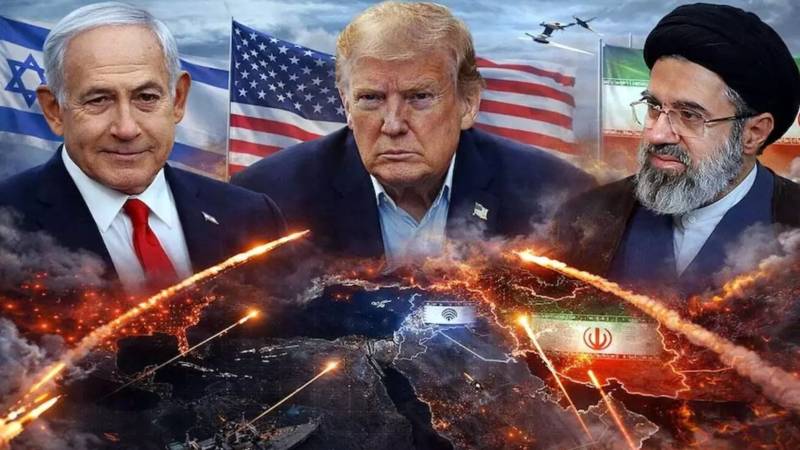
The ongoing confrontation between Iran and the tag team of the United States and Israel carries a strong sense of déjà vu. While we have rarely seen Washington and Tel Aviv operate this openly together, the broader script itself is anything but new. Millennials remember it, older generations have lived through it repeatedly, and even Gen Z, armed mostly with history podcasts and curiosity, can recognise the pattern.
Every decade or so, a new crisis in the Middle East is identified by countries several oceans away. Curiously, the same nations diagnosing the problem often arrive with ready-made solutions before anyone in the region has even been asked what they think. Intervention is presented as necessary, sometimes even inevitable.
The justification rarely changes. Each confrontation is framed as a matter of security and stability, with decisive action promised as the path to regional peace.
History, however, has rarely cooperated with that promise. Instead, the region often feels stuck in a sequel nobody ordered, but everyone recognises. If the script sounds familiar, the results usually are too.
US involvement in the Middle East is hardly new. In the aftermath of September 11, Washington responded as any nation facing such an attack likely would. Yet history shows that military campaigns in complex regions rarely unfold according to plan.
The United States spent nearly twenty years in Afghanistan attempting to dismantle Al Qaeda and remove the Taliban, only for the Taliban to return to power shortly after their withdrawal. The Iraq War saw Saddam Hussein removed within weeks, but the years that followed brought insurgency, instability, and growing resentment towards foreign presence. Elsewhere, intervention in Libya removed Muammar Gaddafi but left a fractured state, while the Syrian conflict evolved into one of the century’s most complicated wars.
Time and again, promises of stability delivered prolonged turbulence, and external pressure often unites populations rather than divides them. This matters even more for Iran, a civilisation thousands of years old that sees outside pressure more as a challenge than persuasion.
Defence companies will likely be cheering from the sidelines, because who needs diplomacy when profits soar, right?
For today’s conflict, it helps to take a trip down memory lane. Military solutions rarely work, whether there is a clear reason for intervention or not. Iran is not Iraq, Afghanistan, or any of the other countries that faced US campaigns. It is one of the world’s oldest civilisations, and its military capabilities, combined with national pride, make any conflict far more significant. Ever since the revolution, Tehran has been preparing for the possibility of confrontation shaped by decades of sanctions and constant threats.
It would be easy to dismiss the regime for its record on freedom of speech, women’s rights, and other internal issues. Yet when the first alleged attack targeted a girls’ school, killing over a hundred girls, those critiques instantly took a back seat. Populations tend to rally around the flag in moments of crisis, even when previously divided, a pattern recently seen in Pakistan in May. The same is now happening in Tehran, where internal divisions have temporarily faded.
The question remains what exactly the goals of America are and how they benefit ordinary Americans or the wider world, sometimes with answers less obvious than the explosions. America’s stated goals include preventing Iran’s nuclear and ballistic missile programmes, containing its regional influence, maintaining security in the Persian Gulf, and bringing Iran to the negotiating table.
Ironically, the recent attack occurred during negotiations, undermining the US's credibility. Iran does not pose a direct threat to the United States, as its own foreign minister has acknowledged, and the strikes focused on US bases within the region, reflecting the geographic realities of the conflict.
If anything, the operation seems to serve Israel’s strategic interests more than America’s. Success would make Israel one of the strongest powers in the region, which in turn requires it to ensure that the US follows its preferred path. Without suggesting conspiracies, once certain classified files were partially released, the mandate for peace effectively disappeared.
For the first time in recent memory, many Americans are questioning this conflict, recognising that it does not clearly serve their national interest and appears to advance Israel’s regional goals more directly. Nearly two weeks into the escalation, the effects are already felt across the Gulf, with nightly missile and drone displays lighting up the skies, and oil markets under strain in ways that probably were not what green activists had in mind when they warned against fuel-guzzling vehicles.
Iran now has a new leader in Mojtaba Khamenei, son of the late Ayatollah, whose bloodline and ties to the Revolutionary Guards suggest a more ambitious approach. Such transitions often strengthen national resolve and could fuel anti-American sentiment, especially given the global fallout after September 11 and repeated interventions.
Meanwhile, the nuclear programme, which President Trump famously claimed had been “obliterated” in June, remains debated, highlighting the gap between rhetoric and reality. Thousands of lives have already been lost, and instability spreads in an area never been fully stable. Disregarding international institutions risks repeating the League of Nations’ mistakes, as flouting rules invites imitation. The only sustainable path is dialogue, since overreliance on force tends to strengthen the regimes it aims to weaken.
If the past has taught us anything, force rarely wins hearts or stability. While missiles fly and strategic alliances flex their muscles, the real question is who benefits in the long run. Israel may sharpen its position, and Washington may appear decisive, but ordinary people, Iranians, Americans, and Gulf citizens, are left counting costs rather than gains.
Defence companies will likely be cheering from the sidelines, because who needs diplomacy when profits soar, right? We saw pharmaceutical companies thrive during COVID, so why not let defence contractors do the same?
Perhaps the most revolutionary idea is simple: talk first, act second. Diplomacy may not make for nightly headlines, and it certainly does not offer photo-ops of spectacular drone choreography, but it is the only path that avoids turning temporary victories into permanent resentments. In a region already weary of scripts it did not write, maybe the smartest players are the ones who put down their weapons and pick up a pen.