

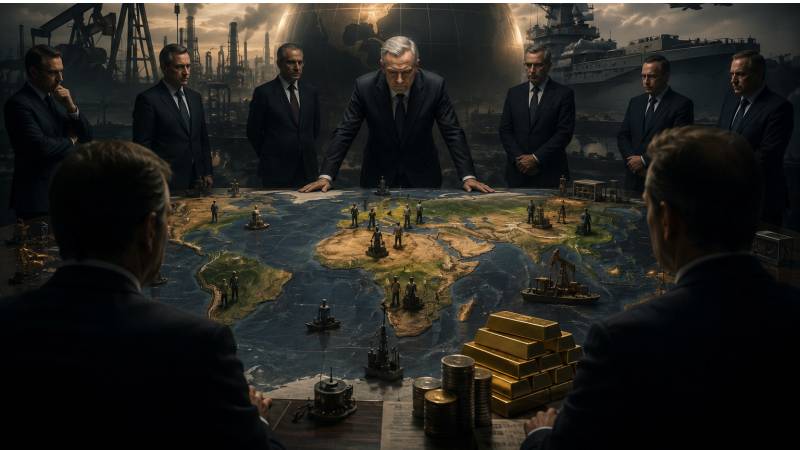
Bound by nostalgic imperial visions and driven by insatiable ambitions, three major capitals—Washington, Tel Aviv, and Tehran—have effectively hijacked the collective destiny of civilization. What appears on the surface to be a bitter, existential ideological war between bitter adversaries is, in truth, a functional alliance of convenience that systematically dismantles the moral, legal, and economic foundations of the modern world. Operating under a shared logic of force over law, this destructive triumvirate plays havoc with the planet’s vital resources, holds global supply lines hostage, and accelerates humanity's descent into a turbulent abyss of structural collapse and geopolitical chaos.
The contemporary architecture of international politics is no longer defined by normative diplomatic restraints or multilateral accords, but by a profound and deliberate breakdown of international law. In examining the triangular matrix linking the United States, Israel, and Iran, an observer witnesses a striking paradox: three regimes locked in hyper-visible, violent confrontation, yet collectively relying on that very hostility to project unchecked state power. While diplomatic rhetoric paints their interactions in the dramatic colors of mortal enmity, their practical maneuvers expose a deeply transactional ecosystem. In this high-stakes theater, state sovereignty, universal human rights, and sovereign protections are casually sacrificed to feed the engines of strategic encirclement and ideological domination.
The conventional geopolitical narrative frames this theater as a simple binary struggle between Western democratic alliances and a revolutionary Axis of Resistance. A deeper strategic analysis, however, reveals how these apparent adversaries functionally validate, preserve, and reinforce one another’s regional dominance. The United States, wrestling with the gradual fading of its unipolar dominance, relies on an entrenched, aggressive regional antagonist in West Asia to justify a permanent military footprint, posture as an indispensable guarantor of maritime security, and maintain lucrative defense-industrial relationships across the region.
Whether through direct military campaigns, economic coercion, or proxy conflicts, the actions of these three states continuously drag humanity toward an abyss of instability and ruin.
Israel, navigating internal political fractures and external strategic dilemmas, skillfully leverages the perceived threat of a hostile state apparatus in Tehran to cement unwavering, bipartisan backing in Washington. This perpetual emergency environment allows Tel Aviv to bypass long-standing diplomatic imperatives regarding regional self-determination, rewrite customary laws of anticipatory self-defense, and systematically engineer a restructured regional order where raw military might dictates permanent borders.
Tehran, conversely, thrives on this climate of perpetual siege. The ruling hierarchy in Iran utilizes the immediate proximity of American forces and Israeli tactical operations to whip up domestic nationalist cohesion, crush internal socio-political dissent, and justify pouring vast national wealth into ballistic arsenals and asymmetric proxy networks. The three powers thus participate in a self-sustaining cycle of conflict. Each entity requires the perceived wickedness of the other two to consolidate domestic authority, silence internal political opposition, and evade international oversight. The grand language of liberation, national defense, and revolutionary resistance acts merely as a convenient facade for a far simpler motive: the preservation and expansion of regime power at any cost.
Beyond the political maneuverings, this tri-state dynamic inflicts catastrophic damage on the earth's tangible wealth and global stability. Driven by nostalgic dreams of past grandeur and strategic dominance, these three states play havoc with global energy reserves, financial networks, and agricultural supply lines. Critical maritime choke points—most notably the Strait of Hormuz and surrounding waterways—are routinely transformed into volatile combat sectors. The resulting shocks to energy markets cascade directly into the developing world, driving up transportation costs, sparking runaway inflation, and deepening food insecurity for millions who have no stake in this distant geopolitical game. The wealth of nations and the natural assets of the planet are reduced to expendable chips in an insatiable war machine, starving vulnerable economies of the stability needed for basic human development.
The most enduring casualty of this grand strategic theater is the sanctity of international law itself. Over recent decades, the customary principles that once anchored international statecraft—respect for sovereign borders, the prohibition of extrajudicial assassinations, and the inviolability of civilian infrastructure—have been methodically dismantled. When global titans conduct unilateral strikes, execute targeted assassinations in foreign territory, or orchestrate broad offensive campaigns without multilateral mandates, they establish a lawless precedent. When regional opponents respond with indiscriminate barrage warfare, maritime blockades, and proxy warfare within populated areas, the normative international order dissolves entirely, replaced by a predatory reality where hard power alone determines legitimacy.
This erosion creates a severe moral hazard that reverberates far beyond West Asia. By demonstrating that strategic goals can routinely override international law without meaningful institutional consequences, Washington, Tel Aviv, and Tehran send a clear, dangerous message to every rising power: international treaties are obsolete, ethical constraints are weak, and survival belongs solely to those who possess the means for absolute destruction. This unraveling of global boundaries triggers a worldwide scramble toward multipolar militarization, forcing sovereign states to conclude that security lies not in diplomacy or international consensus, but in acquiring advanced weaponry and hard power capabilities.
Ultimately, the persistent turmoil driven by this triumvirate unmasks the core failing of a global system captive to unchecked state ambitions. Whether through direct military campaigns, economic coercion, or proxy conflicts, the actions of these three states continuously drag humanity toward an abyss of instability and ruin. The illusion of an inevitable ideological war conceals a shared commitment to force over justice. Until the international community reclaims its authority to hold powerful nations accountable to universal standards, the world will remain trapped in a perilous paradigm, where the peace, resources, and future of humanity are continuously sacrificed on the altar of geopolitical supremacy.