

In public policy, few metrics are as influential and as frequently misunderstood as the Value of Statistical Life (VSL). It quietly shapes decisions across domains such as public health, road safety, disaster risk reduction, and climate adaptation. Yet, its role is often underappreciated in policy debates, particularly in developing countries like Pakistan, where competing priorities and constrained fiscal space make every allocation decision critical. In such a context, VSL should not be viewed as a theoretical construct, but as a practical and necessary tool for economic appraisal and funding prioritisation.
A common misconception is that VSL assigns a monetary value to human life. This is neither accurate nor appropriate. Instead, VSL reflects how much society is collectively willing to pay for small reductions in the risk of death. It captures trade-offs — how much safety people value relative to income or other goods. This distinction matters because it reframes VSL as a measure of societal preferences, not a judgement on human worth. When used correctly, it becomes an instrument to ensure that public investments align with what people value most: safety and survival.
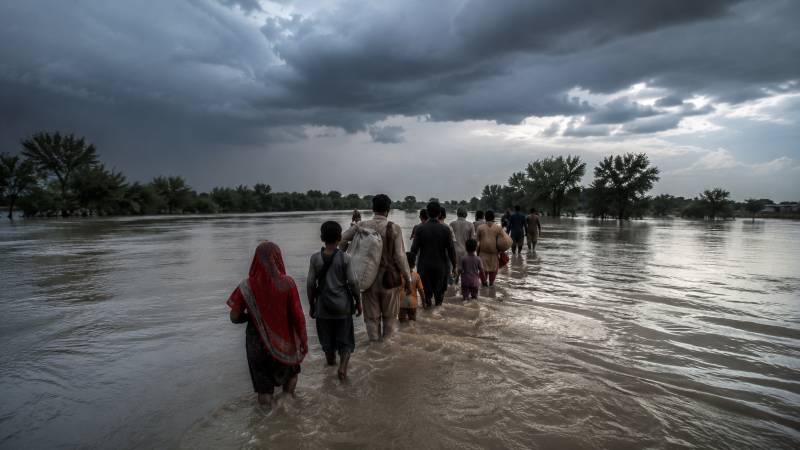
For Pakistan, the case for adopting a structured approach to VSL is particularly strong. The country faces increasing exposure to climate-related disasters, including floods and heatwaves, alongside persistent challenges in urban safety, air pollution, and public health infrastructure. These risks are not only social concerns; they are also economic burdens. In the absence of a consistent framework for valuing mortality risk, there is a danger that life-saving interventions are systematically underfunded simply because their benefits are not adequately quantified.
Globally, recent evidence from developing countries demonstrates that VSL can be both estimated and applied meaningfully, even in resource-constrained settings. A 2024 study in Mexico estimated a national VSL of around USD 2 million, with substantial variation across regions depending on income levels and risk perceptions.
This study did not merely produce a number; it used VSL to inform policy analysis by translating mortality risk reductions into economic terms, enabling a more comprehensive evaluation of public health and environmental interventions. Such evidence reinforces an important point: VSL is not a luxury reserved for high-income countries, but a versatile tool that can support better decision-making in developing economies as well.
Other recent academic work also highlights that VSL estimates can be adapted to local contexts through careful empirical methods, including labour market analysis and stated preference surveys. These approaches are particularly relevant in countries like Pakistan, where formal labour market data may be limited and informal economic activity is significant. The flexibility of VSL estimation methods allows policymakers to triangulate evidence and develop estimates that better reflect local realities rather than relying on transferred values from entirely different economic contexts.
A well-designed, context-specific VSL framework can strengthen cost–benefit analysis, improve funding decisions, and ensure that investments reflect societal priorities
This distinction is crucial because many of the VSL estimates currently used in Pakistan are adapted from high-income countries and adjusted for income differences. While this approach provides a useful starting point, it may not fully capture local risk attitudes, cultural factors, or behavioural patterns. Relying exclusively on such adjusted values risks misrepresenting the true economic value of mortality risk reduction in Pakistan, which in turn can lead to inefficient or suboptimal allocation of scarce public resources.
Integrating VSL into Pakistan’s policy framework would allow it to function as a consistent benchmark in cost–benefit analysis. For example, investments in flood early warning systems could be evaluated not only in terms of infrastructure costs, but also in terms of the number of lives saved, monetised using VSL.
Similarly, heat action plans in urban centres could be assessed by estimating reductions in heat-related mortality and comparing those benefits to implementation costs. In air quality management, VSL can help quantify the health benefits of reducing pollution levels, thereby strengthening the economic case for regulatory action. In each case, VSL enables policymakers to move beyond abstract benefits and make explicit, comparable trade-offs.
Equally important is the role of VSL in supporting funding decisions. Whether allocating domestic budgetary resources or preparing proposals for external financing, VSL can provide a clear and transparent justification for investments in life-saving interventions. It helps articulate the return on investment in terms that resonate with both economists and policymakers: how much is being spent to save a life, and how does that compare across different interventions? This level of clarity is essential for improving accountability and ensuring that public funds are directed towards the most impactful uses.
However, adopting VSL is not without challenges. There are methodological complexities in estimating it accurately, particularly in data-constrained environments. There are also ethical sensitivities surrounding the perception of “pricing” human life. These concerns should not be dismissed. Instead, they should be addressed through transparent communication and robust methodology.
Policymakers and researchers must emphasise that VSL is about valuing risk reduction, not assigning a value to individuals. Clear communication can help build public trust and ensure that VSL is understood as a tool for better decision-making rather than a moral judgement.
Ultimately, the question is not whether VSL should be used, but how effectively it can be integrated into Pakistan’s policy and planning processes. With increasing pressure on public resources and rising exposure to risk, ignoring the economic value of life-saving interventions is no longer tenable. A well-designed, context-specific VSL framework can strengthen cost–benefit analysis, improve funding decisions, and ensure that investments reflect societal priorities.
Valuing life appropriately is both an economic necessity and a policy responsibility. In a country like Pakistan, where the stakes are high and resources are limited, adopting VSL as a guiding principle in economic appraisal is not just an option; it is an essential step towards more rational, equitable, and resilient development.