

Pakistan has pulled off a spectacular diplomatic feat by saving the world from a catastrophic escalation potentially spiralling into a Third World War. Its highly balanced stance on the military conflagration in the Middle East, backed by constant, intensive and honest diplomacy soliciting peace, has finally paid off. When the world was waiting with bated breath for the expiry of the deadline given to Iran by President Donald Trump, vowing ‘death for a whole civilisation’ and unspeakable pain for Iran, Pakistan’s leadership was intensively pleading for peace with Washington DC, Tehran and other major capitals.
President Donald Trump’s threats had created the spectre of a destructive move to end the war. His frustration knew no bounds. He was desperate to find an off-ramp to exit the war. He had apparently forgotten all his war objectives and was only obsessed with the reopening of the Strait of Hormuz. He feared the imminent collapse of the global economy and his potential humiliation in the mid-term elections. These fears rendered him amenable to wise counsel for restraint and acceptance of the Iranian list as the framework for peace.
Just hours before the deadline, President Donald Trump accepted a two-week ceasefire on all fronts and immediate talks based on the Iranian ten-point list as the framework for peace. This left Tehran with no excuse to reject the ceasefire and talks. This was a momentous occasion. The ceasefire, though provisional, brought a sigh of relief to the world and the capitals in the vicinity of the theatre of war.
War is hell, and only the dead have seen the end of it. Not too long ago, the world had impotently watched the brutal destruction of Gaza and the death of over 80,000 Palestinians, including a huge number of children. Iran has experienced a long and brutal reality of survival since the Islamic Revolution, facing wars and political and economic coercion.
It needs to move with the comity of nations as a peace-loving country, enjoying all sovereign rights in accordance with international law and the UN Charter. Pakistan’s sincere and honest efforts to broker peace did not go unnoticed by the Iranian people. It was moving to see them erupt into jubilation, celebrating the ceasefire and the prospects of peace. They have been yearning for the end of economic sanctions and isolation.
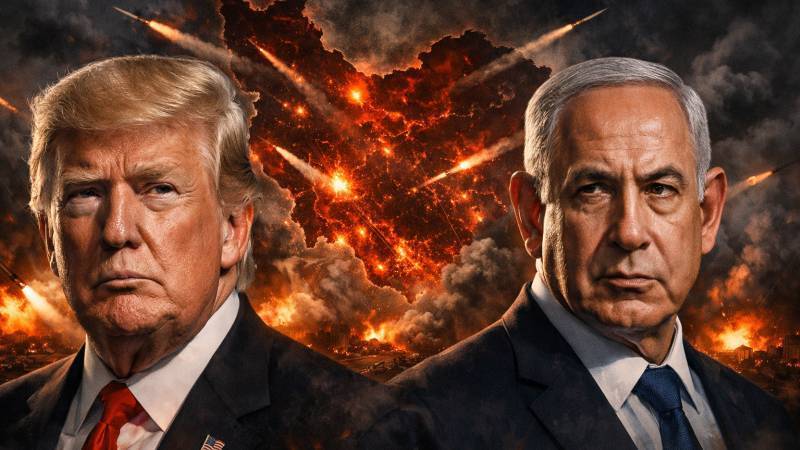
The Jewish leader Benjamin Netanyahu seems annoyed with Donald Trump’s abrupt decision for a ceasefire on all fronts
Both sides are being represented by high-level delegations. The US delegation comprises the Vice President J.D. Vance, the US Envoy to the Middle East, Steve Witkoff, and President Trump’s son-in-law, Jared Kushner, while Iran is represented by the Speaker of Parliament, Muhammad Bagher Ghalibaf, and Abbas Araghchi. Along with President Masood Pezeshkian, they remain the only senior survivors of the clerical regime after the criminal assassination of the top-ranking political leadership, including Ali Khamenei. The composition of the delegations demonstrates their commitment to broader and permanent peace.
The Jewish leader Benjamin Netanyahu seems annoyed with Donald Trump’s abrupt decision for a ceasefire on all fronts. Probably, he wanted to exclude Lebanon from this ceasefire. He did not stop airstrikes on Beirut even after the ceasefire was announced, saying that Lebanon was not included in it. Despite a rebuke from the USA, he continues airstrikes in parts of Lebanon. He will throw spanners in the peace process.
He is utterly frustrated by the outcome of the war. His plan for regime change in Iran has been rendered asunder; his dreams of a Greater Israel lie in tatters, with the Abraham Treaties hanging in limbo. Notwithstanding its massive losses, Iran has bravely survived. Its territorial integrity, political structure of governance, and defence war machine remain intact. It has successfully denied its adversaries the satisfaction of achieving any of their war objectives. This is what is viewed as the defeat of the invaders.
The onerous responsibility Pakistan has undertaken in mediating the war has just begun. The transmission of messages between the warring groups was the easy part of the mediation. The delegations are about to undertake the serious part of their deliberations. They will discuss each and every point, weighing it carefully on the scale of their broader national interests and priorities.
The mediators, with experts behind the scenes, must be able to address differences among the interlocutors, converge different views and interpretations, and find acceptable phrases. This will be a wholly challenging process for diplomats to play superbly skilful roles, using words and phrases that mask the real aims and intentions of one side from the other. In the process, the mediators have nothing to lose save peace. They must mediate honestly between the interlocutors.
There are certain points in the Iranian list which, in my view, will prove stumbling blocks. Firstly, the possession of enriched uranium. Iran has the sovereign right to enrich uranium to a certain degree for peaceful use under the supervision of the International Atomic Energy Commission. The USA and Israel are obsessed with possessing this uranium, which, according to the Iranians, is enriched up to 60 per cent. This is not weapons-grade enrichment, but they do not believe them.
Secondly, the USA wants the reopening of the Strait of Hormuz for international navigation without any control by Iran. This is what its allies in the Gulf region yearn for. Iran wants to retain some degree of control over navigation through the Strait. This waterway is of paramount significance for the global economy. About one-fifth of the oil supply to the international market, and over 90 per cent of the outbound Gulf oil, flows through it. In the first three weeks of the war, the Gulf states lost 250 billion dollars in oil revenue. Their economies are dependent on oil exports.
Thirdly, the USA will never agree to withdraw from the region. This would be tantamount to admitting defeat in the war and withdrawing from the region in disgrace. The USA has vital national interests in the Gulf region. All the Gulf states have been its allies, hosting its military bases, although they have met with one of the biggest disappointments of their existence, witnessing the USA’s failure to shield them from Iranian attacks. Even then, it will be difficult for the USA to withdraw from the region.
Fourthly, it will also be out of the question for the USA to agree to pay war reparations to Iran. Though the USA was the invader and its aggression inflicted heavy losses on Iran, it will nevertheless be impossible for it to accept the payment of war reparations outright. It can compensate by other means—accepting a form of toll on the navigation of ships through the Strait of Hormuz, releasing Iran’s frozen funds, or lifting economic sanctions.
Fifthly, Iran will seek a broad framework of peace, which may include its allies in the region, including Hezbollah, Hamas, and the Houthis. The Israeli leader will not agree to this and will throw spanners to sabotage the process. In this spoiling game, India may be hand in glove with Israel.