

Click here to read the author's previous article on solar power in Pakistan
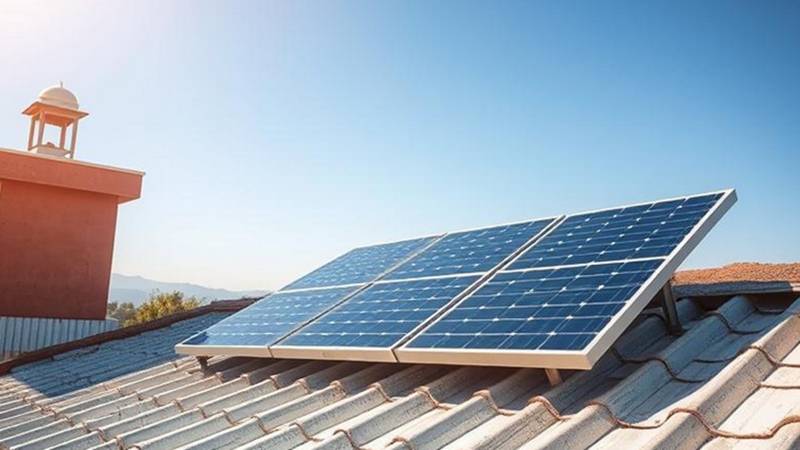
Solar panels installed on roofs are a great source of clean energy. They also minimise the need to build or upgrade expensive transmission lines that bring power from remotely sited large-scale solar farms. Neither does it have the adverse consequences associated with those farms. Rooftop solar panels can also minimise power outages.
As discussed previously, Pakistan is experiencing a solar revolution. According to one expert, 2.96 million households have installed solar panels, out of a total of 34 million households, or 8.7%. But the number of households on net energy metering (NEM) is only 283,000, or less than 1%.
In March, Pakistan’s energy regulators proposed replacing NEM with the Net Billing Tariff (NBT), even though the percentage of all households on NEM is miniscule. According to one source, NEM creates a cost shift of Rs 261 billion. There is no mention of the value created by solar that extends to all customers.
This bears an eerie resemblance to the “cost shift” narrative being put forward in California to vilify customers on NEM. The Public Advocates Office has estimated the cost shift at $8.7 billion. It has been challenged by a dozen energy experts, including professors, researchers, consultants, utility executives and regulators.
To put things in perspective, it’s worth noting that California’s population of 40 million is dwarfed by Pakistan’s population of 250 million. However, if California was a separate country, it would have the 5th largest economy in the world, while Pakistan has the 46th largest. California’s per capita income is $ 81,000, nearly 14 times higher than Pakistan’s.
Fed up with their high bills, 2 million households in California have installed solar panels. That’s 14% of the households. It took almost two decades to reach that number
So, the two are very different. But when it comes to electricity policy, they have many similarities. Both regions have high electricity rates. Pakistan, while having a drastically lower standard of living, charges roughly 23 US cents per kWh (a unit of electricity). California charges even more, at 31 cents per kWh. A utility that serves 5 million customers in northern California, charges 40 cents a kWh and has frequent power outages.
Fed up with their high bills, 2 million households in California have installed solar panels. That’s 14% of the households. It took almost two decades to reach that number. One reason is the high cost of solar in California, which is estimated to be around $3,000 per kW. However, households get a 30% income tax credit on solar installations, so the effective price is $2,100. But that is still twice what solar panels cost in Australia, where a third of Australian households have installed solar panels. In South Australia, the solar adoption rate is around 40%.
In Pakistan, a friend who is an engineer, tells me that the installed cost of solar panels is roughly $400 per kW, a fifth of California’s number. Of course, the per capita income in Pakistan is a lot lower, so even the $400 per kW cost is high by Pakistani standards.
However, electric bills, especially in the summer months, routinely exceed Rs 50,000. They even reach Rs 100,000 for some households. Thus, solar panels are being installed. However, as noted earlier, the percentage of households who have installed solar panels and who are on NEM is tiny. So, what’s the point of ending NEM so early in the evolution of the solar revolution?
I have worked for nearly five decades on energy issues in a dozen countries on five continents. Electricity pricing has been a dominant part of my work. During the last decade, the topic of NEM has been front and centre of many policy debates and I have testified on the topic in the US and Canada.
What stands out is the paranoia utilities have when faced with rooftop solar installations. They view themselves as monopolies, shielded from competition by regulation. They view customers who install solar panels as competition and blame them for shifting their costs to less affluent customers, thereby raising rates for other customers. The metaphor that is often invoked to vilify them is “Robbin Hood in Reverse.” However, high rates caused them to install solar. It’s not the other way around.
In 2016, when solar panels began to gather momentum in California, the state introduced NEM 2.0. It introduced a monthly non-bypassable charge and mandatory time-of-use rates. In 2023, despite objections from ten experts, it replaced NEM with the net billing tariff (NBT). Export compensation was lowered drastically by about 80%. I debated the transition with a well-known academic.
Some parties wanted the California regulator to go two steps further and not only impose a grid access charge of $8/kW-month but impose NBT retroactively to all solar customers. These gratuitous steps were not approved.
As it is, the massive drop in export compensation dramatically extended the payback period for customers. Unsurprisingly, solar installations fell dramatically. At the same time, the percentage of new solar installations that were paired with batteries went up since customers found it more valuable to consume at home what they would otherwise have exported to the grid.
California has a very aggressive goal to mitigate climate change by promoting electrification of home heating and water heating systems and vehicles. However, high electric rates stand in the way. Unfortunately, it has decided to put up yet another roadblock to solar installations. It has introduced a fixed monthly charge of $24.15 for all customers (low-income customers have a lower fixed charge which comes on top of a 35% discount on their total bill which has been in place for decades).
California decided to make these desperate changes once solar installations reached 14% of households. Pakistan’s rush to kill NEM is premature. It should not be following in California’s footsteps, at least not yet, when NEM customers do not even represent 1% of all households.