

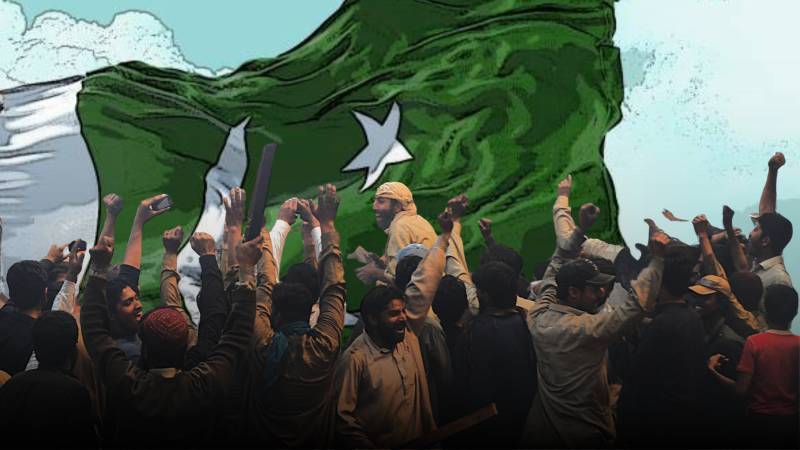
Polarisation is no longer an occasional feature of our politics. It has become the air we breathe. It runs through assemblies, media channels, universities and even homes. Family dinners turn into shouting matches. Friends part ways over political loyalties. What once brought people together now pushes them apart.
Pakistan today is bleeding from within. A venomous polarisation has seeped into the nation’s soul. Every crisis, whether economic collapse, institutional decay or natural calamity, is weaponised in partisan warfare. Where adversity once inspired unity, it now triggers recrimination and mockery. This is not the Pakistan imagined in 1947 but a land divided against itself, where politics has turned into pathology.
Our history is littered with fractures. The ideological battles of the 1960s, with Zulfikar Ali Bhutto’s populism pitted against conservative coalitions, entrenched confrontation. The 1990s deepened the split as dynastic rivalries between the PML-N and PPP made political loyalty tribal. Families aligned with one camp shunned the other. That bitterness echoes in today’s feud between these parties and the PTI. The ouster of Imran Khan in 2022 and the contested 2024 elections widened the chasm. Rivals are no longer treated as opponents but as existential threats.
This division is not a harmless clash of opinions. It has become a crisis of empathy. Each tragedy, instead of uniting people, drives them further away. When floods destroy villages, political blame is the first response. When blasts tear through markets, leaders use the dead as numbers to score points. Even funerals, which should be moments of collective grief, are turned into political theatre. The dead are reduced to statistics. Their families fade into the background. Polarisation empties tragedy of meaning.
The digital age pours fuel on this fire. Pakistan has about 67 million social media users. Platforms built to connect people now amplify outrage. Algorithms reward anger, not reason. Digital armies and partisan pages, often backed by political actors, thrive on vilification. Every debate descends into abuse.
A society distracted by its own quarrels becomes easier to rule, and easier to exploit
Every failure is politicised. People view every issue through the lens of political loyalty. Policies and failures are not examined for accountability but defended out of partisanship. Calamities are no longer moments of collective mourning; they have become stages for partisan sniping. One side mocks the suffering in a rival’s stronghold, the other retaliates with equal spite. Leaders remain shielded from responsibility while ordinary grief is reduced to a score to settle.
The divisions do not stop at politics. They seep into everyday life. Hate grows where compassion should be. Racism and ethnic slurs circulate freely online. Provinces mock one another’s misfortunes. Marginalised communities are ridiculed even while they live under displacement and poverty. Sectarian anger resurfaces at every turn, adding new layers of division.
The damage is not only emotional. It corrodes institutions, too. Polarisation seeps into classrooms where young people are taught suspicion before knowledge. It enters workplaces where colleagues measure loyalty before competence. It paralyses governance, where policy becomes impossible without first calculating which camp it will please or offend. The cost is borne by citizens who want solutions.
The loudest voices in this environment are not those of victims. They are silenced beneath the noise. Survivors of violence and disaster struggle to be heard. Mothers who bury their children find their sorrow drowned out by television debates. Farmers who lose land to floods watch politicians argue about budgets instead. People living in camps after displacement are forgotten once the cameras leave. Their voices disappear in the fog of division.
This brokenness serves power well. Division distracts from deeper questions of justice, rights and accountability. Leaders thrive when people are too divided to stand together. Media thrives when anger keeps ratings high. Parties thrive when every issue is reframed as a battle for loyalty. A society distracted by its own quarrels becomes easier to rule, and easier to exploit.
History shows that nations survive crises not through wealth or weapons but through the strength of their social fabric. Pakistan has demonstrated this strength before. Communities rebuilt homes together after disasters. Citizens formed human chains in defence of schools and hospitals. Families opened their doors to neighbours in need. Those were moments when empathy outshone division. But those moments are now harder to find.
Disagreement is natural. No society can exist without differences. But what we are living through is not a healthy debate. It is destruction. What we face is not diversity of opinion. It is division as a permanent condition. Once it becomes permanent, it corrodes the possibility of common ground.
Rebuilding will not be easy. It requires more than appeals to unity. It requires small acts of listening. It requires giving space to grief without turning it into a contest. It requires recognising hate speech for what it is, and refusing to excuse it in the name of politics. It requires leaders to act with responsibility, though their record gives little hope. And it requires citizens to resist the temptation of easy anger.
The choice before us is simple. Either we allow polarisation to keep eroding our bonds until nothing is left but a fractured society, or we take the more challenging path of listening, restraint, and empathy. Between ruin and repair, the decision is ours.