

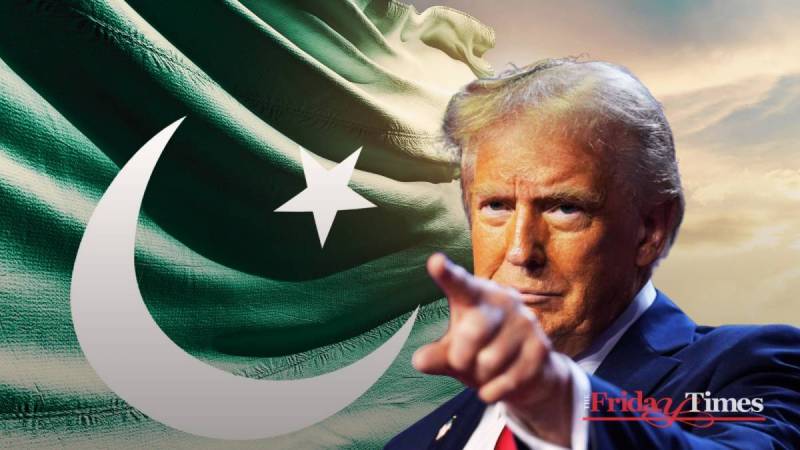
As far as India and Pakistan’s separate bilateral relations with the United States are concerned, the tables seem to have turned – at least for the past few months.
India’s Prime Minister Narendra Modi would proudly say, “President Doland Trump is my phrend” – a phrase now increasingly used by many Indians on social media to mock him and to question whether someone who was his ‘phrend’ could act in the way he has been towards India of late.
The US President has made several posts on Truth Social (which he then also shares on X) stating that India had a “dead economy”, and has repeatedly claimed in public that he played a pivotal role in brokering a ceasefire between the two nuclear-armed neighbours, ending their brief May conflict.
The culmination of the downturn in relations between the US and India came when the former imposed a 50% tariff on Indian imports, half of this being a penalty for trading with Russia, particularly for buying oil from it. This tariff is the highest so far against any US trading partner.
By contrast, Pakistan has secured a relatively better deal on tariffs, at 19%, and has repeatedly been mentioned in favourable terms by the US President. India – and its largely compliant media, which by and large follows instructions from the ruling BJP – could not stomach the fact that the world’s most powerful man invited Pakistan’s army chief for a one-on-one lunch lasting well over two hours. President Trump tweeted that the US and Pakistan had reached a deal whereby US companies would help explore Pakistan’s oil reserves, and there would be collaboration and cooperation on rare minerals and cryptocurrency. Both of the latter are issues in which the US President is very interested, and he has emphasised that these are among his priorities.
Yet some Pakistanis – often supporters of a particular political party known for placing their leader’s interests above those of the nation – dismiss this improvement, arguing that being a friend of the US should in itself be a cause for concern
Soon after, Pakistan’s Foreign Minister Ishaq Dar met US Secretary of State Marco Rubio in Washington, where the latter thanked Pakistan for its crucial role concerning Iran and in helping to manage the conflict between it and Israel. President Trump also alluded to this, saying that Pakistan is one country that knows Iran very well – implying it played a key role during Iran’s aerial conflict with Israel.
As for India, it appears to be becoming something of a pariah as far as the US is concerned. In response to the punitive 50% tariff on its exports to America, India has put on hold plans to buy arms from US companies. Several major American retail chains that source goods from India – such as Walmart, Amazon and Target – have cancelled orders, saying they cannot absorb the price increase caused by the tariffs. This is expected to hit Indian exporters hard, with significant layoffs anticipated.
India’s thriving IT sector could also be badly affected if the Trump administration pressures American companies to operate and provide such services domestically rather than outsourcing them – or if he simply imposes a tariff on imported services, which is essentially what these are. Either way, Indian IT and tech firms are bracing for the negative fallout from the US tariffs.
India’s media, which takes most of its cues and talking points from the BJP government, has been criticising the US government day in and day out – targeting President Trump in particular, claiming he has made a big mistake and that the US economy will take a major hit because of the tariffs on India. The Indian media, along with the government, seem either to have completely misread President Trump’s personality and his approach to running his second presidency, or to be paralysed by pride and hubris. Whatever the reason, India’s response to the US is likely to further complicate its already-degraded relationship with Washington.
This brings us to another matter – namely, how some Pakistanis view their country’s vastly improved ties with the world’s most powerful nation. Logic and reason would suggest this is a positive development, especially at a time when one of Pakistan’s principal adversaries finds its relationship at perhaps the lowest point in its history.
Yet some Pakistanis – often supporters of a particular political party known for placing their leader’s interests above those of the nation – dismiss this improvement, arguing that being a friend of the US should in itself be a cause for concern. They point out that America has treated many of its friends poorly in the past, with such friendships not always ending well.
However, these naysayers overlook a basic fact: Pakistan has been in this situation before, and has also been at the other extreme – when America treated it as an outcast and pariah. The country has come full circle and learnt from experience. India, on the other hand, finds itself in such a predicament for the first time, and its situation is decidedly worse than Pakistan’s – regardless of what the future may hold for both relationships. For now, Pakistan enjoys a clear advantage while its biggest adversary is at the opposite end of the spectrum – a decidedly desirable position to be in.