

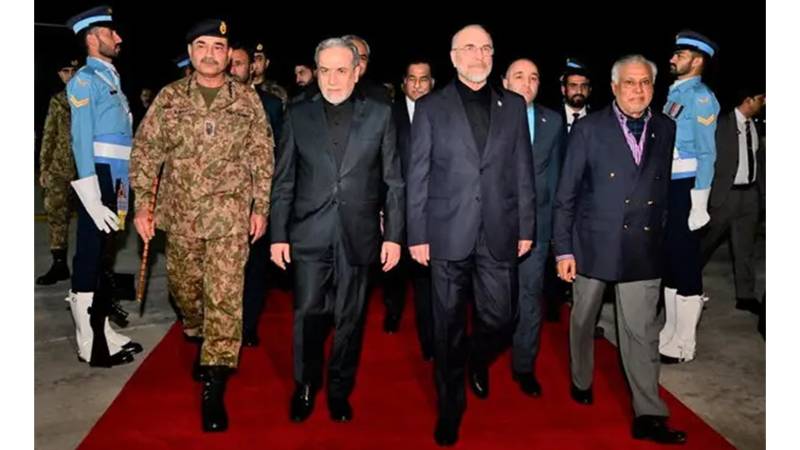
As the delegations arrive in Islamabad, they bring with them the wreckage of every assumption that launched this war. They bring the memory of strikes that achieved no strategic decision, of religious narratives that collapsed before they could be deployed, of digital platforms that inflamed three continents while solving nothing, and of an international order so thoroughly dismantled by its own architect that the parties to a 21st-century war must turn to old-fashioned shuttle diplomacy human beings on airplanes, carrying messages between exhausted enemies because nothing else remains.
Pakistan did not choose this moment. The moment chose Pakistan. And the question that matters is not whether Islamabad deserves the role, but whether it understands what the role actually requires.
Pakistan's credentials as interlocutor rest not on its power but on its position. It shares nine hundred kilometres of border with Iran. It hosts the largest Shia Muslim population outside Iran. It has functional if perpetually strained relations with Washington. It carries no colonial memory in Iranian historical consciousness, no territorial ambition in the Middle East, and no logistical complicity in the war's prosecution. The Gulf states that might otherwise have played this role disqualified themselves the moment they opened their airspace. Pakistan kept its hands clean not always by design, but the cleanliness is real, and in diplomacy, real cleanliness is a credential no communiqué can manufacture.
The question that matters is not whether Islamabad deserves the role, but whether it understands what the role actually requires
Yet credibility has prerequisites that classical international relations theory states with uncomfortable precision. An interlocutor must be perceived as neutral by both parties, must possess leverage over both, and must be capable of delivering what it promises. Pakistan meets the first condition partially, the second asymmetrically, and the third only within honest limits. It has genuine leverage with Tehran border, trade, religious solidarity, and a relationship that survived decades of American pressure to isolate Iran. It has almost no leverage over Washington. And it can deliver facilitation, not compliance. It can bring parties to language. It cannot make Israel stop. It cannot make the United States abandon its role as Israel's unconditional strategic guarantor a relationship that no treaty governs and no ally can moderate, where the client has so thoroughly captured the patron that the tail has long been wagging the dog.
Israel is the structural hole at the centre of every conversation happening in Islamabad. The party that initiated the strategic logic of this war is absent from the table and Iran, for its part, cannot abandon Hezbollah, because a Tehran that walked away from its allies under American pressure would teach every future partner the same lesson: this patron cannot be trusted when the pressure rises. Pakistan's role is not to resolve this contradiction. It is to keep both parties talking long enough for exhaustion to do what diplomacy cannot.
Pakistan is not mediating a war it is architecting the corridor through which exhausted empires retreat without admitting they are retreating. That corridor, once built, belongs to Pakistan.
The attempt to frame this conflict in religious terms collapsed from every direction simultaneously. It was rejected by Arab citizens who finally understood what their governments had refused to admit that security bought from Washington is rented, not owned, and the lease expires precisely when it is needed most, trapping their own governments in the cruelest of contradictions: publicly claiming neutrality while privately enabling the strikes. Iran refused the bait. Tehran fought in the language of sovereignty, anti-imperialism, and international law the language of the Global South that has heard the civilisational argument before and buried the generation that believed it.
The United States brought the hammer of the mightiest military in history. Iran brought the patience of a civilisation that has outlasted every empire that ever struck it. Patience, in the end, is the one weapon no defence budget can purchase.
This is the world that Washington’s doctrine of institutional contempt produced the systematic dismantling of the rules-based order by the very state that built it. Previous American administrations, however hypocritical, however selective in applying international law, at least maintained the fiction of the framework. That fiction mattered. What replaced it was not multipolarity and balance. It was anarchy in the precise meaning the term carries in international relations theory, the absence of any legitimate authority above the state. When the most powerful nation on earth announces that rules are for the weak, it does not create a new order. It creates a jungle. Operation Epic Fury is not despite that doctrine. It is its direct harvest. Islamabad did not summon this gathering. Exhaustion did and exhaustion, when it arrives simultaneously on every side, has always needed a room.
The war mongers built their monument in smoke and rubble. Peace will be built, as it has always been built by someone nobody remembers, in a room nobody photographed, on a night when exhaustion finally defeated ambition.
Into this jungle, Pakistan has brought the oldest available instrument: physical presence, trusted channels, and the willingness to carry a message between parties who cannot speak to each other directly without losing face. Oslo was not made in Washington it was built in Norwegian country houses over quiet dinners that the world knew nothing about until the agreement was already done. In every case that mattered, the real conversation happened somewhere else, between someone the cameras were not watching. The Cuban Missile Crisis was resolved in a conversation between Robert Kennedy and Anatoly Dobrynin that the world did not learn about for thirty years. Henry Kissinger flew secretly to Beijing using Pakistan as his cover story and his transit corridor and that secret produced the most consequential diplomatic opening of the twentieth century. Pakistan was the corridor then. Pakistan is the corridor now.
The digital age offered the illusion of a new diplomacy and delivered instead a new accelerant. Every strike was on X within minutes. Every inflammatory statement by every hardliner on every side became a trending event before any government spokesperson had drafted a response. The compression of time was the compression of diplomatic possibility because diplomacy needs time for positions to soften, for leaders to find face-saving language without their publics noticing the softening, for the constructive ambiguity that every peace agreement requires to be assembled without being immediately destroyed by a leak. Digital tools proved extraordinarily effective at making peace harder and war easier. But when the guns needed to stop, every party reached for the oldest tools available: a trusted human being, a closed room, a handshake that nobody photographed until it was already done. X did not end the Cuban Missile Crisis. X did not produce Oslo. X did not unlock China. Digital diplomacy is the noise. Old-fashioned diplomacy remains the signal.
For Pakistan's role to produce enduring peace rather than a temporary pause, Islamabad must understand that a ceasefire is not a settlement. Every agreement in this region without structural architecture has collapsed. Pakistan cannot deliver everything but it can anchor the process, transforming a one-time corridor into a permanent diplomatic infrastructure, because no other single state holds this geometry: Muslim-majority, nuclear-armed, non-Arab, credible to Beijing, still heard in Washington, trusted on Tehran's border even after strong ties with Arabs remained cautious and neutral. That geometry is precisely what enduring peace requires not the power to impose, but the position to persuade because peace cannot be enforced by institutions the powerful have dismantled, nor built by states with something to gain from the war's continuation. It can only come from those with everything to gain from its end, sitting in rooms the cameras cannot enter, carrying messages the platforms cannot distort, speaking languages of sovereignty and dignity that exhausted enemies can accept without humiliation.
Islamabad is not the stage of this peace. It is the room before the stage, the room where the agreement that the world will applaud is quietly, patiently, invisibly made. That room, and the credibility to convene it, is Pakistan's most durable gain from a war it did not start, did not want, and may yet help to end.