

I have had extensive experience in Pakistan’s print media, having worked at three of its most widely-read English newspapers. I have also been fortunate enough to make the transition from print to digital and online journalism, just around the time that digital and online was picking up, and both readership and advertising spend was shifting towards it. Now, it is estimated that the ad spend in Pakistan on digital and online media almost matches that of television, with print a distance third – and it won’t be long before digital and online ad spend rises to the top. Also, some of Pakistan’s top entertainment TV channels now make as much revenue every month from their YouTube channels as they do from the TV channel – which gives you an idea of how lucrative good content placed and made available online can be.
Having been a journalist much of my profession life has also made me understand the ethics of reporting – and for that, I would say the best training I got was in my job as a reporter, and later assistant editor at Dawn – where I worked for 11 years. As a reporter, whose writings and words had the potential to affect thousands, if not tens of thousands, you had to be sure that what you were reporting was factually correct and true. Of course, in Pakistan’s usually opaque government machinery and general lack of availability or access to readily available official information, verifying things can take time. But as a journalist and a news organization, you would have to ensure this, that is if you wanted to have credibility.
With the advent of social media and online news, however, this kind of got thrown to the side. The online news cycle is round-the-clock, it’s not a newspaper which has a 24-hour news cycle, its probably more frenetic than television news as well, which also has a round-the-clock constant news cycle. Time is of the essence and the quicker you can post something, the more chance you will have of getting more views, engagement and this will be at the expense of your competitors. More views, engagement, and impressions will likely lead to increased revenue, and this is how the business model mainly works. And of course, now we have social media ‘news’ handles posting just about anything as ‘news’ as long as it's paid for by a client (and the post does not inform readers that it’s paid for).
The system of misinformation and fake news drives itself in a sense — it is self-sustaining
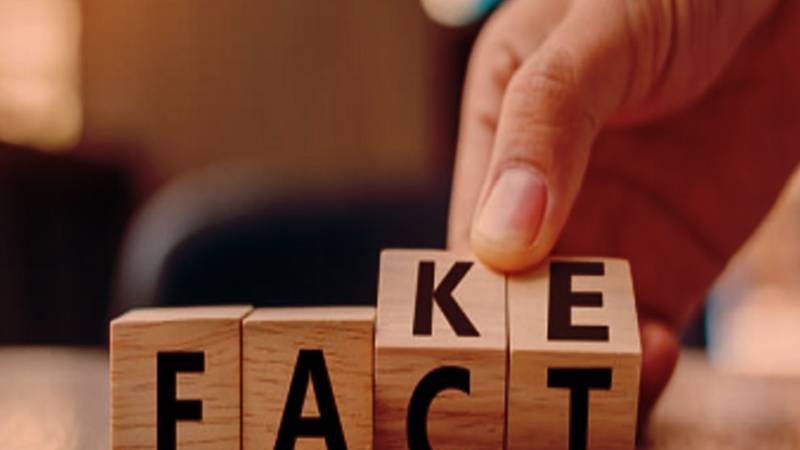
What all this leads to is a highly unregulated news market and one which has a high percentage of unverified news or just plain rumour and hearsay being passed off as accurate and truthful news. Many online news and social media websites that try and pass off as news websites (through their social media handles) lack the controls that are required to verify whether what they are reporting and saying is even true. Usually, something is picked up from a social media post and repackaged as a new report, and posted, without any official confirmation.
A recent and glaring example of this is a ‘news item’ posted over the last few days by online news sites such as The Current, and then a social media handle by the name of ‘Verified Pakistan’ – ironic given that it tends to pass off as rumours and hearsay as verified news.
The report said that hundreds of student visas had been revoked by the US State Department and the foreign students who were studying in the US would have to leave for home. This part is accurate enough – but then it claimed that there were many Pakistanis among such cases. And that part was patently false for the simple reason that the nationalities of the students whose visas had been revoked had not been officially released by the US government or by the universities which had reported the cases. So one can only wonder how these online news sites and ‘news’ handles on social media came up with this claim.
And the usual route is that it was reported by one of the sites first -- which picks it up either from a social media post by an individual or even from a WhatsApp forwarded message. And without absolutely any verification it’s posted and tens of thousands of followers of the social media handle in question take it as fact and share it with others. However, during this sharing and re-sharing barely anyone checks to see if the claim that Pakistani students are affected is even true - even journalists whose job includes verifying something before reporting it don’t check. And as for the online news websites or social media handles masquerading as disseminators of news, their staff are by and large not journalists and they don’t see verification as an essential prerequisite for posting a report claiming to be news.
The bottom line is that the eyeballs, the audience, the impressions, the engagement — and most importantly the ad revenue then go to these posts and the websites and social media handles that put up such posts. The system of misinformation and fake news drives itself in a sense — it is self-sustaining. And there’s little or no incentive for those who use it to stop posting such stories. However, in all these mainstream media organisations lose out in a big way and they have the most to gain by countering this system of fake news.
If and when their proprietors realise this remains to be seen.