

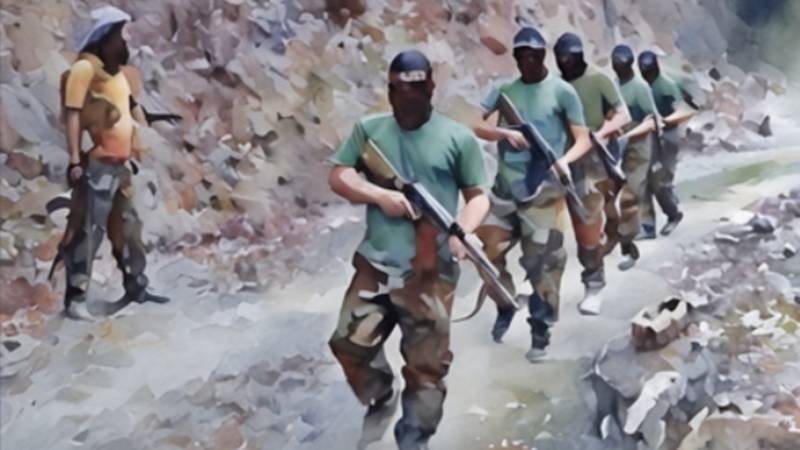
Recent cross-border strikes conducted by Pakistan against Tehreek-e-Taliban Pakistan (TTP) training facilities inside Afghanistan have unveiled a deeper and more complicated game being played by Kabul, sources in both Pakistani and Afghan security agencies have disclosed. Far from dismantling these militant sanctuaries, the Afghan government is accused of relocating them into urban and military-controlled areas, while simultaneously fueling anti-Pakistan narratives among TTP cadres.
According to well-placed security officials in Islamabad and Kabul, Pakistan carried out targeted strikes in provinces including Khost, Kunar, and Paktia in recent weeks. The coordinates for these attacks, they say, were originally shared by the Afghan government itself—only for Kabul to tip off TTP fighters ahead of time to vacate the camps.
“The Afghan authorities played a double game,” said a Pakistani intelligence officer familiar with the operations. “They told us where the TTP was based but warned the militants to leave before our aircraft struck. When their families were hit, Kabul spun the narrative that Pakistan was killing women and children, pushing the militants to escalate violence inside our borders.”
Afghan sources, when pressed, did not deny India’s presence in Kabul but downplayed its operational role
An Afghan security source corroborated that Kabul had indeed relayed intelligence to Pakistan but insisted this was part of a broader “strategic calculation.” According to him, the Afghan government sought to keep lines open with Islamabad while avoiding direct confrontation with the TTP, whose fighters remain heavily armed and deeply entrenched.
A Calculated Move to Urban Sanctuaries
The aftermath of these strikes has seen a worrying development. Sources revealed that the Afghan authorities have advised TTP leaders to move their training camps from the porous border belt into Afghanistan’s urban centers and Northern provinces.
“They told TTP leadership to shift to Jalalabad, Wardag, and even inside military facilities where Pakistani jets cannot target without sparking international uproar,” said the Pakistani intelligence officer.
Embedding militants in populated cities, particularly within Afghan military compounds, makes it increasingly difficult for Pakistan to conduct precise strikes without facing condemnation at international forums like the UN Security Council. “This strategy plays directly into India’s hands,” the Pakistani source added. “New Delhi can point fingers at Pakistan for violating Afghan sovereignty while sponsoring propaganda that Islamabad shelters militants who attack Kashmir.
The India Factor
Indeed, Indian involvement looms large in the evolving security dynamics. According to Pakistani officials, a “Technical Team” based at the Indian Embassy in Kabul acts as a covert financing hub for the TTP. The cell allegedly funnels money through Afghan government intermediaries, ensuring that each TTP fighter receives monthly stipends.
“Every militant gets around 5,000 Afghanis from this channel,” disclosed a Pakistani counterterrorism official. “The goal is simple: keep the TTP resourced and focused on destabilising Pakistan.”
Afghan sources, when pressed, did not deny India’s presence in Kabul but downplayed its operational role. “India has invested in Afghanistan’s infrastructure and maintains influence with certain Taliban factions,” said one Kabul-based official. “But to suggest a direct hand in TTP operations is an oversimplification.”
Yet, in Islamabad’s eyes, India’s fingerprints are clear. By leveraging Afghan soil and exploiting Kabul’s fractured Taliban factions, New Delhi finds a convenient tool to bleed Pakistan without engaging directly.
Refugees as a Recruitment Pool
Another worrying trend involves the refugee population. With Pakistan recently expelling undocumented Afghan nationals, security sources reveal that hundreds of returnees have gravitated toward the TTP, bolstering its ranks.
“We hosted Afghan refugees for over four decades, provided them shelter, education, and livelihoods,” said a senior Pakistani official. “But among them, a dangerous segment always sympathised with militants. Their return to Afghanistan has only replenished TTP manpower.”
For Islamabad, this reinforces the necessity of its controversial repatriation policy, despite criticism from human rights groups. “We had no choice,” the official argued. “It was a matter of national security.”
Factions and Foreign Agendas
When asked why the Afghan Taliban government—historically a beneficiary of Pakistan’s hospitality—would enable the TTP, both Pakistani and Afghan sources pointed to internal divisions.
“There is no single Afghan Taliban,” said the Afghan security source. “Multiple factions exist, each backed by different regional powers. Some are closer to Pakistan, others to Iran, and still others receive quiet support from India. The ones protecting the TTP see Pakistan as a bargaining chip, not a partner.”
This fracturing within Kabul’s leadership has left Pakistan vulnerable to attacks while complicating diplomatic engagement. Islamabad continues to push for dialogue, but sources admit there is little trust left.
Pakistan as the Target
The larger picture, Pakistani analysts argue, is of a country victimised from multiple fronts. On one side, TTP militants wage relentless attacks inside Pakistani territory, often targeting security forces and civilians alike. On the other, India exploits Afghan soil to finance and legitimise these groups. Meanwhile, Kabul manipulates the situation to gain leverage, appease militants, and malign Pakistan internationally.
“We are facing a three-pronged assault,” said a Pakistani security strategist. “The TTP bleeds us with violence, India bleeds us with propaganda and financing, and the Afghan government enables both. Pakistan is the victim here, caught in a regional crossfire.”
For Islamabad, the path forward is fraught with dilemmas: whether to escalate cross-border strikes at the risk of global backlash, or to absorb the costs of continued militant attacks while pursuing a fragile diplomatic track with Kabul.
But one thing remains clear. As TTP fighters entrench deeper in Afghanistan’s urban heartlands, the war against terrorism for Pakistan is entering a new and dangerous phase—one in which Islamabad finds itself increasingly isolated, vilified, and victimised.