

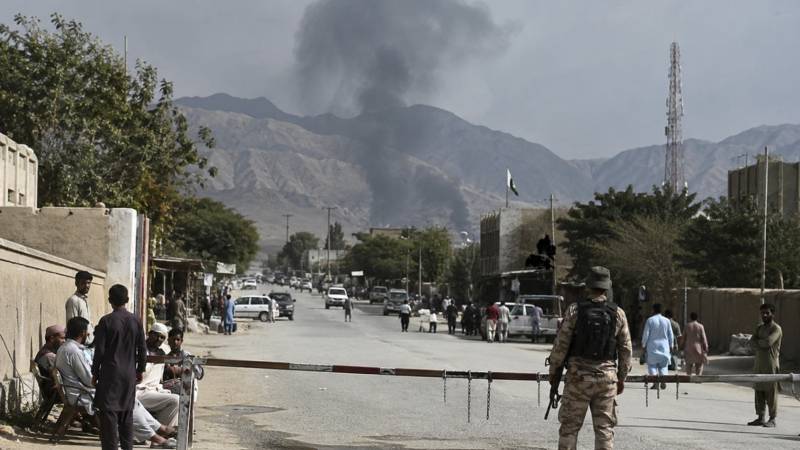
On a festive Eid day, as the Khatib (خطیب) stood to deliver the sermon, an armed insurgent commander suddenly took the microphone and began addressing the crowd on human rights and the separatist movement in Balochistan. This incident reflects the deeper transformation of the region; once known as a centre of political consciousness and nationalist discourse, Mastung today appears overshadowed by an atmosphere of fear and uncertainty.
Geographically, Mastung is located to the south of Quetta, the capital of Balochistan province. Nushki lies to its west, while Bolan and Sibi are situated to its east. Its total population is approximately 260,000. Mastung is located nearly 50 km from Quetta (Pakistan Almanac). If one wishes to travel to Karachi or interior Sindh from the border area of Chaman, the route passes through Mastung, Kalat, and Khuzdar (Balochistan High Court).
During the time of Akbar, Mastung was part of Qandahar (Sangat Academy Quetta, February 06, 2015). There is a hill junction between Quetta and Mastung, also known as “Lak Pass” (لکپاس / Urdu), or the “Tunnel”. Crossing the frontiers of Mastung, one route passes through Nushki District and Taftan (نوشکی۔ تفتان / Urdu) into Iranian Balochistan, Sistan and Balochistan (سیستان و بلوچستان / Urdu). Similarly, another route from Mastung passes through Darya-e-Bolan, Sibi (سبی / Urdu), and Jhal Magsi (جھل مگسی / Urdu), eventually leading to Jacobabad in Sindh province.
When we spoke to the local political influencer Aslam Baloch regarding this matter, he said: “Ninety-nine per cent of the population here speaks Balochi and Brahui. Persian is also spoken here. To promote religious education, the Jamia-e-Naseeriya Madrasah (جامعہ نصیریہ مدرسہ / Urdu) was established in 1935.” It is also a historical fact that the first missionary centre of Balochistan was established in Mastung.
Before Partition, the name of Mastung was “Aurangabad”, while another name associated with it was “Khudabad” (خداباد / Balochi, Urdu).
The political history of Mastung stretches back centuries. The beginning of the Baloch national movement in 1907 is also associated with the birthplace of Mir Abdul Aziz Kurd, the great nationalist leader of Balochistan, who founded an organisation called Young Baloch (ینگ بلوچ / Urdu) in 1920 at the age of just 13 (Sangat Academy, April 17, 2024). This organisation marked the beginning of organised political movements in Balochistan. Later, the organisation was renamed “Anjuman-e-Ittehad Balochistan” (انجمن اتحاد بلوچستان) and evolved into a regular political party (Independent Urdu, November 07, 2020).
Because of the interconnected geography, it becomes relatively easier for groups involved in militant or sectarian activities to move quickly across districts, provinces, and even neighbouring countries
In 1929, Yusuf Aziz Magsi was arrested for publishing an article titled “Faryad-e-Baluchistan” against the tyrannical Prime Minister of the Kalat State, Shams Shah, and was imprisoned in Mastung Jail (مستونگ جیل / Urdu) for the first time. In 1937, the “Kalat State National Party” was also established in Mastung. The mother organisation of Baloch nationalist politics, the “Baloch Students Organisation” (BSO), known in Balochi as “Warna Waninda Gall” (ورنا وانندہ گل / Balochi) and in English as “Youth Students Organisation”, was also established in Mastung and became one of the strongest and most organised districts of the BSO (History of BSO, December 04, 2025). The first council session of the BSO was held in Karachi (Brief History of BSO). Mastung is also regarded as the land of several important political and religious figures.
Since Mastung is considered a stronghold of nationalist politics, and because much of the nationalist political struggle in Balochistan originated from this region, the establishment has often sought to destabilise the area through political distraction and instability. Under the rule of General (r) Pervez Musharraf, prolonged political uncertainty once again emerged in Balochistan.
At the same time, as part of what many describe as a deliberate strategy to push the region towards religious extremism, sectarian hatred, and instability, a climate of violence emerged in Mastung. Hundreds of Shia pilgrims became victims of terrorism in the Mastung area in the name of sectarian conflict (BBC World, January 21, 2014). Mastung gradually became a hub for jihadist organisations.
Before the general elections in 2018, a major explosion occurred in the “Kanak” (کانک / Brahui) area of Mastung, in which around 149 people, including Nawabzada Siraj Raisani, were killed, while more than 180 were injured (BBC World, July 16, 2018). No meaningful investigation was conducted into the incident, nor was any significant progress made in the case. The suicide attack on Maulana Abdul Ghafoor Haideri (مولانا عبدالغفور حیدری / Urdu) is also considered part of this wider pattern of religious extremism.
In that attack, 28 people lost their lives, and around 35 were injured (Daily Dawn, May 13, 2017). Similarly, more recently, 59 people were killed and over 120 injured in an explosion during Eid Milad-un-Nabi (عید میلاد النبی / Urdu, Arabic), yet no arrests were made, no investigation report was released, and the government appeared indifferent towards the matter (The Guardian, September 29, 2023). No group officially accepted responsibility for the attack. The same month, an attack targeting Jamiat Ulema-e-Islam (F) leader Hafiz Hamdullah (حافظ حمداللہ) also took place in Mastung, injuring 11 people, including Hamdullah himself (Daily Dawn, September 14, 2023).
Baloch separatist organisations have claimed responsibility for some of these incidents in Mastung, while others have been attributed to religious extremist organisations. The entire situation has often been used to place blame on nationalist forces in Balochistan, especially in Mastung. Those seeking to discredit nationalist politics may also exploit religious tensions and disturbances for political purposes.
Mastung, Balochistan, has remained a place of considerable strategic importance for both sectarian groups and Baloch insurgent organisations. However, in March 2025, a clash reportedly took place between the secular Baloch Liberation Army (BLA) and Islamic State Khorasan Province (IS-KP) (Jamestown, September 20, 2025).
In this regard, when we spoke to Shahzada Zulfiqar, a senior journalist who closely follows extremism and political conflict in Balochistan, he said:
“If we look at the past, these elements already existed in Mastung, but their influence increased significantly when the government or establishment in Punjab during the 1990s began to pressure them heavily elsewhere. As a result, they found greater space here. During this period, conversions also took place in Mastung, Dera Murad Jamali, and Naseerabad.”
He further added:
“Another important factor is the train route and the movement of pilgrims through this region. It is evident that these are Saudi proxies, while Iran supports Shia groups, and this conflict reflects Saudi investment. Gradually, these groups found refuge here and strengthened their roots.” (2023).
Before 2000, incidents of target killing were relatively rare, but afterwards, attacks on processions and Imambargahs (امام بارگاہ) intensified, and hundreds of pilgrims were killed, including in incidents such as the Hazara Town attack. Shahzada further noted that anti-Shia elements, Tehreek-e-Taliban Pakistan (TTP) (تحریک طالبان پاکستان / Urdu), and ISIS all maintain a presence in the region.
Mastung (مستونگ), a historic city of Balochistan (بلوچستان), has increasingly transformed into fertile ground for extremism, shifting from a centre of peaceful nationalist politics towards radical religious influence. One of the primary reasons behind this transformation is its strategic geographical location.
The city is connected to several key routes: it lies between Quetta (کوئٹہ), the provincial capital, and Chaman (چمن) on the Afghan (افغانستان) border; between Nushki (نوشکی) and Taftan (تفتان), which lead towards Iran’s Sistan and Balochistan (ایران، سیستان و بلوچستان) province; and through various corridors extending from the Bolan River (دریا بولان) and Jhal Magsi towards interior Sindh, as well as from Khuzdar to Kalat and onwards to Karachi. Another route from Surab (سوراب) district extends into the Makran region (مکران ریجن).
Because of this interconnected geography, it becomes relatively easier for groups involved in militant or sectarian activities to move quickly across districts, provinces, and even neighbouring countries. This accessibility has historically made Mastung convenient for both sectarian organisations and Baloch insurgent groups to operate within the region. Despite these challenges, Mastung’s true identity remains rooted in intellectualism, nationalist consciousness, and a tradition of peaceful political struggle.