


Our plane banked on its approach into Beijing and the Great Wall swung into view. Like a dragon lying along the high peaks of China, it seemed to be sunning itself one final time in the late afternoon sun before the winter winds would sweep in from the vast plains of Mongolia.
Fighter jets gleamed in the distance as our plane taxied toward the terminal. As our taxi sped toward the hotel, we were surrounded by Stalinist architecture.
The next morning, we went to see the Forbidden City. Even though it lay just half a mile from our hotel, we managed to get lost. A few students came out of nowhere and spoke to us in English: “Where are you going?”
I said “To the Forbidden City.” They led us toward a multi-storied building. It felt a bit odd but given the innocent look on their faces, we followed them in and went up the stairs into a large room. Landscape paintings dotted the walls. We had fallen into a tourist trap.
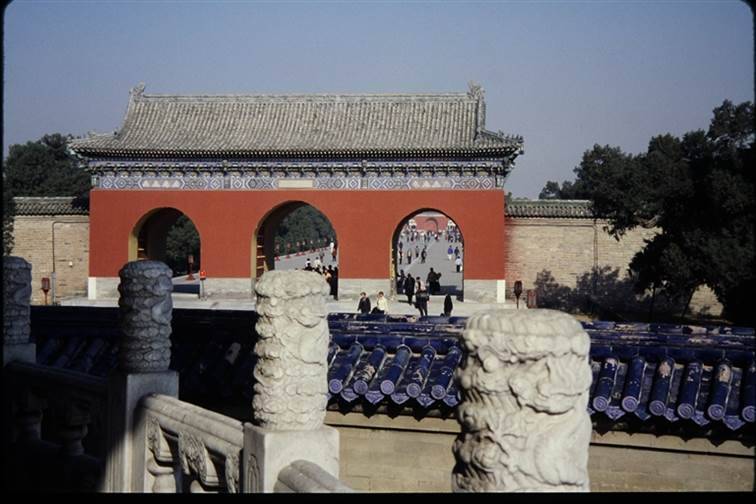
We wound up buying a couple of paintings, just to gain our freedom. They said, “Make a right turn and you will see the Forbidden City.”
We reached the destination. It was a heavily guarded entrance. As we began entering it, a soldier stopped us and said: “This is the headquarters of the Communist Party. The tourist entrance is further down on the left.”
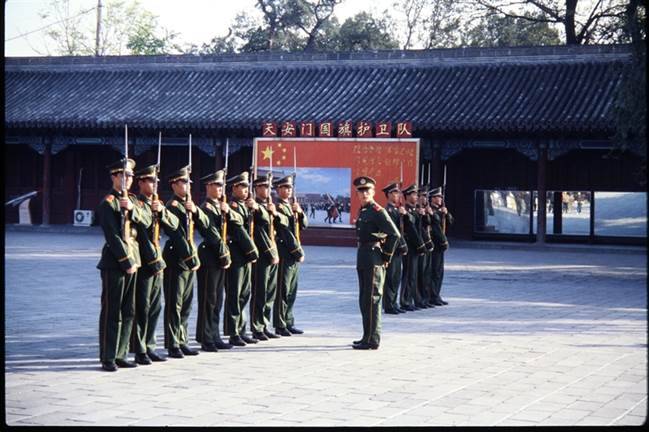
We found the correct entrance and entered the compound. An army detachment was putting on a ritualistic display. I took out my camera and focused on the commander. He looked at me and signalled, “No.”
We wandered around the Forbidden City. It was one vast empty museum with 9,999 rooms[] since the Nationalists had taken the most valuable treasures to Taiwan in 1949.
The next day, we hired a car. The driver, a college student, was our guide for the next three days. He was taken aback at my knowledge of the Chinese revolution. He calmed down when I told him that even though I lived in the US, I was a Maoist in Karachi.
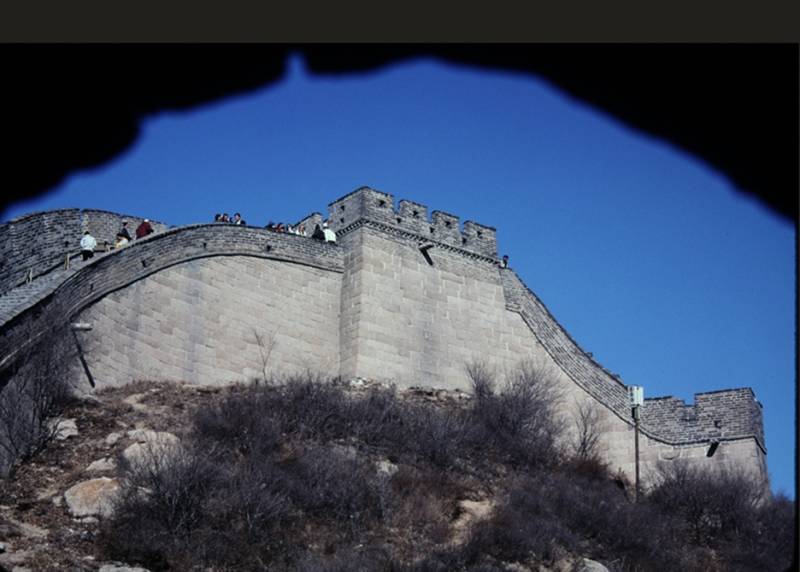
We went with him to the Great Wall at Badaling, where Richard Nixon had posed in 1972. Decades earlier, a young Mao Zedong had said, “He who does not reach the Great Wall is not a true man.” On the way down, we ran into a Japanese man who expressed his apprehensions that China would overtake Japan in his children’s lifetime. As a fortification, the Wall looked forbidding but later we would come across a statement attributed to Genghis Khan, that a wall was only as strong as the pockets of its guards.
We also saw the Temple of Heavenly Peace and the tombs of the Ming Dynasty. They were strangely empty but suggestive of China’s grand history. We learned that red was a special colour in China even before Mao arrived, since it denoted good luck. Yellow was even more special, and signified the emperor. Mao had very cleverly grafted communist imagery on historical symbols, just as he had anchored his quotations on a foundation laid by Confucius.
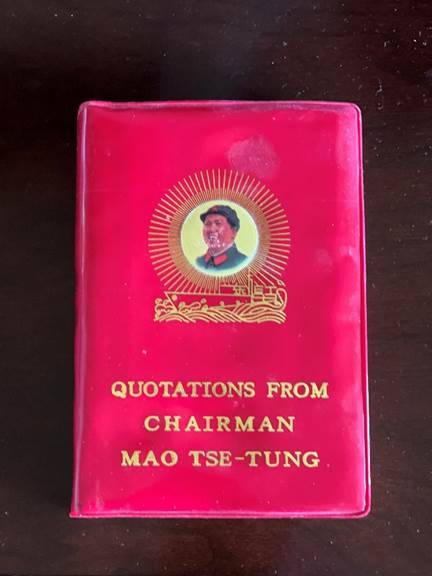
It was also clear that Mao was no longer running China, even though he remained interred in a huge mausoleum in Tiananmen (Gate of Heavenly Peace) Square. I found it difficult to get copies of Mao memorabilia but finally found a badge, a hat and the Red Book.
Little red taxis were abundant in Beijing. We took one to see the Peking Opera, whose stirring images and plaintive melodies about the journey of the Eight Immortals to Korea still ring in our hearts.
One afternoon, we took a “cycle rickshaw,” akin to what we had seen in Karachi. The driver took us through a bazaar by pedalling through some back streets. He stopped suddenly at a traffic intersection involving four-lane roads. As the light turned green, he began pedalling to reach the other side before the light turned red. The road was uphill, causing beads of perspiration to rise on his clean-shaven head. Along the way, he had to compete for space with buses and cars. I gave him a sizable tip once he concluded the scariest ride of our life. Of course, he demanded double the extra amount and on sensing hesitation, reached into my wallet and took out the difference.
In Beijing, we checked out the military museum. I felt like I was looking at the evolution of weaponry in the Pakistani military and felt compelled to take a picture. But photography was forbidden
We flew to Xian early the next morning. The guide who met us was friendly but spoke broken English. Along the way, we drove by a farmer who was having an argument with a policeman holding a rifle. The farmer had raised his shovel in a threatening manner, and I was happy that the speed of our taxi did not allow us to see the grand finale of the Xian Opera!
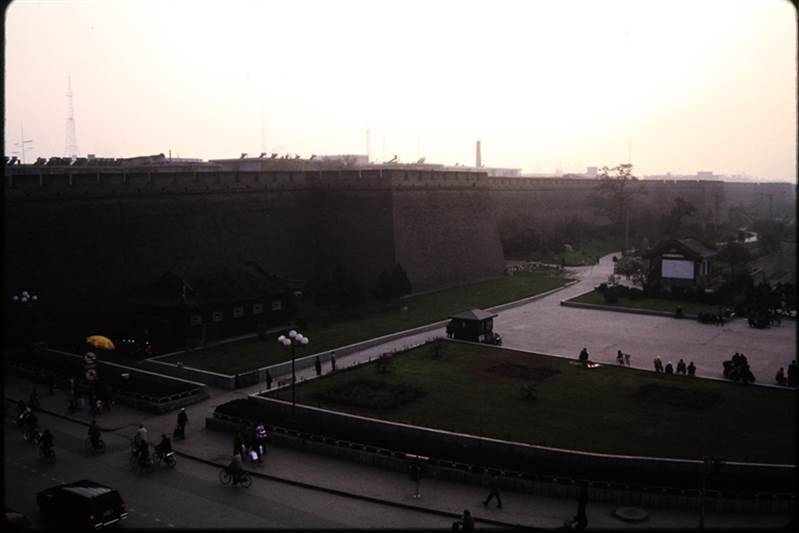
In Xian, we saw the historic City Wall whose incredible views of the old town deepened as the sun began to set.
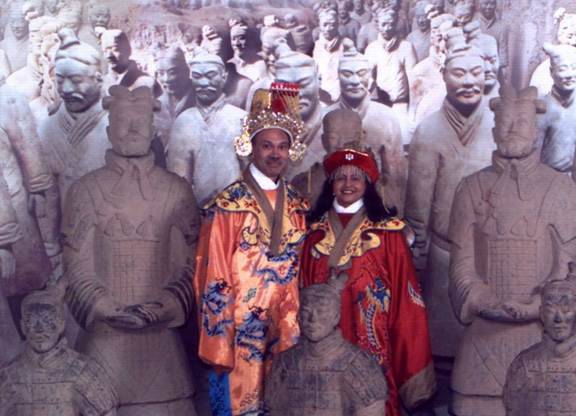
Finally, we came to the place that had put Xian on the itinerary of every world traveller: the tomb of Emperor Qian containing thousands of life-sized terra cotta soldiers. These were first discovered in 1974. Originally, they were in colour. But even without the colour, they made an incredible statement.
We walked into a studio which had paintings on the wall. They did not try to sell us any of the paintings but showed us a photograph of Bill and Hillary Clinton, dressed as Emperor and Empress. They offered to do the same for us. We put on imperial apparel and had our picture taken.
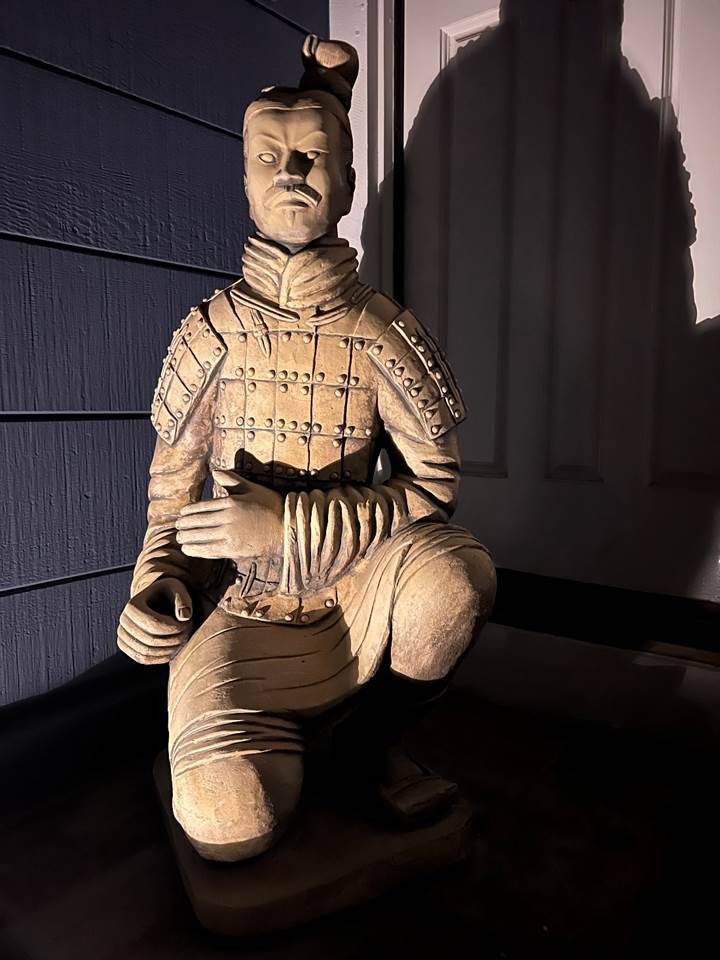
A few months after our return home, I was able to buy a full-sized replica of a Xian soldier at a local hardware store. He graces our entrance.
In Xian, as we were departing the grounds of the City Wall, we encountered an elaborately costumed cast that was putting on a Star Wars like performance for several hundred Japanese tourists.
We went to see the Grand Mosque in the afternoon and decided to offer our ‘Asr prayers there. I was taken aback when my guide whisked away my wife to a separate building. I felt my prayers had been accepted when she appeared with him a half-hour later.
The men at the entrance to the mosque welcomed me. But seeing my uncovered head, they placed a cap on it that dropped down to my eyebrows. Thankfully, it held up during the sajdah. After the prayer, a musalli proudly showed me that the entire Quran had been carved on the walls in wood. Another one invited me to a Sufi-style langar (dinner) outside the prayer hall, but I excused myself, because I had to catch an evening flight.
Back in Beijing, we checked out the military museum. It had a vast collection of Korean War memorabilia, including American U-2’s and F-86’s (which were the mainstay of the Pakistan Air Force in the 1965 war with India) that had been shot down by Chinese gunners. Also on display were various generations of Chinese fighters and tanks. I felt like I was looking at the evolution of weaponry in the Pakistani military and felt compelled to take a picture. But photography was forbidden and when I tactfully pulled out my camera from my leather jacket, a guard signalled “no.”
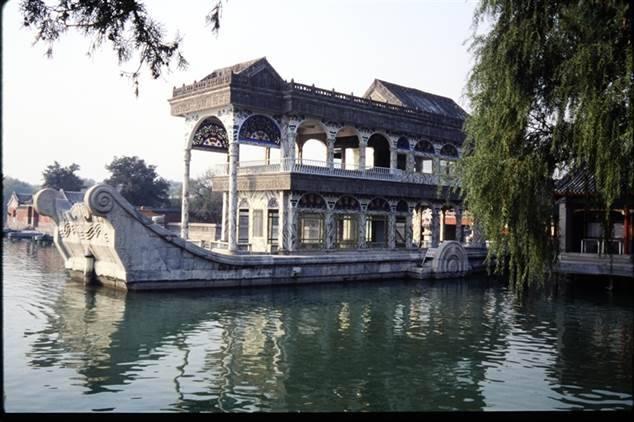
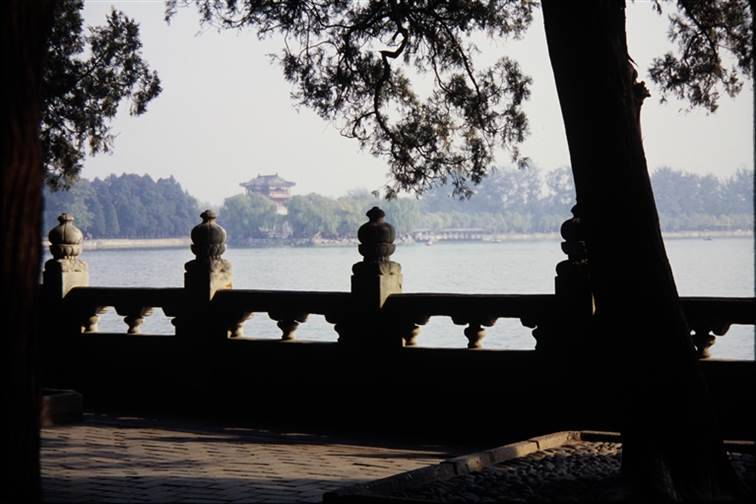
One afternoon, we had lunch at a Muslim restaurant that served naan and kababs. It was tasty. On our last day, we went to tour the Summer Palace, which was built for the use of the Empress Dowager. Inside the palace we took a ride on a dragon boat in a lake and later walked along a portion of the covered walkway that circles the lake.
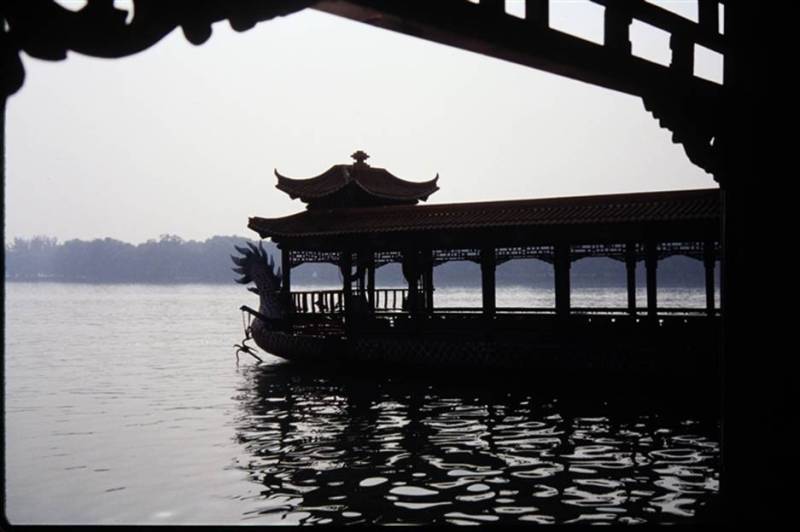
As we were leaving the palace, snow flurries arrived. The next day, the wind began to strip off the amber leaves from trees as our plane lifted off the tarmac. At home, we went to see the film Crouching Tiger, Hidden Dragon. Much of it featured the Forbidden City at its zenith. It was a great homecoming.