

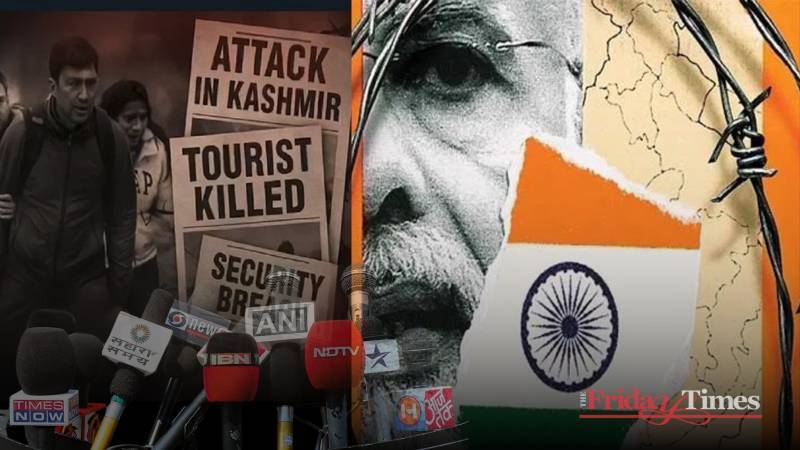
State power actively shapes and edits historical memory as a core element of state-building. This process involves erasing conflicting identities and re-narrating past events, often violent ones, to establish a singular “official” state narrative that promotes a specific “agenda” while discarding alternative accounts of truth.
This perfect assertion reflected in the Modi government moved from democracy to redefining democracy itself—turning narrative control into a governance strategy, since its inception.
In this regard, following the rise of “new media,” propaganda and “alternative facts” have become key instruments for the Government of Modi (GoM), individuals, and interest groups seeking to reshape the narrative around specific information. Leveraging fundamental storytelling techniques, the Narrative Policy Framework (NPF) enables policymakers to utilise media channels to disseminate these revised narrations.
A clear example of this in action is how India effectively constructed a narrative, is previously during the insignificant Balakot strikes – by prioritising how events unfold to fit a desired conclusion, this narrative framework embraces a fault system of existing belief and deceitfully tries to fit in coherence theory of truth – where truth is based on past believe and an internally woven tapestry, not requiring threads of factual correspondence to the external world. This stands in sharp contrast to the correspondence theory, which anchors truth firmly in the verifiable facts via the landscape of experience.
This pattern of narrative construction persists, dangerously escalating towards a potentially catastrophic outcome that would transcend the power of any narrative to rationalise
The familiar drumbeat of geopolitical tension reinvigorated once more, portrayed by Indian media as alleged strikes against terrorist sites within Pakistan, is being strategically leveraged to cultivate the same particular narrative. This narrative, it seems, is primarily intended for domestic consumption by the GoM, fulfilling a need that has become increasingly pressing since the tragic event in Palgham.
So, Pakistan's call for an independent inquiry into the Palgham attack represents a more evidence-based approach, prioritising factual verification. In contrast, India appears to be constructing its narrative on a system of beliefs rooted in past occurrences, a stance that may not align with the truth, given Pakistan's current internal and external challenges, which could preclude a similar course of action.
Amidst the ongoing conflict between Pakistan and India, this pattern of narrative construction persists, dangerously escalating towards a potentially catastrophic outcome that would transcend the power of any narrative to rationalise. At that point, the losses for both nations would become unimaginably profound.