

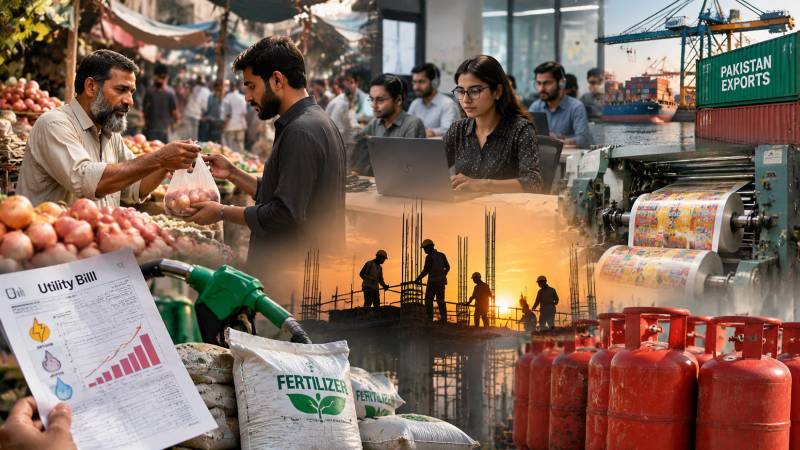
We often discuss capitalism as though it belongs exclusively to stock exchanges, corporate towers and industrial empires. But capitalism does not always arrive wearing a suit. Sometimes it arrives as a bank charge, a school fee, a utility bill or a price tag on survival. Honestly, it’s everywhere woven right into daily life. It decides the price a street vendor asks, how marketing agencies strike deals, the way a packaging company figures out its profits, and even how software companies treat their people. At its core, it’s all about who has money and who needs work. For most people in Pakistan, capitalism isn’t just an academic concept; it’s the daily reality shaping money, status, opportunities, and power.
Classically, capitalism means private ownership of production for profit, while communism wants all resources shared to erase class divides. But Pakistan is somewhere else entirely — a mix of private business, government influence, family connections, protected industries, and a huge informal market. The issue isn’t simply “capitalism exists”; it’s the specific kind we’ve let develop. In theory, a good market rewards hard work, innovation, and value. But what happens when connections matter more than creative ideas? Or when knowing the right person opens more doors than coming up with a better product? When the people controlling entry are cherry-picking the winners, competition isn’t as free as we like to imagine. It starts with small things. Maybe a vendor sizes you up before quoting a price. A shopkeeper’s attitude shifts based on your car. Office workers are often seen as costs, not talented people driving business forward, and it’s the same story at marketing agencies, packaging firms, and software companies. Big-money clients get attention and flexibility; small clients wait and wonder if they matter.
Money can buy products; it shouldn’t buy the right to treat the seller poorly. But let’s be honest, we often act like having more cash equals being more worthy. The person with money gets more respect. The one on a paycheck is just supposed to be grateful. Things get more serious when this attitude grows beyond individual dealings and seeps into whole industries. Sugar, fertilizer, steel, energy—these aren’t just products you buy at the store. They decide how much food, farming, building, and business cost across the country. If a few players control these markets, everyone pays, from the boardroom to the dinner table. Look at the Competition Commission of Pakistan. In 2025 alone, it fined companies more than Rs2.36 billion for things like price-fixing and secret deals just steel companies got hit with penalties over Rs1.5 billion. Fertilizer sector fines topped Rs375 million. These aren’t just accusations—they’re fines after investigations. Why does this matter? Because regular people can’t investigate big industries or haggle with major market players. They just pay whatever price is handed to them.
Let’s stop pretending profit is some kind of crime. Businesses that invest, train, and take risks deserve to succeed. But if they’re teaming up to rig the game or keep out newcomers, they’re not winning through skill; they’re just closing the gates to everyone else. And you can dress it up however you want, with slogans about free enterprise, fancy conferences, and so on. But as long as powerful insiders set the rules for themselves, real competition gets squashed. The guy guarding the door isn’t protecting the market; he’s guarding his own turf. Take the energy sector, for example. In late 2026, reports came out that LPG was being sold way above official prices. For low-income families who need LPG for cooking, this meant they were overcharged by more than Rs1.4 billion in just five days — at least, according to industry estimates. Even if that number isn’t perfectly accurate, it raises a blunt question: How do these overcharges happen, and who’s looking out for regular people? Cooking isn’t optional; if the price shoots up, households simply have to swallow it. Whenever prices spike, it’s the poor who are told to tighten their belts—use less, travel less, give up more. Yet the ones benefitting from weak competition rarely have to justify their profits. The rules seem to bend one way.
Even business representative bodies, like chambers of commerce, reflect these imbalances. They should connect entrepreneurs with the government, help shape policies, and solve industry problems. But in practice, big players dominate the discussion. A huge industrial group doesn’t see the same problems as a home-run business or a small digital agency struggling to pay staff on time or deal with surprise taxes. Interests sometimes overlap, but not always. A conversation in March 2026 about these chambers made this tension obvious. Traders, big manufacturers, small businesses—they all need something a little different. Large firms have a voice, and yes, they contribute a lot. But smaller firms shouldn’t be an afterthought. Look at the Pakistan Business Council. It started with a handful of big corporations; now it claims to represent 106 companies making up a huge chunk of the economy. That doesn’t mean they’re doing anything wrong, but it does show how organized big business can steer the conversation.
Meanwhile, thousands of small businesses, freelancers, and startups rarely get the same access. Can a small software house bring their issues to policymakers as easily? Can a packaging company get heard on tariffs and finance problems? Is anyone listening when a freelancer struggles with international payments, the way they listen to industrial giants? These chambers shouldn’t turn into exclusive clubs for the wealthy and connected. Their success isn’t about glitzy dinners and minister meetups. What matters is whether they help open doors for everyone: better access, fairer disputes, real support for exporters, and policy changes that actually make a difference. Money shouldn’t be the only thing that buys attention.
Capitalism isn’t just in the banks or laws. It lives in the favours we give, the unfairness we accept, the hierarchies we don’t bother to challenge.
This isn’t some attack on successful entrepreneurs. The business owner who employs twenty people brings value, too, even if they don’t have the capital, influence, or old-school connections of someone running a thousand-person company. Smaller firms create jobs, teach new skills, and bring in foreign sales. Nowhere is this clearer than in Pakistan’s digital ecosystem. The Pakistan Economic Survey for 2025–26 reported $3.38 billion in ICT export remittances from July to March. That’s a $2.91 billion trade surplus, with over 34,000 IT companies registered by March 2026. Technology services now matter—a lot.
Freelancers drive plenty of this growth. In July and August 2026, they pulled in about $352 million, up 44% from a year earlier. These aren’t just the Googles or Microsofts. This is young people working from small rooms, coding, designing, writing, consulting for international clients. Maybe they hire two or three more as their gigs grow. Local software houses handle global projects without needing political friends to back them up. Yet even as the country cheers their results, the system doesn’t always make it easy. Freelancers hit payment hurdles. Small firms can’t always get loans or attention. Digital agencies handle overseas accounts but stay on the sidelines in policy talks, which are dominated by old industries. Do we actually support them, beyond the hype?
It’s the same for packaging and small manufacturing businesses. They need steady energy prices, reliable supplies, sensible rules. When their costs—or payments—swing wildly, planning gets impossible. If we want exports to grow, we need more than optimistic speeches we need a system where small businesses can compete on actual merit, not personal connections. That’s where we have to draw a line between growth in numbers and what people actually feel. Rising exports, investments, and remittances look great, but those headlines don’t show whether new jobs are being made, or if new businesses get a fair shot. You can have impressive stats in one sector while small firms elsewhere barely keep their doors open.
Not all investment is equal. What matters: Does it build something new? Teach new skills? Increase exports? Boost wages or support local suppliers? When investment just props up old structures, the rich get richer, but not much else changes. This isn’t just a Pakistani story. Big money shaping things happens everywhere the difference is how strong the rules (and the rule-keepers) are. Where regulators, courts, and laws actually work, it’s tougher for powerful people to rig the game. Where those systems are weak, “free enterprise” becomes an excuse for closed-door deals. But attacking every big company or pining for non-stop government control isn’t the answer either. Too much state interference kills risk, creativity, and often, progress. Hardworking entrepreneurs aren’t the problem; freeloaders are. Risk deserves reward, and productivity should pay off. The real disaster starts when government can’t tell legit profits from unfair wins. It gets worse when influence trumps innovation, when regulations shield insiders instead of helping consumers, and when the loudest voice belongs to those with the best connections.
Religion even weighs in: Islamic teachings openly warn against hoarding and price-gouging. “None hoards except a sinner.” Maybe this should matter in a place where public life often borrows religious language. Making a profit isn’t automatically ethical just because it’s legal. Truth is, we’ve ended up valuing people based on what they can extract, not what they create. We admire the guy who has the right contacts, not the woman designing the next big thing. We highlight CEOs on stage, forget about the workers below them, and talk “ease of business” on panels without asking how much paperwork a small firm faces before it even sees a customer.
The hierarchy that starts on the street corner only gets dressed up differently inside boardrooms or government offices. Vendors judge by looks, bosses by bargaining power, big firms by market share—and powerful groups still chase special access, leaving independent entrepreneurs waiting for a genuinely fair system. A healthy market should reward effort and talent, not just privilege. Business groups should speak for the whole spectrum, not just the wealthy. Regulators should act before abuse gets out of hand, not just fine companies after the fact. Software houses, freelancers, packaging companies, and small exporters all deserve a real seat at the table, not just the occasional shoutout in a speech.
The real test isn’t how much wealth we generate, but how fairly everyone can join in. Can anyone start a business without needing an influential sponsor? Can a small company stay afloat without being pushed out? Does a worker get his share of the value he creates? Can a consumer trust that prices reflect actual competition, instead of closed-door deals? When we stop questioning everyday hierarchies, they turn into destiny. The real debate isn’t left or right, socialist or capitalist slogans it’s about whether everyone truly gets a chance, or if those with wealth and access just keep squeezing out everyone else. Capitalism isn’t just in the banks or laws. It lives in the favors we give, the unfairness we accept, the hierarchies we don’t bother to challenge. Until we face those, everywhere from the street corner to the meeting rooms, we’ll keep mistaking privilege for talent, and access for achievement.