

There are two kinds of people when it comes to living 'life': those who consider it a blessing, and those who regard it as a liability. Both have to live as an unavoidable necessity. However, people of the first kind are very limited. They either have every resource (wealth, status, power, energy, intellect, etc.) to experience the true flavour of life, or they are so selfless that they do not need anything from life; they simply live every moment however it is. Once a person is immune to all the odds of life in either way, it becomes very beautiful and loving.
Contrarily, there is a huge number of people for whom life is burdensome and boring. For them, every day is full of challenges. There is a persistent effort to achieve peace and satisfaction, but it never happens. Celebrations, enjoyments, smiles, and laughter are merely fleeting moments which fade away with the ticking hands of the clock. Happiness, for such people, is like a short-lived spring which brings fragrance and hope for a time, and gets thrown away in the warmth of an exhausting summer. Sometimes, it becomes so tough that going along seems impossible. The path becomes so rough that a lot of people decide either to quit it or seek distraction (drinking, smoking, gambling, addiction, etc.) just to avoid the roughness.
Likewise, a significant number of people seem to resent life so much that, if given the choice, they would not have chosen to be born. But all of them ignore one thing: life is beautiful; we don’t know the art of living. There are different circumstances (family, class, education, income, etc.) for different people. Therefore, they ought to experience different flavours. The problem begins when most of us start to idealise a particular way of life as a standard one. When everyone gets deeply immersed in the pursuit of a life which is neither practically achievable nor realistically possible, the problems start. There is a constant race, but no one knows why he or she is running. Life is a beautiful gift. It is a treasure whose worth is incalculable. It should be lived as it is, not how it ought to be. Those who discover this art are the real artists.
A constant effort to indulge the brain in pleasure-seeking behaviour leads to an addiction to remaining in the comfort zone – escapism becomes part of human psychology
Of many, the main reason behind living a difficult life rather than a happier one is psychological in nature: the pursuit of pleasure and the avoidance of pain. When the brain gets satisfied, it releases a pleasure hormone called dopamine. A constant effort to indulge the brain in pleasure-seeking behaviour leads to an addiction to remaining in the comfort zone. Thus, the human brain keeps avoiding pain. As a result, escapism—avoiding daily pressures by keeping oneself busy in the pursuit of short-term rewards—becomes part of human psychology. Anna Lembke, in her book The Dopamine Nation: Finding Balance in the Age of Indulgence, mentions that humans have become dopamine-addicted. When we watch movies, play games, or even scroll through different reels, the brain keeps on releasing dopamine. With time, the body gets addicted to this hormone and demands a higher frequency and intensity of the events and materials which stimulate it. The more the addiction, the more the pain-avoiding tendency emerges within the body. When people get exposed to different realities of life, they try to follow a similar pattern: avoid pain and seek pleasure.
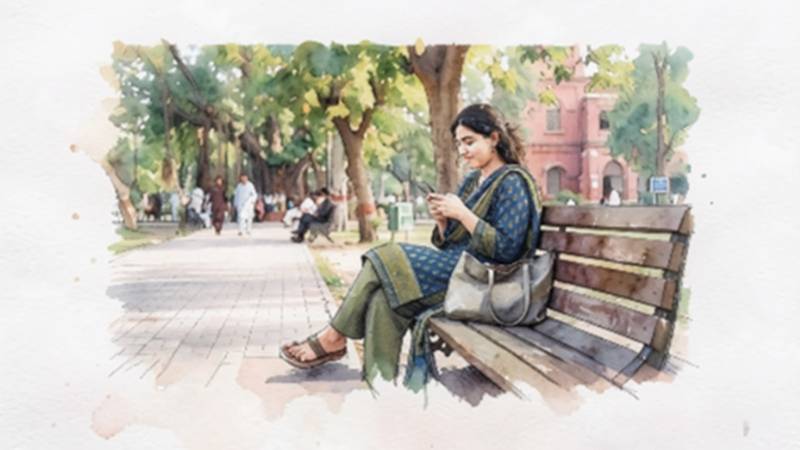
Life, on the other hand, is a perilous journey. It demands immense endurance, determination, and a positive attitude to live with. The happiest are those who learn the art of going along with these things. Those who avoid pain (the challenges) get busy constructing a life full of fantasies and imaginations. They often compare their lives with the ones being presented on digital screens. The glamour, perfectionism, and luxury being shown virtually lead to a fear of missing out (FOMO). When a celebrity, or even a friend, posts his or her picture or a video on social media visiting a beautiful restaurant or a scenic view, we start comparing it with our lives. We start to build fantasies and fiction in our minds. For a time, these fictions amuse us. When the days pass, envy and jealousy seep into the body. As a result, real life—the one devoid of screens—becomes worthless and tasteless. To avoid real pain, people spend more time on screens; hence, they compare more. This leads to boredom and dissatisfaction in one’s daily routine. Some people often start losing meaning in their lives. Most of the time miseries, deprivations, agony, and alienation turn out to be the ultimate outcomes.
"The challenge for a human now is to be more interesting to another than his or her smartphone." (Alain De Botton)
To make life beautiful, there is an imminent need to come out of fantasies and over-imagination. In spite of attaching too many expectations to life, we need to live with whatever we have. If there are problems, escapism is not the solution; being tough with them is the solution. One should not get frustrated in difficult times. Rather, he or she should make problems part of his or her life. Having friendship with the problems opens the doors of mastery and triumph. Robert H Schuller, in Tough Times Never Last, but Tough People Do!, rightly holds that “Great people are ordinary people with extraordinary determination.” Those who made history underwent the toughest times of their age, but never decided to quit. As it is said, 'when the going gets tough, the tough get going.' The people who are strong-minded and resilient manifest purpose and meaning in every situation. They decide to go along despite challenges. They try to act rather than daydream.
Miracles never happen. Small acts performed with persistence have the ability to convert mountains into molehills. Great people never bow before the circumstances; they get tougher when life hits them hard. This never-quitting attitude trains them to make their lives purposeful and beautiful. Steve Jobs, the former CEO of Apple, was removed from the company in 1985. Life became too tough for him. He withdrew from social life for some time. The world seemed so strange to him. Once he said: “I even thought about running away from Silicon Valley.” But he never decided to lose before hardships. He founded “Next- a company which produced advanced operating systems.” His company expanded. Apple, on the other hand, went in the opposite direction. In 1997, Apple was at the brink of bankruptcy. It signed a deal with Next. Steve joined Apple again and became the CEO. In his speech he said: “ It turned out that getting fired from Apple was the best thing that could have ever happened to me.” He found an opportunity in the tough times. He got the freedom to explore and think as a beginner. In his words: “The heaviness of being successful was replaced by the lightness of being a beginner again.”
In a nutshell, life is beautiful for those who know the art of living. No doubt, it sometimes hits really hard, but the tough ones keep going. They do not fall prey to imaginations and fantasies. They accept their lives in their original ways. They get immune to pleasure-seeking behaviour through instantaneous dopamine. They act, they sweat, they fall, they rise. Enduring challenges opens the ways to their eternal success and everlasting victory. They discover the art which only a few can.