

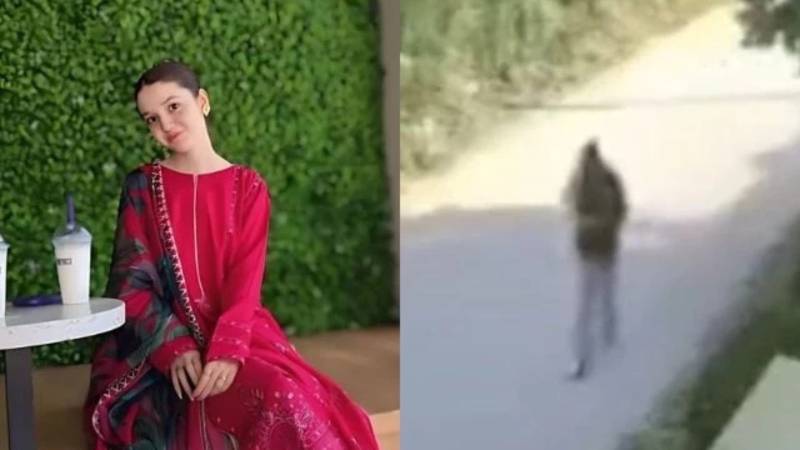
In today’s ever-evolving world, a girl daring to dream seems to be a sin. Sana Yousaf, like many girls in our country, turned to TikTok to reclaim her voice, her space, and her presence. But eventually, the same world that applauded her in the shadows punished her in daylight.
Sana, just 17, was brutally murdered—another candle snuffed out before it had the chance to shine bright. As the news ripples across social media, her smiling videos resurface. Each one now feels like a goodbye. And beneath every view, every comment, lies the silent truth we keep ignoring: women are unsafe in Pakistan, not just in streets or buses, but in their homes, online, in dreams, and even in fame.
The tragedy of Sana Yousaf isn’t an isolated horror—it is a chapter in a much larger book of bloodstained pages.
Remember Qandeel Baloch? The bold, outspoken digital icon who was strangled to death by her own brother in the name of 'honour.' Or Noor Mukadam, the daughter of a former ambassador, slaughtered in the capital's heart by a man she trusted. Or Sarah Inam, killed by her husband with a dumbbell. These are not tales from dark alleys. These are stories from our circles, our cities. Each woman thought she could breathe. Each woman was proven wrong.
In a country where the boundaries for women are constantly redrawn by male egos and fragile honour, safety is not a right — it is a gamble. These boundaries are invisible, shifting, and enforced by violence— physical, verbal, and institutional. A woman in Pakistan can be celebrated one day and condemned the next, depending not on her actions but on the mood of society. Speak too loudly, laugh too freely, dress too boldly, dream too openly — and suddenly she’s stepped over a line she never knew was there.
Sana is gone, and soon, the outrage may fade. But if her death does not rattle us into real change, then we’re not mourning her—we're waiting for the next
Meanwhile, the state recites rehearsed vows every time a tragedy makes headlines. Lawmakers rush to offer condolences. FIRs are delayed, evidence goes missing, and witnesses are silenced. Justice is a luxury only preserved for the privileged, and in the meantime, innocent young girls keep losing their lives. Not just from bullets or knives but due to fear, due to control, due to a system that does not recognise them. One may say that this corroded system was never built for women, so it is really foolish to expect it to suddenly protect them. Until we acknowledge this harsh reality, we will remain a country where being a woman is nothing short of being a risk, and surviving womanhood boldly would be an act of defiance.
Sana's murder is not just about one girl—it is about a culture that quietly believes women who are visible must be punished. That if she speaks, she provokes. That if she dances, she invites. That if she lives too freely, she must not live at all.
The solution lies not only in reforms or stringent laws, because laws may exist but in our country are usually delayed or denied. The deeper rot lies within the very fabric of our society: in our homes, where girls are taught to shrink themselves while boys are rarely taught restraint; in our schools, where textbooks glorify male heroes but omit female voices and struggles; in our drawing rooms, where jokes about women’s freedom draw laughter and not discomfort; in our collective silences, where we look away when abuse happens next door because “it’s a family matter.”
It is purely our fault that we are raising our sons with shields but not with mirrors. We teach them pride, but not empathy. Strength, but not consent. Meanwhile, our daughters are handed rulebooks on how not to be harassed, how not to provoke, how to blend in, and how to stay silent. In essence, we train them to survive—not to live. So long as a girl’s safety depends on her compliance and a boy’s behavior is excused as ‘boys will be boys,’ we will remain a nation in mourning. We must rewire this culture from the inside out. Accountability must start at the dinner table, not just in courtrooms. Real reform begins when we stop asking women how they behaved and start asking men why they weren’t taught better.
Sana is gone, and soon, the outrage may fade. But if her death does not rattle us into real change, then we’re not mourning her—we're waiting for the next.