

Click here for the first part of this guide
City-states in the Indus Valley Civilisation operated as autonomous, highly organised urban centres governed by councils of rulers, governors, officials, landowners, religious leaders, traders, and merchants. The city-states had standardised economic networks, industrial and agricultural hubs, and public infrastructure. There were also citadels, granaries, assembly halls, markets, factories, temples, and cemeteries. They had transportation networks, as well as drainage and sewage systems to carry away waste from the cities.
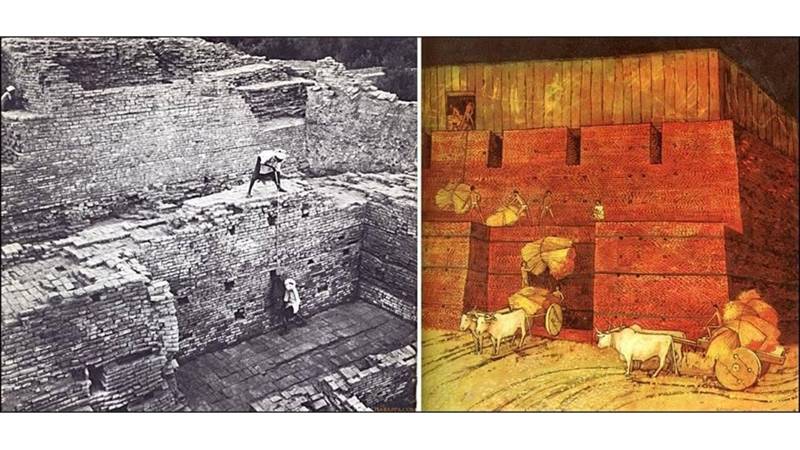
Sir Mortimer Wheeler excavated the State Granary building at Mohenjo-Daro in 1950. He interpreted this structure as a civic granary. Dr FA Khan calls it a public treasury building. Others believe that it was a dockyard. The officials of the City-State of Mohenjo-Daro supplied grains to the inhabitants of the city during famines and floods of the River Indus. This structure stands in the west of the Great Bath. It measures 27x50 metres with 27 brick blocks. There are horizontal and vertical passages for the crossing of air. It had loading platforms and the site of a stair. The building had a timber rooftop or ceiling. The Great Bath drain crosses close to this granary from the east.
The College Building
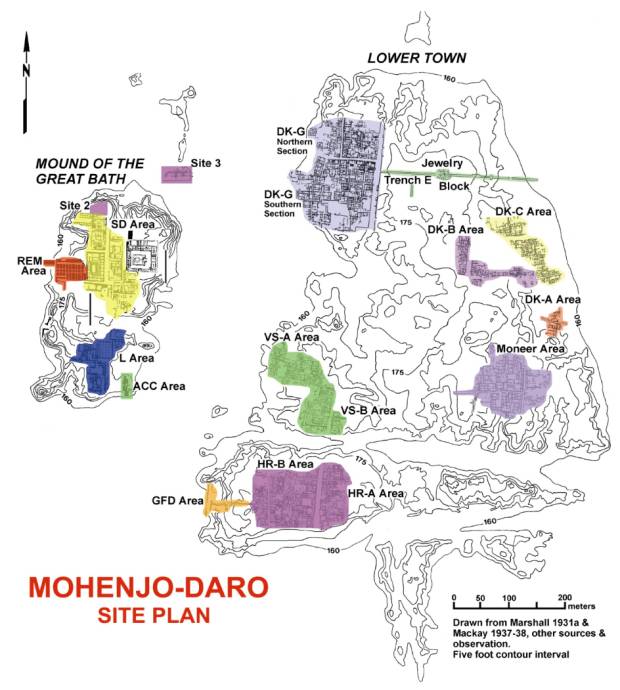
The College Building lies in Block 1 of the SD Area in Mohenjo-Daro. It was excavated during 1927 to 1931 by Mr Mackay. According to Mackay, this important building was the residence of a very high official, possibly the high priest himself, or perhaps a college of priests. This building design was copied from the Great Bath, which stands in the west in the same area. Probably it stood two or three storeys high with a fenestrated court. A possible students’ entrance was from Divinity Street, which was in the east of this building. Antechambers for an awaiting audience were also attached to this remarkable building. There was a spacious entrance hall in Room 55 with the apartments of the head of the establishment. Mr Mackay also called this important building the Fenestrated Court, which also showed late additions.
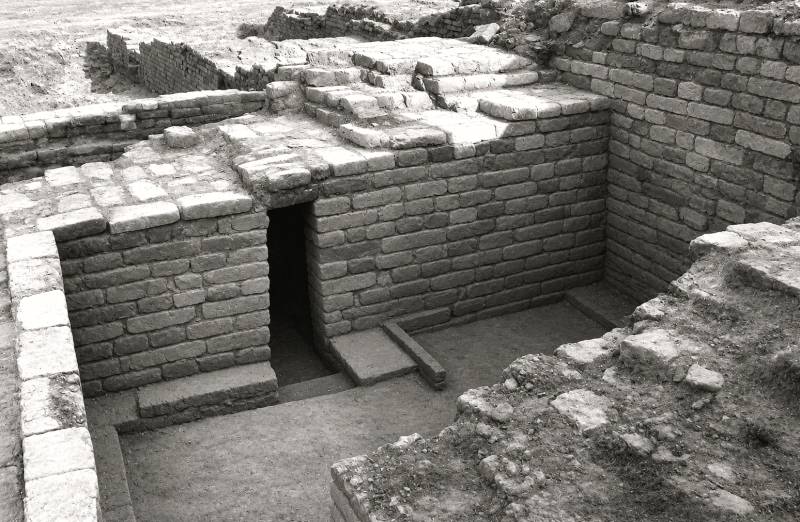
The College Building was entered from Divinity Street by doors that were possibly students’ entrances to this great establishment. Some grain bins, square bins, cooking places, and washing floors were built by people who reoccupied this dignified building after the floods in the Late Period in the Collegiate Building. A large earthenware jar with Sambhur (deer) bones was discovered by archaeologists during excavations. Mackay dated this building as a Late Period structure which had been occupied by some people after a heavy River Indus flood. A seal (SD 3058) and an amuletic clay bulla from Rooms 18 and 19 were found. An unfinished limestone torso (SD 2781) was found from the Fenestrated Court 61. This statue was in process when a flood hit the city in the Late III Period.
The Divinity Street
Divinity Street is a well-constructed drain with its tributaries. This street is located in Blocks 1 and 2 in the SD Area of Mohenjo-Daro. Describing Divinity Street, Mr Mackay writes that, “Block 1 is separated from the Stupa buildings by a well-defined street, that we have named Divinity Street, which is 6 ft.9 ins wide at its northern end increases to 10 ft.3 ins. wide at the other end.” Why this street was called Divinity Street?! Mr Mackay writes that, “So called from the almost certain presence of a sacred building to the east of it, and the finding of the steatite figure of a horned deity at the level + 1.7 ft. in the lane itself (Pl. LXXXII,7). This figure is only 0.58 in. high”. From Divinity Street, the following antiquities were found: 1) Seal No. 701 (SD 3192); 2) a white stone marble (SD 3215); and 3) an alabaster pedestal, etc.
The outskirts of the citadel featured industrial refuse dumps and heavily fortified gateways with monumental towers – these structures point to a city that was both an industrial powerhouse and a well protected fortress
Dustbin / Trash Place
The Dust Bin or Trash Place is located in the Mohenjo-Daro: Southern Buildings Section Block 1, excavated by Sir John Marshall between 1925–26. A Late Period building in the SD Area Southern Buildings Block 1 is situated to its north. A stone-covered drain comes from the north of Main Street and another covered drain comes from the eastern side close to the bath in the south of the Buddhist Stupa. This dust bin is enclosed by three of the streets.
Mohenjo-Daro: Southern Buildings Section
The Southern Buildings Section was excavated in 1925–26 during Sir John Marshall’s massive excavations at Mohenjo-Daro. There are eight blocks in this section having houses, streets, wells, baths, pavings, and drains, etc. Sir John Marshall published its plan at Pl. XXVII in his book.
A Well-Built Bathroom Close to Divinity Street
There is a well-built bathroom in the Late Period building in the SD Area Southern Building Section Block 2. This bathroom is 8 feet 1 inch long N-S, by 6 feet wide E-W. Below the pavement, there is a small channel which is connected with a drain in the street to the west. The bathroom was reached with a stairway in its south-eastern corner that measured 1 foot 8 inches wide. Explaining this well-built bathroom, Sir John Marshall writes in his book Mohenjo-Daro and the Indus Valley Civilization (1931) that, “Its floor is made of specially prepared bricks, measuring 9.5 by 5.15 by 2.25 inches. The surfaces of the bricks, which are laid flat wise, are coated with a reddish deposit. The joints of the brickwork are so fine that they will hardly admit the blade of a pocket knife” (p. 147). Most of the walls in the Late Period building in the SD Area Southern Building Section Block 3 rest on mud filling and the debris found lying in and about the walls of the Intermediate Period.
A Neatly Built Well in Southern Building Section Block 4
There was a neatly built well in the Late Period building in the SD Area Southern Building Section Block 4. The bricks of the well were of the usual kind instead of being wedge-shaped. According to Sir John Marshall, “In March 1927, the water level was 28 ft. 6 ins below the present top of the well” (p. 148).
On the south of Block 4, there is a street whose southern wall is completely demolished, but there is a beautifully constructed water channel with brick cover. This seems to be intermediate work. There were houses, wells, pavements, and drains, etc.
House with Courtyard
Sir John Marshall writes about this house that, “On the south side of the street between Blocks 4 and 5 and at its western end, there is a fairly well preserved house (Block 6) of the Late Period, with walls resting on foundations of the Intermediate Period, which is nearly complete. Four rooms with their doorways remain. The southern portion of this house has disappeared or, as seems more likely, there was an open courtyard here.” The steps in the south-western corner probably once led to the roof of the house. The antiquities found from this house were a large conical stone and the long barrel-cylinder bead. There is a roughly constructed covered drain of the Late Period between House 6 and the bathroom (described in Block 5). Its channel runs southwards. It is covered over with bricks of various sizes. The bricks had been robbed from this area most probably during the Kushan Period for the construction of the Buddhist Stupa of Mohenjo-Daro.
Elliptical/Oval Well in Block 6
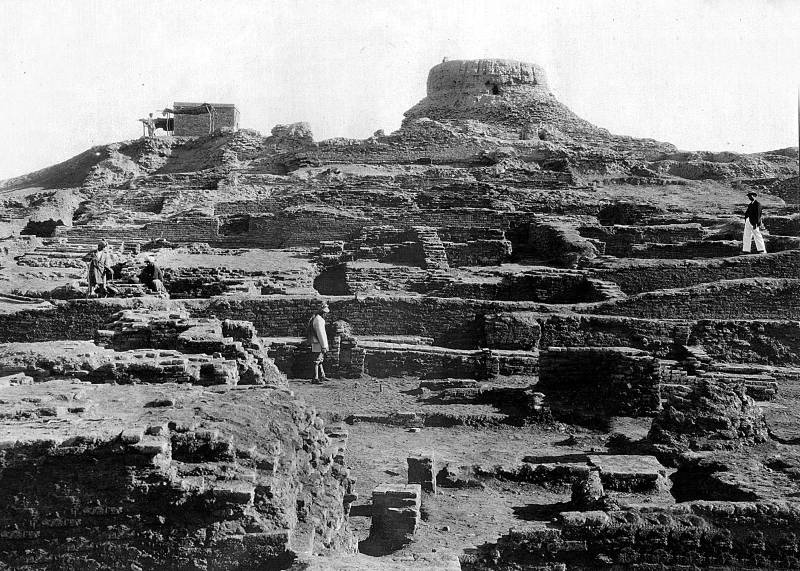
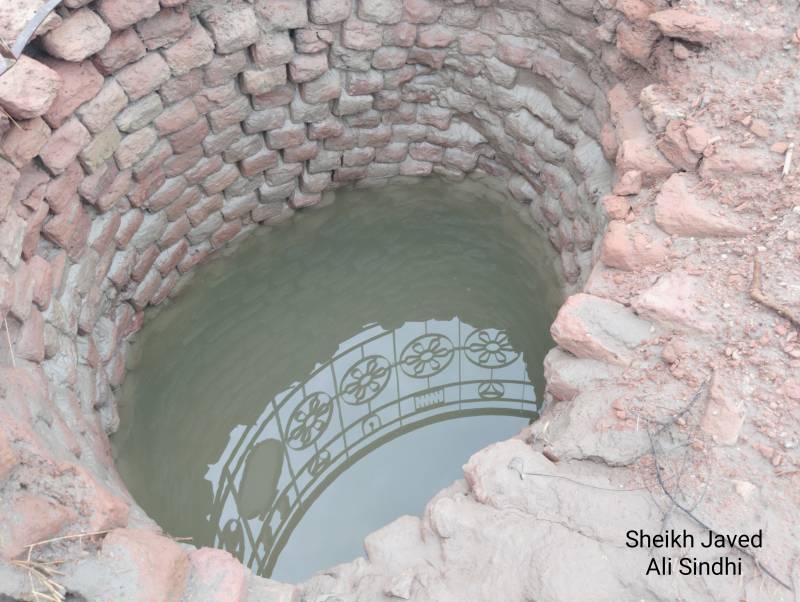
Mostly, walls and other structures disappear in Block 7. Sir John Marshall writes, “A very noticeable feature here is a well of most irregular shape (Pl. XXVIII, a). At the bottom it is practically round, but at the top it is elliptical in shape owing to earth pressure. The wedge-shaped bricks of which the upper portion is made measures 13 inches long by 2 inches thick. One end of the bricks average 6 inches and the other 5 inched wide. The upper portion of the drain has also been roughly repaired in places with ordinary bricks measuring 11 by 5 by 2 inches. It is very unusual at Mohenjo-Daro to find a well so badly built.
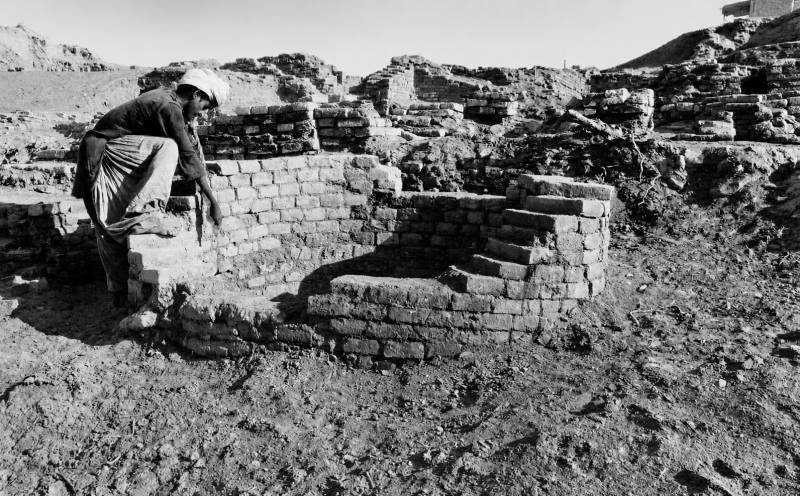
From its level, it should belong to the Intermediate Period, but its upper portion seems to be of Late date. The sizes of the bricks used in its construction help us but little with regard to its date, as in the Late Period the people of Mohenjo-Daro were very fond of re-using material taken from the lower levels. The dimensions of the elliptical portion of the well are is 5 by 3 feet, and the diameter of the lower portion is 5 feet 6 inches” (p. 150). A bi-coloured faience spindle whorl was found from the doorway of Block 7. A pottery cone and an interesting stone figure of a ram were also unearthed from this region. There are thick walls of an important building in Block 8.
Citadel Mound: L Area
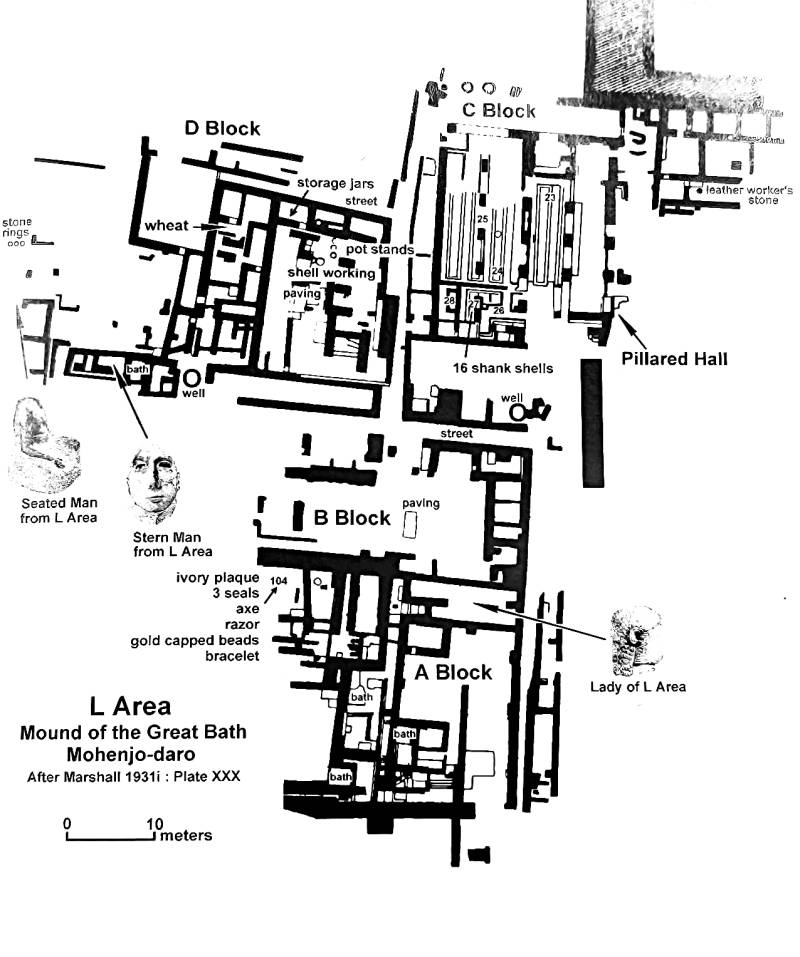
Mr Mackay began the excavation of the L Mound at its southern end in January 1927. According to Mr Mackay’s L Area Excavation Report published in the Annual Report of the Archaeological Survey of India 1926–27, this mound is designated by the letter L. The L Area was probably a quarry for brick robbers in the past. Another important part of the Citadel Mound, the L Area covers a surface of 7,500 m. A large number of houses, rooms, courtyards, corridors, doorways, kitchens, wells, bathrooms, drains, pavements, and stairways are found in it. Other important structures are the large court, compartments, small chambers, earthen floors, ablution places, a narrow lane, partition walls, pavings, and entrances. L Area has 4 sections, i.e., A, B, C & D. Various periods of the Indus Valley Civilisation have been traced from the L Mound during the excavations. The Late Period is only represented on the highest mound. The buildings of this period are in very bad condition.
Enclosure Wall in Section A
L Area’s Section A has many rough constructions, chambers, enclosure walls, pavements, court wall, intermediate walling, lane, doorway, bathrooms, and ablution places from which much pottery and other objects had been excavated in 1925–27. The enclosure wall is remarkably built and is 6 feet wide. Its large size suggests that it was an enclosure wall. The eastern part is well preserved while its middle part is very damaged and overlaid with Late Period structures.
In Section A, Chamber 104, there were found 3 seals, the fine copper axe, a razor of copper, the polychrome jar stand, a clay model of a pig, and an ivory plaque, which is carved on one side, in relief, with the figure of a man holding a bow (Pl. CXXXII/10). Around Room 118, there are remains of paving and an ablution place, water channels, aperture, and drain. Pottery jars for a bath belonging to the Late Period were found along with other antiquities like pottery cones, a pottery dog figurine, and a number of clay balls. The statue of the Lady of L Area was discovered from Section A.
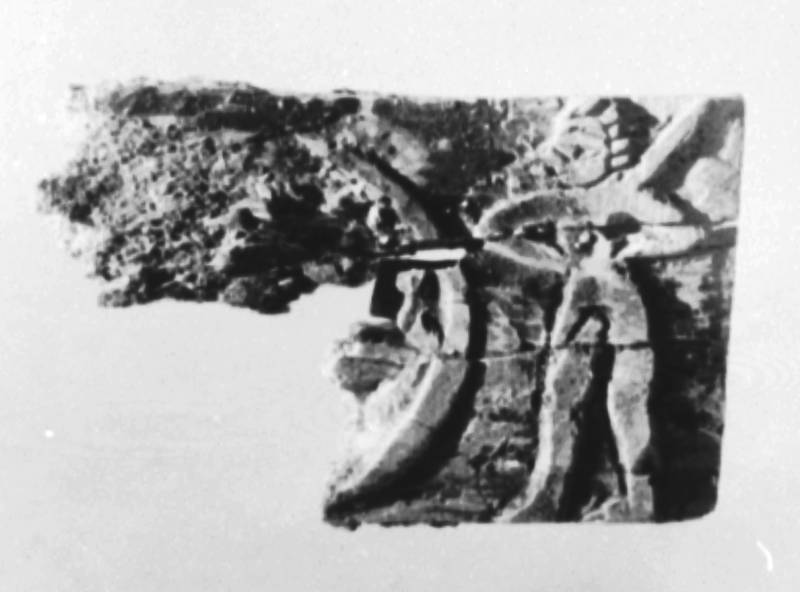
Ablution Place in Room No. 122
According to Sir John Marshall (1931), the 3 adjoining rooms to the north, numbered 119, 120, and 122, were quite small compartments. Intermediate Period Room 122 had a well-built ablution place at its northern end, the floor of which was built of bricks measuring 10 by 4 by 2.5 inches. This Chamber 122 is 15 feet 9 inches long by 7 feet 4 inches wide. The water of this ablution place went to a well-built street drain outside. A jar cover and a bracelet made of pottery were found in this chamber. A door socket of black stone was also unearthed from the north-western corner. Other important structures of the L Area are the court wall, pavements, intermediate wallings, doorways, lanes, and bathrooms.
Bathrooms
There were bathrooms of the Late Period in Chambers 126 and 129.
Section B Buildings List
L Area Section B has many structures like thick walls, partition walls, niche, pavings, entrances, stairways, intermediate wallings, and mud fillings.
Large Well in Section C
Remains of a well are found in Chamber 85, Section C. Its diameter is 7 feet 5 inches. The well is lined with a single thickness of wedge-shaped bricks. This had not been cleared out.
Large Pillared Hall / Assembly Hall / Market Place
The Assembly Hall is situated in the C Block of the L Area in Mohenjo-Daro. It is also called the Pillared Hall. The area of this mysterious building was 27.5 metres square or 90 feet square. It had 20 square brick pillars arranged in 4 rows. It was actually a large hall where the rulers, priests, officials, elites, and soldiers used to assemble for state-related matters and socio-political and cultural activities. A well lies in the middle of the hall. It belonged to the Intermediate Period. Mr Mackay has identified this elaborate building as a marketplace. Close to this building, 16 conch shells mixed with pottery, along with carved beads, were unearthed from Room 27 in the south of the Assembly Hall. A flower bed for the beautification of buildings, a system of water channels, shallow buttresses, fairly flat grounds, and a gallery are also common features here. This area is also famous for the discovery of a reed matting place. A wall no less than 28 feet in thickness was excavated. A ring of bricks, probably jar stands, was found.
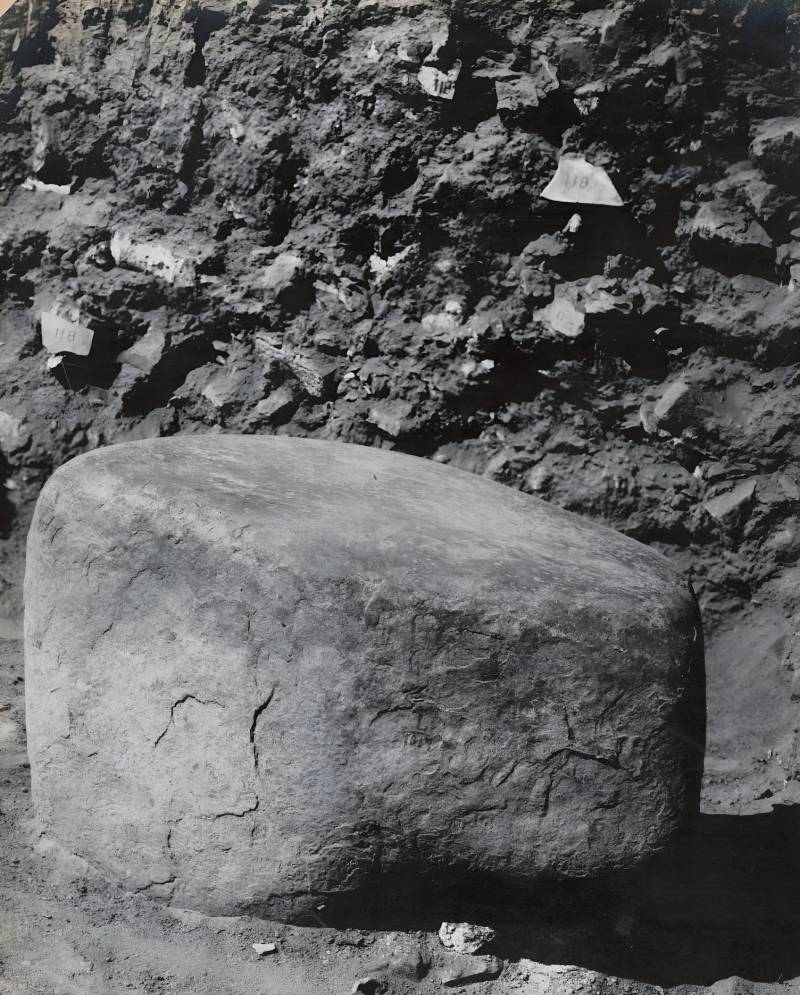
Leather Cutter’s Stone
Around 3000 BC, animal hides were used for protective clothing, footwear, and other basic gear. During the Vedic Period (1500–500 BC), there is evidence of leather being used in the form of water bags, armour, and musical drums. Leathercraft developed under Persian and Mughal patronage. Once there was a leather cutter’s or sandal maker’s shop in the north-east of the Assembly Hall at Mohenjo-Daro. A skilled cobbler used to mend sandals of travellers who came from different parts of the world for trade. Explaining a Leather Cutter’s Stone (Section C Room 6), Sir John Marshall writes, “The dimensions of Chamber 6 are 16 feet E.W, by 8 feet 6 inches N-S. Its eastern wall has been badly damaged, but enough remains to fix the size of the chamber. In the western portion of this room a large stone was found, apparently in situ, measuring 2 feet by 1 feet 7 inches by 1 feet 2 inches. It is a natural boulder, dark brown in colour and with a hardness of 5 or over. Its top is flat and polished, and it was possibly used by a Leather Cutter or Sandal maker” (p. 169). Nothing is known about this Leather Cutter’s Stone today.
Brick Bench
There is a very large Chambers 20 and 21 which was mishandled in the Late Period. At the southern end of the chamber are the remains of a long brick bench, built in the Late Period. Its height was 18 inches and was built against the foundations of the earlier piers. Remains of a hall, paved walks, aisles, drains, recesses, a curious building, annexe, semi-circular wall, and stairways were excavated. While cut bricks, sank shells, seals, shell inlay, a pottery ball sling, pottery, jars, and a shell bead of disc were also found from the Section C buildings.
Shell-Cutter’s Workshop in D Section
The shell industry flourished highly at Mohenjo-Daro and other Indus ancient cities. The marine molluscs were used to produce ornaments, ritual vessels, utensils, and other inlay work. Its main sources were the coastal regions of the Arabian Sea: Makran Coast, Gulf of Kachchh, and the Gulf of Khambat in Gujarat in India. Section D in the L Area has Chamber 45, which is known as the Shell Cutter’s Workshop.
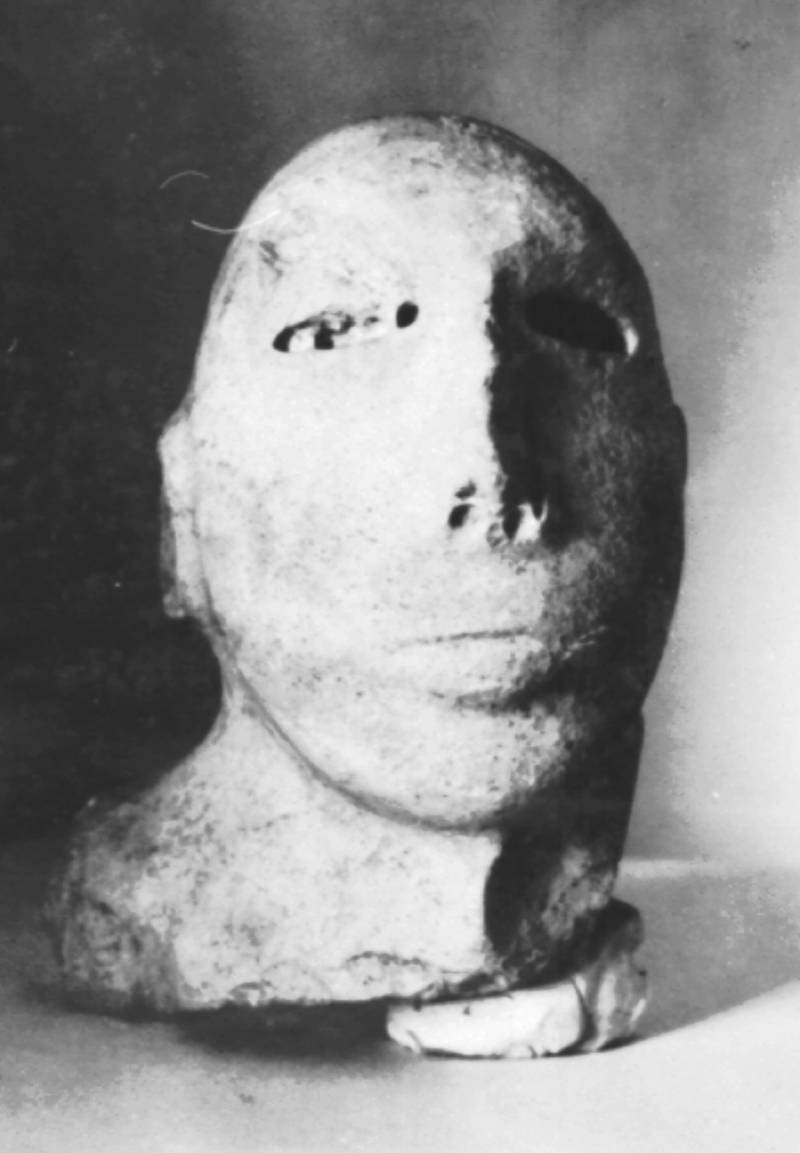
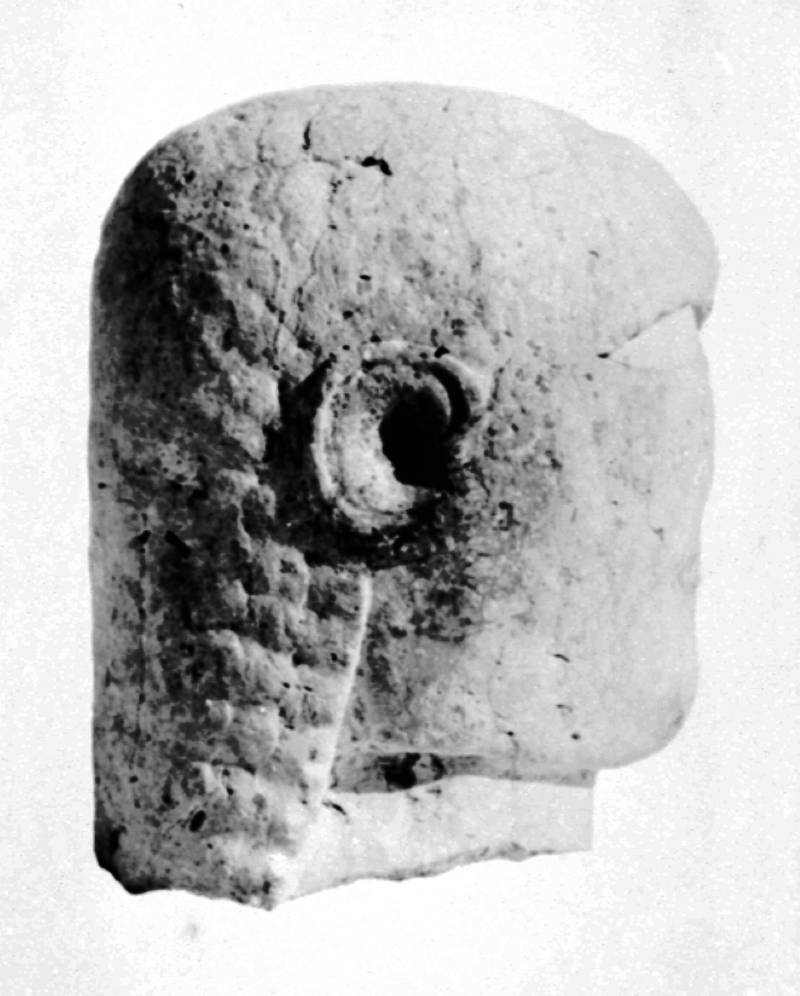
Sir John Marshall writes that this part of Chamber 45 was apparently occupied at the end of the Late Period by shell-workers, for five whole sank shells as well as numerous pieces of unfinished shell inlay were found here. Among other important findings were the 7 pottery jars, 2 irregular pieces of crystal, and a bead. A door socket and sank shell were lying on the pavement in Chamber 47. From Section D, the street, paving, hall with piers, storage jars, pot stand, shell working, well, bath, 3 limestone rings, the Stern Man of L Area (Statue), Seated Man of L Area (Statue), and wheat were found.
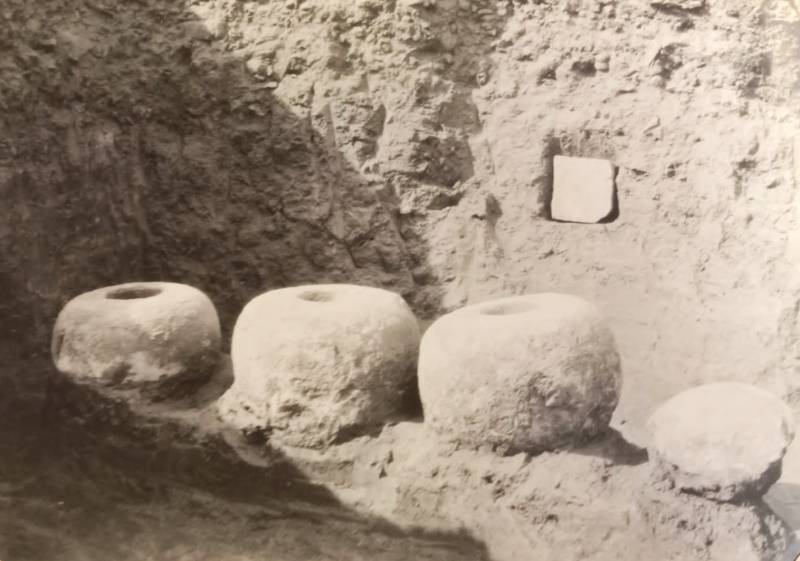
Finding Place of 3 Limestone Rings
Sir John Marshall writes, “The most interesting features here is two N.S. rows of three and two rectangular piers respectively, each pier of which averages 3 ft. by 1 ft. 9 ins in section and stands in average of 1 ft 6 ins high. To the west of these, three more or less perfect limestone rings were found in a row together with a fragment of a fourth. The bases of these rings, which were all about the same height, were 2.25 feet below datum” (p. 174). Mostly the rings were of rough workmanship. These rings were made from a cherry limestone. The antiquities found here were the steatite seals, pottery dishes, shell beads, a pottery female deity, a male seated figure, a paste figure of a monkey, 24 sank shells, pottery vessels, utensils, and the clay rhinoceros, etc.
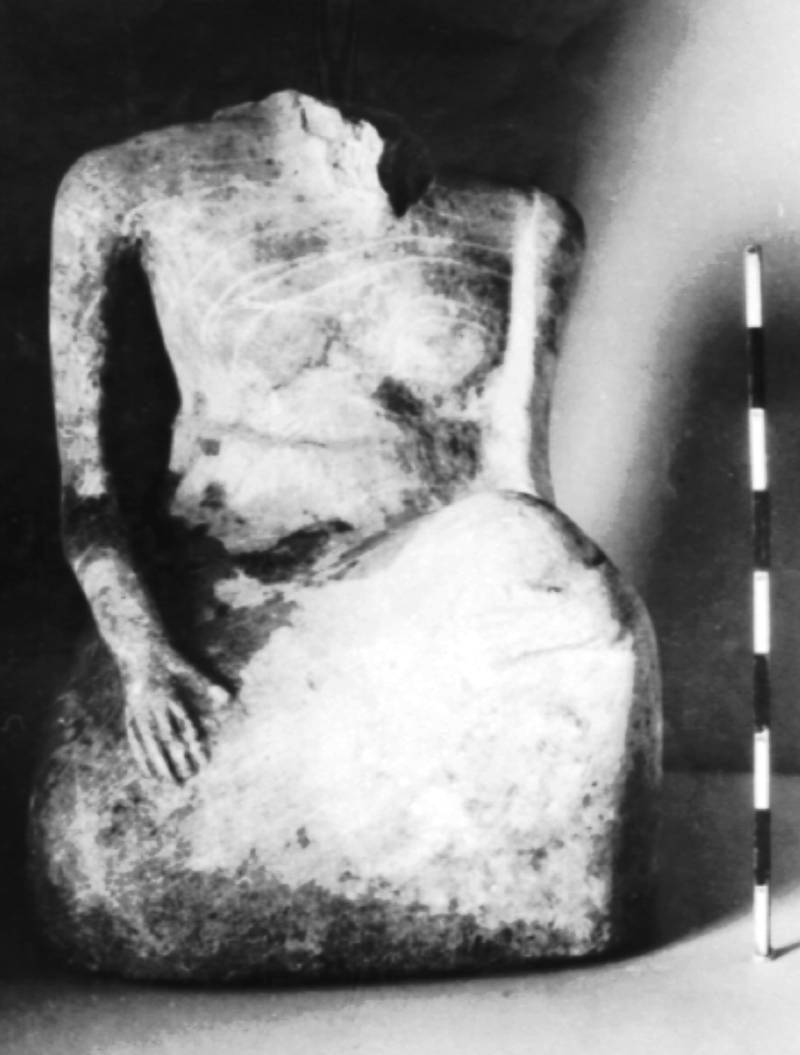
Dump for Kiln Refuse
In L Area Section D, there was a dump for kiln refuse. It seems that there were many kilns in the immediate vicinity. Sir John Marshall has discussed this kiln area on page 174.
Group of Towers / ACC Citadel Gateway
Sir Mortimer Wheeler excavated a Group of 5 Towers / ACC Citadel Gateway during the 1950s. He also discovered a passage, platform and parapet, well, drain, pots and pottery, etc.