

The origins of modern international humanitarian law are rarely traced to the theatre. We instinctively credit the polished halls of Geneva or the ink-stained parchment of the Lieber Code forged during the American Civil War, attributing the rules of armed conflict to diplomats and sweeping treaties drafted in the aftermath of industrialised slaughter.
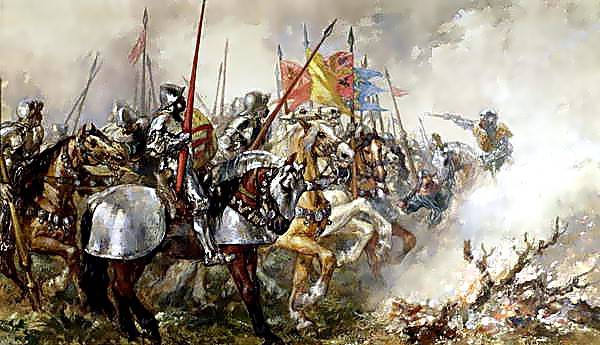
Long before international tribunals possessed the jurisdiction to prosecute war crimes, William Shakespeare was actively charting the dark, complex contours of military justice. His martial masterpiece, Henry V, operates as a foundational jurisprudential text. At the climax of the Battle of Agincourt, panicked by a raid on his camp and fearing a massive counter-attack, King Henry issues a chilling, unequivocal order: every English soldier must slaughter his French prisoners. It is a moment that brutally strips away the romanticism of medieval warfare.
Today, evaluating the legality of that exact type of command falls squarely under the jurisdiction of modern tribunals like the International Criminal Court (ICC) in The Hague. Shakespeare’s play serves as a striking historical reference point for the monumental, often agonising struggle to enforce the contemporary laws of armed conflict.
The international legal framework engineered by the Rome Statute in 1998 was specifically designed to prevent the kind of unrestrained brutality Henry leverages on the battlefield. The court was built on the ambitious promise that sovereign leaders could no longer hide behind their borders to escape accountability for war crimes, crimes against humanity, and genocide.
Yet, as contemporary conflicts unfold in real-time, the state of international law frequently appears exceptionally fragile. To understand the immense systemic hurdles the ICC faces, one must examine the core concept of non-combatant immunity.
At the walls of Harfleur, King Henry demands the city’s surrender through a meticulously crafted projection of terror, threatening the total annihilation of its civilian populace. He vividly promises the governor that a prolonged siege will completely untether his soldiers, painting grotesque images of sexual violence and the slaughter of the elderly. Legally, this constitutes a calculated weaponisation of atrocity as a coercive strategy.
The contemporary court fundamentally rejects the premise that extreme, existential circumstances might justify suspending non-combatant immunity
Modern jurisprudence expressly forbids such tactics. Article 48 of Additional Protocol I to the Geneva Conventions establishes the bedrock principle of distinction, demanding that armies strictly differentiate between combatants and civilian populations. Furthermore, Article 8(2)(b) of the Rome Statute explicitly criminalises intentionally directing attacks against civilians, alongside the use of rape and other forms of sexual violence as weapons of war.
The ICC grapples with this exact nightmare continually. In modern urban warfare, where military targets are heavily embedded within civilian infrastructure, proving a deliberate, criminal violation of distinction, rather than tragic, but legally permissible, collateral damage, is an exceptionally complex task for prosecutors. The laws are impeccably clear on paper, yet the modern battlefield remains just as chaotic and morally perilous as Harfleur.
A system of organised coercion cannot sustain itself on unmitigated terror alone; it requires internal legitimacy and a rigid adherence to duties. As the English army penetrates deeper into France, the petty thief Bardolph is caught looting a pax from a local church.
Contrasting sharply with his own sweeping threats of mass pillage, Henry ruthlessly sanctions the execution of his old friend, enforcing the protection of civilian property. He signals that a legitimate military campaign must operate within defined legal boundaries.
Modern international law formally codifies this doctrine under Article 28 of the Rome Statute, which holds military commanders and political superiors criminally liable for crimes committed by forces under their effective control. Today, this principle is the beating heart of the ICC's mandate, designed to target the architects of atrocities rather than merely the foot soldiers.
However, translating command responsibility from statute to conviction remains notoriously difficult. Gathering airtight evidence linking a supreme commander in a capital city to the actions of a rogue squad on the ground requires navigating immense political friction, as state sovereignty is routinely weaponised as a shield against accountability.
The absolute limit of any legal framework is exposed when survival is on the line. Henry’s directive to execute the French prisoners at Agincourt forces a direct confrontation between stark military necessity and undeniable war crimes.
The modern legal consensus leaves no room for ambiguity on this front. The Third Geneva Convention, specifically under Article 13, unequivocally demands the humane treatment of prisoners of war, establishing an absolute prohibition against execution or mutilation regardless of tactical desperation.
The contemporary court fundamentally rejects the premise that extreme, existential circumstances might justify suspending non-combatant immunity. Still, the current state of international law frequently struggles to project undisputed authority when powerful nations claim they are fighting for their very existence.
Because the ICC lacks an independent police force and relies entirely on the cooperation of individual states to execute arrest warrants, international justice can often appear selective, heavily dependent on the shifting tides of global geopolitics.
Using the Agincourt campaign to interrogate the modern legal landscape reflects a hard, uncomfortable truth about our institutions. The laws governing armed conflict are not static edicts flawlessly enforced by a global hegemon.
They are fragile, hard-won agreements, constantly tested by the absolute barbarism of combat. The International Criminal Court remains an imperfect institution, heavily constrained by political realities, the refusal of major powers to submit to its jurisdiction, and its own systemic limitations.
It nevertheless stands as the necessary, ongoing evolution of a centuries-old demand: that even in the absolute chaos of war, humanity must relentlessly attempt to draw a line between military necessity and murder.