

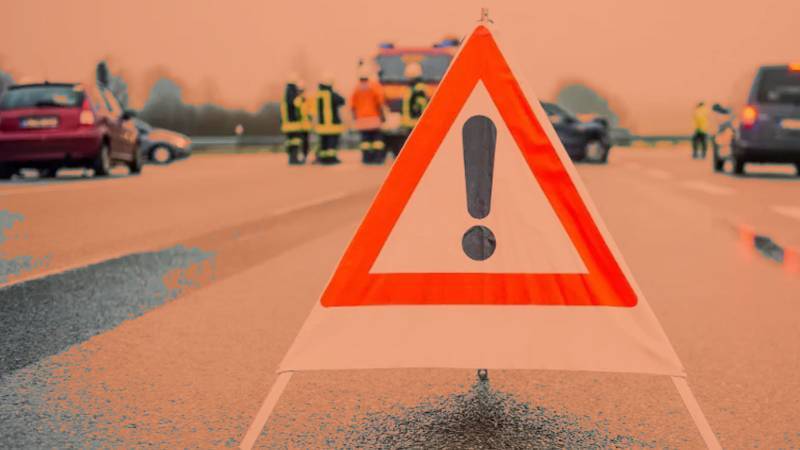
Every day, thousands of Pakistanis set out on their daily commutes, expecting to reach their destinations safely. Yet, for many, these journeys end in tragedy. The roads have become increasingly perilous, with fatal accidents occurring at an alarming rate. Not so long ago Lahore witnessed another devastating crash in DHA Phase 6, where two young students were involved in a high-speed collision. One lost his life on the spot, while the other walked away with only minor injuries. The stark difference between life and death in this case was a simple yet essential safety feature—airbags. The survivor's car had them, while the other did not.
This incident is not an isolated tragedy but rather a reflection of a much larger crisis. Pakistan’s roads have turned into high-risk zones, where reckless driving, poorly enforced traffic laws, and inadequate vehicle safety measures combine to create an environment where survival often comes down to chance. The loss of life is staggering, yet road safety remains a neglected issue, overshadowed by political and economic concerns. Every passing year sees thousands of preventable deaths, but meaningful action remains elusive.
The statistics surrounding traffic accidents in Pakistan reveal the severity of the problem. In 2019-20 alone, there were 9,701 fatal accidents, leading to 5,298 deaths and over 12,317 injuries. These figures are not mere statistics; they represent shattered families, grieving parents, and lost futures. Over the past decade, the situation has only worsened.
Punjab, being the most densely populated province, consistently reports the highest number of fatalities. In 2019-20, it recorded 4,294 fatal accidents, resulting in 1,823 deaths. In the same period, Sindh recorded 858 fatal accidents, while Khyber Pakhtunkhwa saw 3,891 accidents, leading to 2,894 fatalities. Even Islamabad, a city with relatively better infrastructure and law enforcement, witnessed 189 fatal accidents, causing 78 deaths.
The persistently high numbers expose a grim reality: road safety in Pakistan is not improving. Year after year, thousands die on the roads, yet little is being done to address the underlying causes. The crisis is no longer just about accidents—it has become a nationwide epidemic of negligence, with no clear accountability.
Over-speeding remains the most significant contributor to fatal accidents, particularly among young drivers. The thrill of high-speed driving, often encouraged by a lack of enforcement, results in countless deaths every year
One of the primary factors behind Pakistan’s high road fatality rate is reckless driving, which has become an ingrained part of the traffic culture. Speeding, aggressive overtaking, ignoring traffic signals, and driving on the wrong side of the road are everyday occurrences. Many drivers view traffic laws as optional rather than mandatory. Even in major cities with heavy traffic police presence, violations are rampant, largely because offenders face little to no consequences.
Over-speeding remains the most significant contributor to fatal accidents, particularly among young drivers. The thrill of high-speed driving, often encouraged by a lack of enforcement, results in countless deaths every year. Many believe that faster driving equates to efficiency, failing to realise the deadly risks involved. Seasonal factors further exacerbate the situation. During winter, thick fog drastically reduces visibility, increasing the chances of multi-vehicle collisions. In the monsoon season, roads become dangerously slippery, making it difficult to control vehicles. The extreme summer heat can lead to tire bursts and mechanical failures, further raising accident risks. Despite these predictable seasonal hazards, there is minimal public awareness, and no preventive measures are taken to ensure safer roads.
Beyond reckless driving, the absence of basic safety features in vehicles is another contributing factor to Pakistan’s road fatalities. In most developed countries, airbags, anti-lock braking systems (ABS), and electronic stability control (ESC) are standard features in all cars. However, in Pakistan, many vehicles—both locally manufactured and imported—continue to be sold without these essential safety measures.
The accident in DHA Phase 6 highlights the consequences of this oversight. The student who survived was in a car equipped with airbags, while the deceased was in one without them. This raises concerns about the automotive industry's failure to prioritise safety. Despite significant price hikes in recent years, many locally manufactured vehicles still lack airbags. Even imported cars that originally come with advanced safety features are often stripped down before being sold in the local market.
The absence of airbags is not a mere inconvenience—it is a matter of life and death. In the event of a collision, airbags can significantly reduce the impact on passengers, preventing severe injuries or fatalities. The fact that automakers in Pakistan continue to manufacture and sell vehicles without these essential features is a glaring indictment of the industry's disregard for human life.
Even the best traffic laws are meaningless if they are not enforced. In Pakistan, traffic violations go largely unchecked. Speed limits are ignored, red lights are frequently broken, and reckless overtaking is common. Traffic police often lack the resources, training, or motivation to strictly enforce the rules. Bribery and political influence further weaken the system, allowing offenders to escape consequences.
The drivers who flout traffic laws with impunity, the automobile industry that prioritises profit over safety, and the government that refuses to implement necessary reforms—all contribute to a system that allows preventable deaths to continue
Accidents frequently go unreported, as many involved parties prefer to settle matters privately rather than involving the authorities. This distorts official accident data and prevents meaningful policy interventions. The lack of a centralised digital traffic database further complicates efforts to identify high-risk areas and implement corrective measures.
Even when cases do go through the legal system, accountability is rare. Powerful individuals often evade justice, while victims’ families are left without closure. The absence of strict penalties for repeated violations allows dangerous drivers to continue endangering lives without fear of punishment. The leniency towards traffic offenders sends a dangerous message—that road safety is not a priority.
With each passing year, the number of road fatalities continues to rise, yet the blame remains unaddressed. Responsibility for this crisis is spread across multiple sectors, each failing in its duty to ensure road safety. The drivers who flout traffic laws with impunity, the automobile industry that prioritises profit over safety, and the government that refuses to implement necessary reforms—all contribute to a system that allows preventable deaths to continue.
Beyond individual accountability, there is also a broader societal failure. Road safety is not just a policy issue but a cultural one. The normalisation of reckless driving, the widespread disregard for traffic rules, and the lack of public outcry over unsafe vehicles suggest a troubling complacency. Until road safety is treated with the urgency it deserves, Pakistan’s roads will continue to claim lives at an alarming rate.
The loss of life due to road accidents is not just a statistic; it is a devastating reality for thousands of families each year. Every fatal crash leaves behind grieving parents, orphaned children, and shattered futures. The tragedy of road accidents is not just that they happen, but that they happen needlessly.
Pakistan stands at a crossroads. It can either continue down this path of negligence, where preventable deaths are dismissed as mere accidents, or it can recognise the road safety crisis for what it truly is—an avoidable catastrophe. But as the years pass and the fatalities rise, one cannot help but wonder: how many more lives must be lost before real change is demanded?