

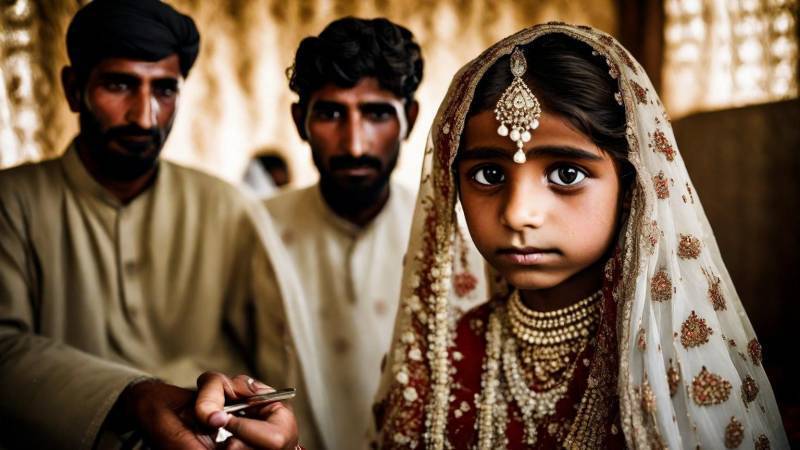
In a progressive and long-overdue move, the President of Pakistan has signed into law a bill that bans the marriage of underage girls, fixing 18 as the minimum legal age for marriage. The decision, although hailed by human rights defenders and civil society, has provoked criticism from certain religious factions. Yet this bold legal measure is a necessary corrective against one of Pakistan’s most entrenched and harmful social practices: child marriage.
According to civil rights advocates and child protection experts, nearly 29 percent of girls in Pakistan are married before the age of 18. This practice is more prevalent in rural and underdeveloped areas, where girls are often seen as economic burdens or tools for resolving family disputes. Cultural traditions such as watta satta—the reciprocal exchange of brides between families—and vani, where girls are married off to settle blood feuds or tribal conflicts, remain prevalent and largely unchallenged. These traditions, rooted in patriarchy and economic desperation, turn young girls into bargaining chips and deny them autonomy, education, and safety.
Even in provinces where progressive laws exist, like the Sindh Child Marriage Restraint Act of 2013, which criminalises marriage under 18, implementation remains inconsistent. Other provinces have been slow or resistant to follow suit, often citing religious interpretations that prioritise puberty as the threshold for marital eligibility. However, a closer reading of Islamic jurisprudence reveals that consent, maturity, and the welfare of both partners are paramount. Islam does not sanction forced or premature marriages that compromise a child's physical or emotional well-being.
Laws alone cannot undo centuries of embedded tradition, but they send an important message—that the state is willing to act, protect, and reform
Pakistan has also ratified several international human rights treaties, including the Convention on the Rights of the Child (CRC) and the Convention on the Elimination of All Forms of Discrimination Against Women (CEDAW), which obligate the state to prevent child marriage and protect minors from abuse. Yet for years, these commitments have remained aspirational, with real change stalled by cultural inertia and political hesitation.
The new federal legislation marks a rare but critical alignment between Pakistan’s constitutional ideals and international human rights obligations. It criminalises underage marriage across the Islamabad Capital Territory, introducing jail terms of up to seven years for facilitators and guardians. The law is a direct challenge to those who hide behind tradition to perpetuate gendered violence.
The Human Rights Commission of Pakistan (HRCP), along with organisations like Shirkat Gah and the Aurat Foundation, has been at the forefront of documenting and challenging these harmful practices. Their reports consistently highlight how child brides are more likely to drop out of school, suffer domestic violence, and experience life-threatening complications during childbirth. These are not just abstract risks—they are daily realities for thousands of Pakistani girls.
Child marriage is not just a violation of rights; it is a theft of futures. Every girl coerced into marriage is denied the opportunity to grow, learn, and contribute meaningfully to society. The economic consequences are equally dire: girls pulled out of school early are less likely to earn a living wage or access healthcare, further entrenching cycles of poverty.
Resistance from certain religious quarters, while expected, must not be allowed to derail this transformative legal effort. Scholars and clerics who truly value the spirit of Islam must acknowledge that child protection and justice are not foreign imports but are intrinsic to Islamic ethics. Preserving the dignity, agency, and welfare of children aligns with the Prophet’s message of compassion and societal balance.
Laws alone cannot undo centuries of embedded tradition, but they send an important message—that the state is willing to act, protect, and reform. For Pakistan’s girls, this message is a long-overdue promise of hope.