

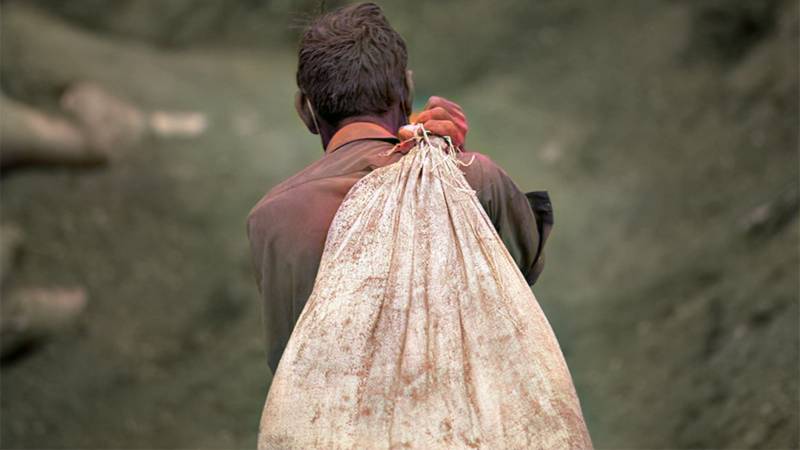
Despite the enactment of progressive laws, various forms of modern slavery persist in Sindh’s rural areas, particularly in agriculture, brick kilns, and domestic work. The latest Global Slavery Index 2023 estimates that about 2.5 million people in Pakistan are trapped in modern slavery.
The role of international human rights institutions and mechanisms is key in tackling business-related human rights abuses. The International Labour Organisation (ILO) was established in 1919 and is now a specialised agency of the United Nations that focuses on policy-making concerning the rights of labourers. The International Labour Standards (ILS) are legal instruments created by the ILO to set universal principles and rights at work.
These standards are established through conventions, which are legally binding treaties, and recommendations, which serve as non-binding guidelines. The ILS are adopted through the ILO’s unique tripartite process, which brings together governments, employers, and workers from its 187 member states to set labour standards, develop policies, and create programmes promoting decent work for all. These standards are adopted at the annual International Labour Conference. Pakistan has ratified eight fundamental conventions and 30 governance and technical conventions, reflecting incremental progress over the decades.
The Constitution of Pakistan 1973 directly recognises several rights which are directly interconnected with ILS and Business and Human Rights (BHR), including the right to life and liberty (Article 9), the prohibition of slavery (Article 11), the right to form unions (Article 17), and the freedom of trade, business or profession (Article 18).
Moreover, while the Principles of Policy in the Constitution are not enforceable by the courts, they nonetheless evince the spirit of the Constitution in guiding policy-making, most relevant to BHR being the protection of the family, particularly women and children (Article 35), the promotion of social justice and eradication of social evils (Article 37), and the promotion of social and the “economic wellbeing of the people” (Article 38).
In 2021, the Human Rights Commission of Pakistan documented that, through court orders, 318 men, 436 women and 617 children were released from bonded labour on farms across different areas of Sindh
The 18th Constitutional Amendment in 2010 devolved labour matters to provincial governments. As a result, the remaining op-ed will be Sindh-focused, which has the second-largest provincial economy in Pakistan. With 67% of business establishments located in Karachi Division and the remaining 33% located in other districts of Sindh, the potential for economic growth cannot be overstated, and it is pertinent to assist that potential economic growth with the implementation of a comprehensive framework on BHR.
The Provincial Assembly of Sindh has enacted 17 Acts of Parliament which oversee the welfare of labour since the 18th Amendment, all enacted with tripartite consultations. I will discuss each with the corresponding eight fundamental conventions of the ILO, as well as other key conventions outside the fundamental eight.
Convention 29 (Forced Labour, 1930) and Convention 105 (Abolition of Forced Labour, 1957) prohibit all forms of forced or compulsory labour. Pakistan ratified both in 1957 and 1960, respectively. The federal Bonded Labour System (Abolition) Act (1992) criminalised bonded labour, and Sindh has expanded this framework with stricter punishments and more comprehensive definitions (i.e., as to coercion) through the Sindh Bonded Labour System (Abolition) Act, 2015.
However, as mentioned, about 2.5 million people in Pakistan remain classified as modern slaves. Labour inspections are rare, and the Sindh Labour and Human Rights Department lacks resources to monitor remote regions. Although the Act has shown some efficacy through judicial interventions, in 2021 the Human Rights Commission of Pakistan documented that, through court orders, 318 men, 436 women and 617 children were released from bonded labour on farms across different areas of Sindh.
Convention 87 (Freedom of Association, 1948) and Convention 98 (Right to Organise and Collective Bargaining, 1949) guarantee workers’ rights to form unions and engage in collective bargaining. Pakistan ratified both in 1951 and 1952, respectively. The Sindh Industrial Relations Act (2013) provides for trade union registration and the ability to collectively bargain. However, the law excludes workers in agriculture, domestic work, and small enterprises—sectors employing over 70% of Sindh’s workforce.
Two critical issues remain ever prominent, as discussed multiple times already: first, implementation, which is the Achilles’ heel of all good legislation—after all, what use are mere words on paper and second, the inadequate protections for informal sectors, which is apparent time and again
Trade unions also face constant repression, with workers reporting frequent trade union “busting” and intimidation by management. Some trade union leaders have been convicted by Anti-Terrorism Courts, with others claiming they faced serious threats (beyond the management level). These threats cannot be considered toothless, given the murder of a prominent trade union leader in 2010 (albeit in Punjab), after he announced a strike to demand wage increases following disclosure of such threats.
Convention 138 (Minimum Age, 1973) and Convention 182 (Worst Forms of Child Labour, 1999) were ratified by Pakistan in 2006 and 2001, respectively. The Sindh Prohibition of Employment of Children Act (2017) prohibits employment under 14 and bans hazardous work for those under 18. Despite the law, 20% of children in Sindh are engaged in labour, particularly in hazardous workplaces such as brick kilns. This, coupled with inadequate educational infrastructure, perpetuates a cycle of poverty, leaving children trapped in labour with no escape routes.
Convention 100 (Equal Remuneration, 1951) and Convention 111 (Discrimination, 1958) were ratified by Pakistan in 2001 and 1961, respectively. The Sindh Terms of Employment (Standing Orders) Act (2015) prohibits discrimination in employment, while the Sindh Minimum Wages Act (2015) mandates equal pay for equal work.
However, only 15.2% of women in Sindh participate in the labour force, compared to the 21.4% national average. In addition, employed women earn 34% less than men on a national average, and the bottom 1% of earners are women in nine out of ten cases. Religious minorities also face systemic exclusion from formal employment, being recruited exclusively for sanitary work, a task Muslims often refuse, with many job advertisements specifying that only non-Muslims may apply, establishing a de facto caste system. Where minorities find formal employment, they are often pressured to convert to Islam or face discrimination, such as receiving shorter break times.
Although not part of the fundamental eight, Convention 81 (Labour Inspection, 1947) was ratified by Pakistan in 1953 (though Pakistan has failed to ratify the related Convention 155). The Sindh Occupational Safety and Health Act (2017) mandates safe working conditions, and the Sindh Factories Act (2015) regulates industrial safety. However, the frequency of large safety failures in factories remains appalling.
Factories often undergo faulty auditing and possess dubious safety certifications, as in the case of Ali Enterprises, where a fire killed at least 255 workers in 2022; a certification had been issued days prior, claiming compliance with all necessary fire, safety, and labour laws. The auditing company in question has audited over 100 factories in a similar manner. Most recently, Karachi saw outbreaks of fires in multiple factories across Orangi Town and Landhi in June 2025.
Although Pakistan has failed to ratify Convention 102 (Social Security, 1952), the Sindh Workers Welfare Fund Act (2014) provides limited benefits for formal-sector workers. A 2019 report showed that 66.4% of Sindh’s workforce operates in the informal economy, thus unable to make use of even these limited benefits. For example, domestic workers such as household maids, arguably some of the hardest-working and most in need of social benefits, are excluded from welfare schemes.
To conclude, it may be appreciated that a reading of any of Sindh’s legislation corresponding to BHR shows they are well-written and incredibly progressive. Nevertheless, two critical issues remain ever prominent, as discussed multiple times already: first, implementation, which is the Achilles’ heel of all good legislation—after all, what use are mere words on paper and second, the inadequate protections for informal sectors, which is apparent time and again.