

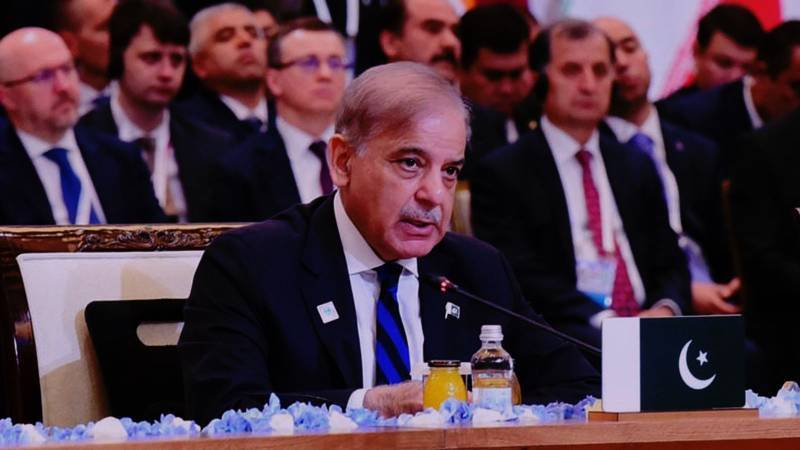
The Shehbaz regime’s celebration of a historic low inflation rate of 1% masks the deeper economic and political costs borne by the people. While touted as a success, it has come at the expense of economic growth and democratic freedoms. The government — a coalition of dynastic parties, fails to justify a 12% policy rate, coupled with tax-driven high energy costs and the withdrawal of subsidies, which has left businesses struggling, households burdened, and investments paralysed. The suppression of demand—rather than genuine economic stabilisation—has become the guiding principle, ensuring that growth remains elusive and job creation is stagnant.
Through a web of demand suppression measures, the administration has not just sacrificed economic growth but also chipped away at civic freedoms, making governance a tool of coercion rather than economic stewardship. Instead of setting the economy back on track, these policies have boxed it in, leaving businesses to shut down, investments to dry up, and citizens to bear the brunt of a dwindling job market.
The 12% policy rate, an anchor meant to tame inflation, has instead weighed down investment and crushed business confidence. With borrowing costs soaring, businesses have held back on expansion, cut down their workforce, and put innovation on ice. Industrial units, especially in textiles and construction, once the heartbeat of employment, have shut down one after another, leaving behind a trail of despair. Entrepreneurs who once dreamed of setting up new ventures have been pushed out, unable to access credit at sustainable rates.
Households, too, have borne the brunt. With high taxes slapped on essentials like food and energy, consumption has dwindled to a trickle. Families have been forced to cut back on basic needs, not because of their choices, but because of an economic playbook that views demand as a liability rather than a driver of growth. The withdrawal of subsidies, an additional punch, has only pushed millions closer to the edge, ensuring that survival—not economic mobility—becomes the overriding concern.
A government that fears public discourse betrays its weaknesses. By tightening its grip on free expression, the regime has revealed its unwillingness to allow democracy to function as a mechanism for accountability
As demand dries up, so does economic momentum. The manufacturing sector has ground to a halt, with machines rusting in silence where once they hummed with productivity. The construction sector, a vital employment generator, has fizzled out, leaving workers to scramble for daily-wage jobs that no longer exist. Even agriculture, the backbone of Pakistan’s economy, has buckled under the weight of high input costs, leaving farmers with the painful choice of either producing at a loss or abandoning cultivation altogether.
Unemployment has spiraled upward, and with it, economic uncertainty has deepened. Young graduates, full of ambition, find themselves in a job market that has shut its doors on them. The working class, once able to support their families, now grapples with shrinking wages and vanishing opportunities. While the government boasts about price stability, the reality on the ground is one of despair.
At the core of this crisis is the regime’s obsession with revenue collection at any cost. Raising indirect taxes instead of expanding the tax net, it has pushed the burden squarely onto the shoulders of the struggling middle and lower classes. The affluent elite, shielded by loopholes and exemptions, remain untouched, while ordinary citizens are left to foot the bill.
Meanwhile, investment remains on the sidelines. The government’s high-interest rate policy has shut out new business ventures, discouraged foreign investors, and ensured that capital remains frozen rather than flowing into the economy. With business confidence at rock bottom, Pakistan’s economic future hangs by a thread. Every measure taken to suppress inflation has merely boxed in the economy further, making recovery an increasingly uphill battle.
But the consequences extend beyond economics. The suffocation of demand has come hand in hand with the erosion of democratic space. Media censorship, restrictions on dissent, and the suppression of public protests have ensured that economic distress goes unchallenged. Those who dare to question the government’s economic choices find themselves shouted down or silenced altogether.
A government that fears public discourse betrays its weaknesses. By tightening its grip on free expression, the regime has revealed its unwillingness to allow democracy to function as a mechanism for accountability. When citizens are denied the right to protest high taxes, skyrocketing energy bills, and job losses, democracy itself begins to wither away.
The path forward demands more than empty rhetoric and manipulated statistics. Pakistan needs a shift from austerity to economic revival by bringing down interest rates to reignite investment and job creation, ensuring progressive taxation that places the burden on wealth rather than survival, and reintroducing targeted subsidies to shield vulnerable communities from economic distress. Encouraging business expansion through favourable credit terms and policy incentives is equally crucial, alongside restoring democratic rights to allow an open debate on economic policies rather than enforcing silence. Without these essential steps, economic paralysis will only deepen, and democracy will continue to erode, leaving Pakistan trapped in a cycle of stagnation and repression.