

In the heart of a small suburban town, veiled in the cloak of eternity and whispered secrets, there existed a place untouched by the ravages of time. This secluded sanctuary, cradled in the arms of nature, was a testament to his innovative and imaginative splendour. Here, under the majestic canopy of moonlight and the watchful eyes of the cosmos, a lone seeker of truth walked daily. Lost in thought, he enjoyed the moon’s gentle caress, which was most tender.
Today the walk was unlike any other, for the skies heralded the arrival of a rare spectacle–the full moon in the clear blue sky. Its radiant light bathed the earth below in a surreal glow, transforming the ordinary into the extraordinary, the mundane into the magical.
Absorbed in deep thoughts, he was thinking of an unusual situation of a patient. A patient in his late forties had a horrifying disease. He had a very strong family history of heart disease, resulting in a number of fatal events culminating in mournful tragedies. His blood fats had skyrocketed to alarming levels, never seen before. His blood vessels, all of them, had severe multiple blockages, causing severe starvation of the heart muscle. To add insult to injury, the blood vessels had massive calcification (build-up of calcium) resulting in critical occlusion, narrowing at multiple sites. The patient was sitting on a ticking time bomb.
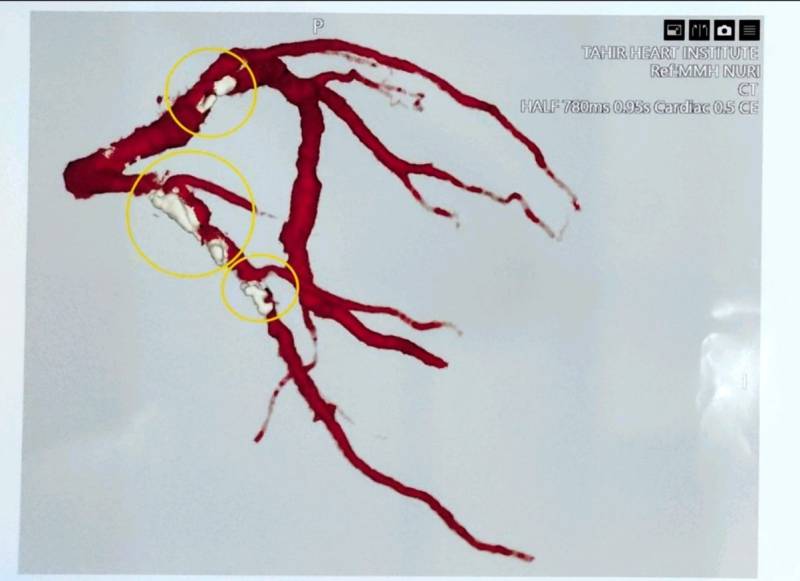
The lone wanderer prayed and thought of some solutions for this patient. What strategy was to be evolved? Imminent bypass surgery? Angioplasty with deployment of stents? Leave him alone on medical treatment to his fate? Or transfer him to another facility?
In other hospitals, people like to remain in their comfort zone, secure and safe, in what has been accepted over a period of time. They love the status quo
As he processed these solutions in his mind one by one, he prayed and said to himself;
“The most powerful thing about imagination is that it has no limits, no boundaries. That is why human being can imagine being on the moon, or being able to fly, or could be at the centre of the earth.”
Imagination and creativity can be used in any field of human development – even in medicine. In this situation, when faced with a choice, he quickly imagined the consequence of his choices. He thus had the ability to make decisions that lead to better consequences.
As Einstein said, “imagination is more important than knowledge.” Imagination is the seed for innovation and creativity. As he strolled in the moonlit night, he prayed for ideas, for experience, and for knowledge stored in his brain to create a fusion and throw up new ideas for this potential challenge.
But how to get ideas? This is the question which is impossible to answer. It is not possible to get ideas deliberately. Getting new ideas is the key to success in this world. God has been kind to all of us, and each one of us has been gifted with the ability to imagine. Imagination gets locked up if one’s mind remains “one-track”. Getting out of one’s comfort zone.
Observe – think - observe, and day dreaming, he thought as he continued to pace in the moonlight. All the time, imagining and thinking about the dying patient, he persisted in finding an answer to his “cure.”
In the outside world, such an interventional procedure in this case requires special equipment and devices. But not so in Tahir Heart Institute.
- Rotablation: During this procedure a specialised device known as a rotablator is used to break down hard calcium plaques by rotating a tiny diamond-coated burr at high speed. (An expensive device used sparingly in our country).
- Atherectomy: A medical procedure to prepare a severely calcified artery for stent placement. This procedure has some evidence of better results but is seldom practiced in Pakistan.
- Laser Angioplasty: An old technique, now largely abandoned. The laser works by vaporising calcium plaques and facilitating the passage of stents. It is an effective technique to treat highly calcified blockages in coronary arteries.
- Shockwave Angioplasty: Uses a specialised balloon catheter to deliver sonic pressure waves that fracture calcified blockages in arteries. It is a significant advancement for treating calcified coronary artery disease. However, it is prohibitively expensive, costing around USD 20,000 for a single angioplasty procedure. Otherwise, it is a simple procedure to practice.
His critical condition, ie unstable angina, precluded any movement. Even the cardiac surgeons refused to undertake a high-risk case with an evolving heart attack.
In our own hospital, away from the metropolis of Lahore and Islamabad-Rawalpindi, this critically ill patient could not be transferred to another facility. In other hospitals, people like to remain in their comfort zone, secure and safe, in what has been accepted over a period of time. They love the status quo. They are ready to make incremental changes, but are not ready to take on that which they feel is not right for them. Status quo, in fact, as I thought, is the death of innovation.
Coming up with something new, where one is the only one who does what one does, is at the heart of innovation. This is “disruptive thinking.”
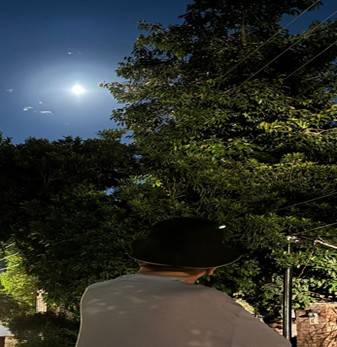
I walked up and down my road in the moonlit night, praying and meditating. In short, I said to myself; “disruptive thinking is thinking the unthinkable.”
Therefore, think what no one else is thinking and what no one else is doing. It is like a maverick at work, only with God-gifted wisdom.
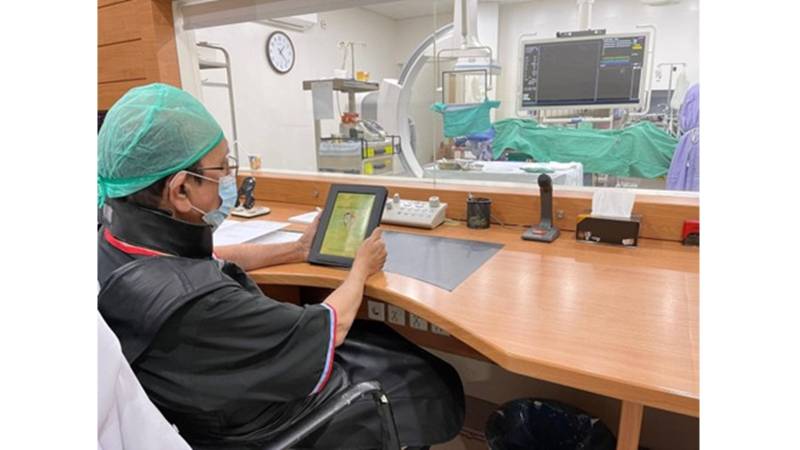
The next day, with earnest prayers, the critically ill patient with life-threatening disease was wheeled into the Cardiac Catheterisation Laboratory for coronary intervention. This was planned as a two-stage procedure lasting over five hours.
Scrubbed and wearing his dark-blue hospital dress, he walked into the operating room, greeted the patient with a smile, and prayed.
He thought as he stood by the patient:
“We have five senses, according to which we perceive the worldly things. As a corollary to this, since the five senses can perceive reality, they cannot discern what goes on in the ‘unseen realm’ ie inside the heart. To see the unseen, we depend on prayers – intuition or the sixth sense. For others, hunches, gut feelings and sixth sense seem to be cryptic, abstract or even enigmatic.”
Rumi, the 13th-century Sufi mystic said:
“Allah guides the believers; to work with all your passion of your being to acquire an inner light.”
To enhance our sixth sense, one has to use it as much as one can. It is like invoking one’s second light. Sages, saints and monks utilised this sixth sense to get answers to complex problems. Midnight prayers and meditation are the breeding ground for these ‘insight triggers’. Prayers of elders and divinely guided saints are the lighthouses which serve as a beacon for navigational aid, for doctors embarking upon challenging cardiac interventional procedures.
In this case, the doctor depended upon his sixth sense. He worked with medical science, got intimate with the mystery of the human heart, flirted with its intricacies, and achieved incredible success with His help. The process of angioplasty (i.e., opening up of clogged, calcific, “lead pipe-like” arteries) was a thumping success. It left him in awe, humbled him, and made him look at God differently.
Einstein once said, “Every scientist becomes convinced that a spirit is manifest in the laws of the universe, a spirit vastly superior to that of man and we with our modest powers must feel humble.”
After a successful angioplasty, the doctor looked at God as a Being who revealed Himself as a Saviour – both for the patient and himself. In spite of inadequate resources, survival against overwhelming odds involved a belief that God empowered individuals through divine guidance, strength, and protection to overcome seemingly impossible situations.
The patient and his family were delighted and three days later waved good bye to the medical staff with gratitude and a broad smile. Allah be praised.
This particular case (and many others like this) have taught us a few lessons;
• Keep yourself motivated even if odds are against you. God ultimately guides you!
• Work hard to achieve your goal because there are no shortcuts.
• Follow your gut feeling; it is intuition, or the sixth sense that helps you create new strategies.
• Spend a lot of time on your ideas and visual cases. But have clarity of thought & actions.
• Learn everything, but use what you need or what the situation demands. Try to shed the excess baggage of ideas and keep them simple.
• Do not get discouraged by others – be bold. “God Helps the Brave.” Listen to learn from people but do what God guides you is right.
• Success usually comes from least – expected avenues. Therefore, keep looking in all directions – you don’t know where it might come from.