

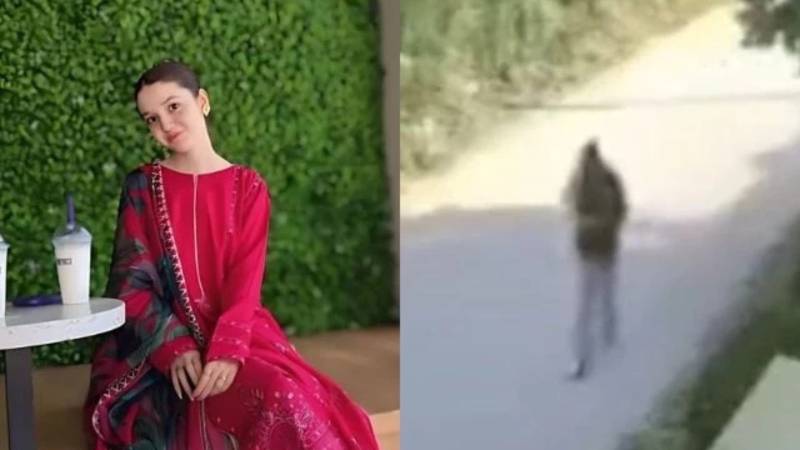
You know how they say every action in life comes with a price? In Pakistan, if you’re a girl and you say no, that price can be death. Because here, men with fragile egos can’t handle a simple two-syllable word. They can’t comprehend it, let alone accept it. And time and time again, it’s women who pay the ultimate price.
Take the case of Sana Yousaf—a 17-year-old , still a child—who said no to a boy. Her repeated rejections ended with her being shot twice in the chest at point-blank range. And this isn’t the first case, nor will it be the last. Noor Mukadam was brutally murdered after turning down a marriage proposal from Zahir Jaffer. Every year, hundreds—if not thousands—of such cases occur. Some make headlines under the banner of “honor killings”; others are quietly buried out of public view.
Many people still don’t understand: this isn’t about love, or even rejection. It’s about power. If Sana had accepted his advances and something still happened to her, people would’ve blamed her anyway, saying, this is what happens when girls get involved with boys. We live in a society that has perfected the art of victim-blaming—at home, in the media, and even in our courts, where the character of the victim is questioned long before the guilt of the perpetrator is.
Ask any woman you know, and she’ll have stories—of being followed, stalked, harassed
We need to recognise that what happened to Sana, and to so many others, isn’t a series of isolated incidents. It’s the by-product of a culture that shamelessly upholds male entitlement and dominance. And this entitlement is promoted in countless ways—subtly and overtly. Think of our prime-time dramas: the hero is often an angry, brooding man who stalks or forces a girl into submission, and somehow his obsession is portrayed as love. In some dramas, men slap women and it’s brushed off as a “moment of passion.” In others, marital rape is hinted at or shown, only to be followed by reconciliation scenes drenched in romantic music. Even comedy shows and advertisements are not spared—where the “ideal woman” is the one who stays quiet, forgives easily, and puts a man’s needs above her own, no matter how badly he behaves. When this kind of narrative is constantly fed to the public, is it any surprise that society starts confusing abuse with romance, and control with love?
Ask any woman you know, and she’ll have stories of being followed, stalked, and harassed. At school. At work. On the street. Often by strangers, sometimes by friends, colleagues, or even relatives. Some are lucky enough to escape. Others are not.
To be honest, writing this feels like screaming into the void. Posting online, demanding justice, maybe even getting it—none of it changes the painful truth that we, as a society, have an almost wilful disregard for women, their bodies, and their choices. It’s heartbreaking. It’s infuriating. And while maybe this won’t change anything, writing these words at least us a voice. And no matter how small, having a voice matters.