

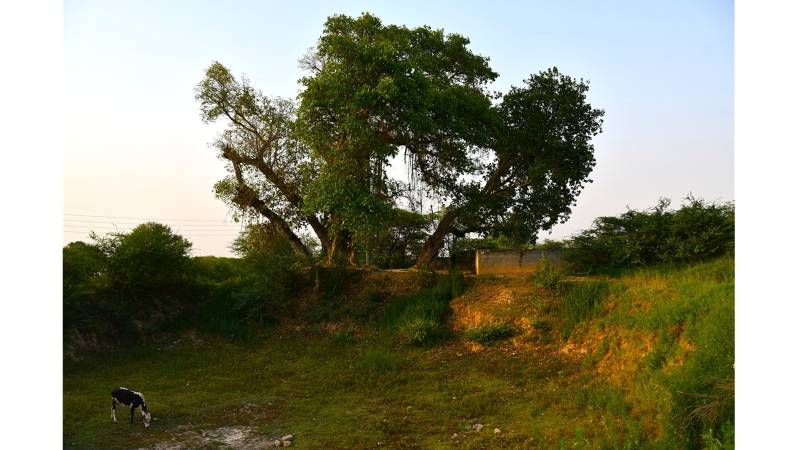
Several historical villages in Rawalpindi district were once known for their cultural heritage. Unfortunately, the magnificent mansions, temples, and gurdwaras that dominated the villages' landscapes were lost. These villages were also important marketplaces in their respective areas. One such village is Banda, which was also known for its choubaras (double-storey mansions) and market, which dominated the pre-Partition Banda. It is located about 1.5 km east of Dhoke Budhal village on Rawat-Chak Beli Khan Road. The village can be easily accessed from Dhoke Budhal. It can also be approached from Sukho on the Sukho-Dhoke Budhal Road.
Today, none of the grand pre-Partition mansions that once characterised Banda village has survived. Nevertheless, historical memory preserves the village's reputation as a prosperous commercial centre. Such was its economic significance that Banda was frequently associated with Basali, another prominent market village in the Rawalpindi region. They were popularly known as Banda-Basali, a designation that reflected their status as the area's principal commercial centres. Owing to their economic prominence, these two villages also wielded considerable political influence, shaping the socio-economic and political landscape of the surrounding region.
Colonial-Era Education: Pioneering Schools
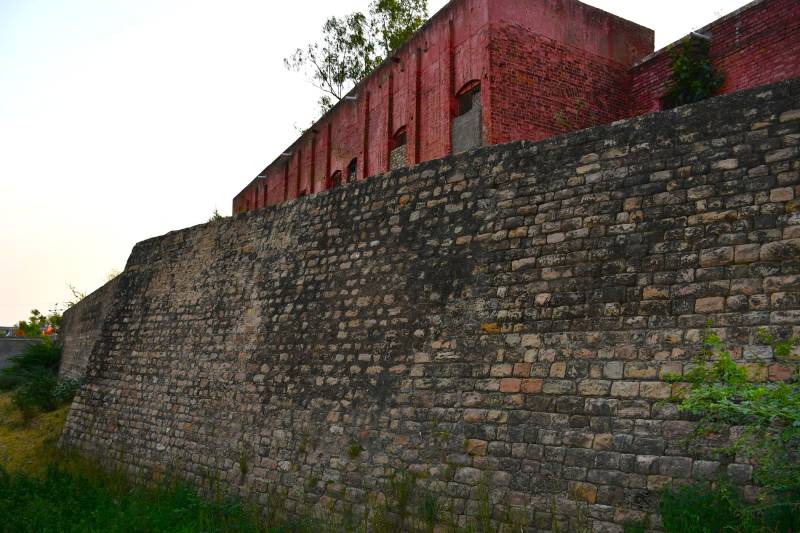
In the colonial era, when there were only a few schools in the Rawalpindi district, Banda village stood out as one of the notable villages to establish a primary school in the third quarter of the 19th century. This school was built in 1872. Despite undergoing renovations multiple times, the building still showcases colonial-period architecture, with one of the outer stone walls on the eastern side preserved. The stones for the outer wall were most probably brought from Wadala Nullah and dressed on the spot by local masons. Despite asking several local community members for the names of the masons who built the schools and other structures in Banda, I was unable to obtain them. I always try to mention in my pieces the names of masons and artisans who left behind such impressive structures and artworks that deserve to be celebrated. The school was also noted for its impressive wooden ceiling, which was removed during its 1990s renovation.
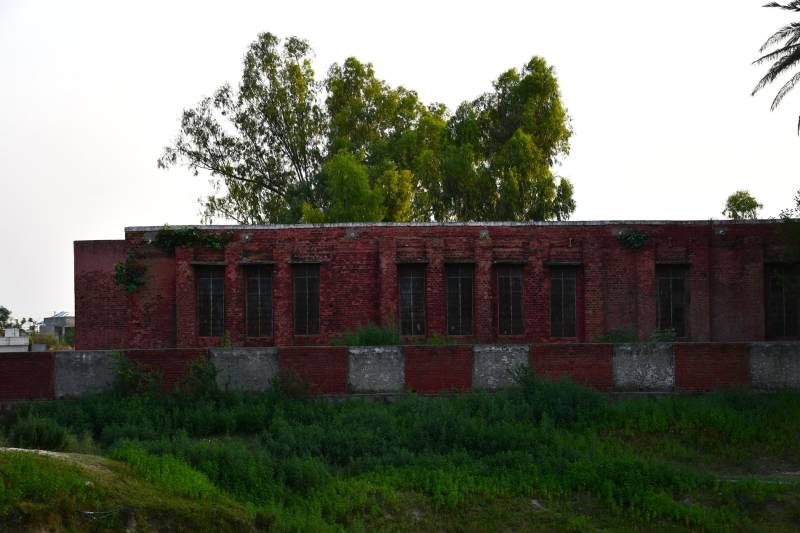
This school was upgraded to a high school in 1972, a century after its establishment. Many notable dignitaries studied at this school and later made a name for themselves in their respective fields. One of the news pieces highlighting the problems faced by the schools, as identified by the local community, also contained some information about school teachers and other staff members in the pre-Partition era. This news report by Qaisar Shirazi was published in the Express newspaper in November 2010. According to the report by Qaisar Shirazi, in the pre-Partition era, Boys Primary School Banda had teachers from all three religions: Sikhs, Hindus, and Muslims, reflecting a tolerant society that existed at that time. The prominent Sikh and Hindu teachers included M Santokh Singh, Labh Singh, Sohan Singh, Dhana Singh, Darshan Singh, and Daulat Ram. Among the Muslim teachers, the names included Khan Ghulam Ahmad Khan, Noor Hasan, Saudagar Khan, Illahi Bakhsh, Chanan Shah, Bahadur Ali, Hasnain Shah, Ghulam Hyder, Karamdad, Muhammad Zaman, Nazeer Ahmad, and others.
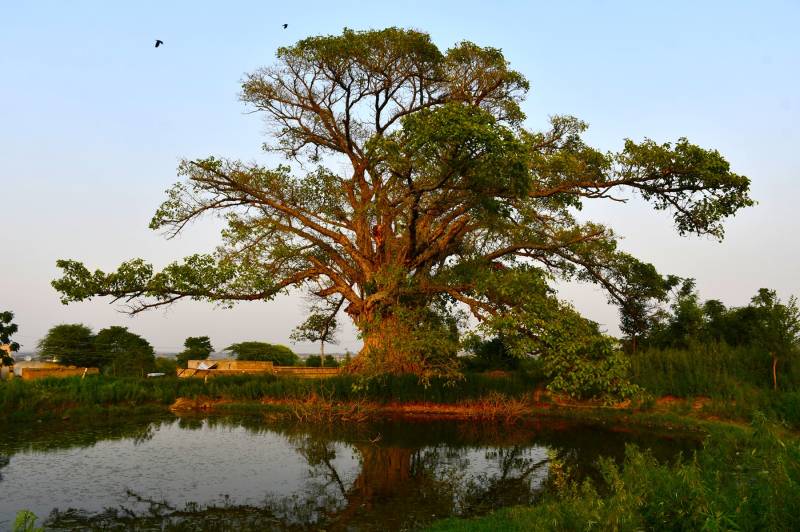
For generations, banyan trees have served as informal gathering places where villagers meet, exchange news, settle disputes, and discuss everyday matters – and in Banda, this tradition continues to this day
There is also Government Girls Elementary School Banda, built in the colonial period. Recognising the importance of female education in Banda village, the British government established a girls' school in 1889. Malik Shahzad Siddique has discussed in detail the histories of both the boys' and girls' schools in an article published in the June 2020 issue of the monthly Piyas magazine.
This development of schools in Banda during the colonial era underscores both the strategic importance of Banda village to the British colonial administration and the considerable influence of its local elite. Through their access to and engagement with the colonial power structure, the community succeeded in securing the establishment of not only a primary school for boys but also one for girls.
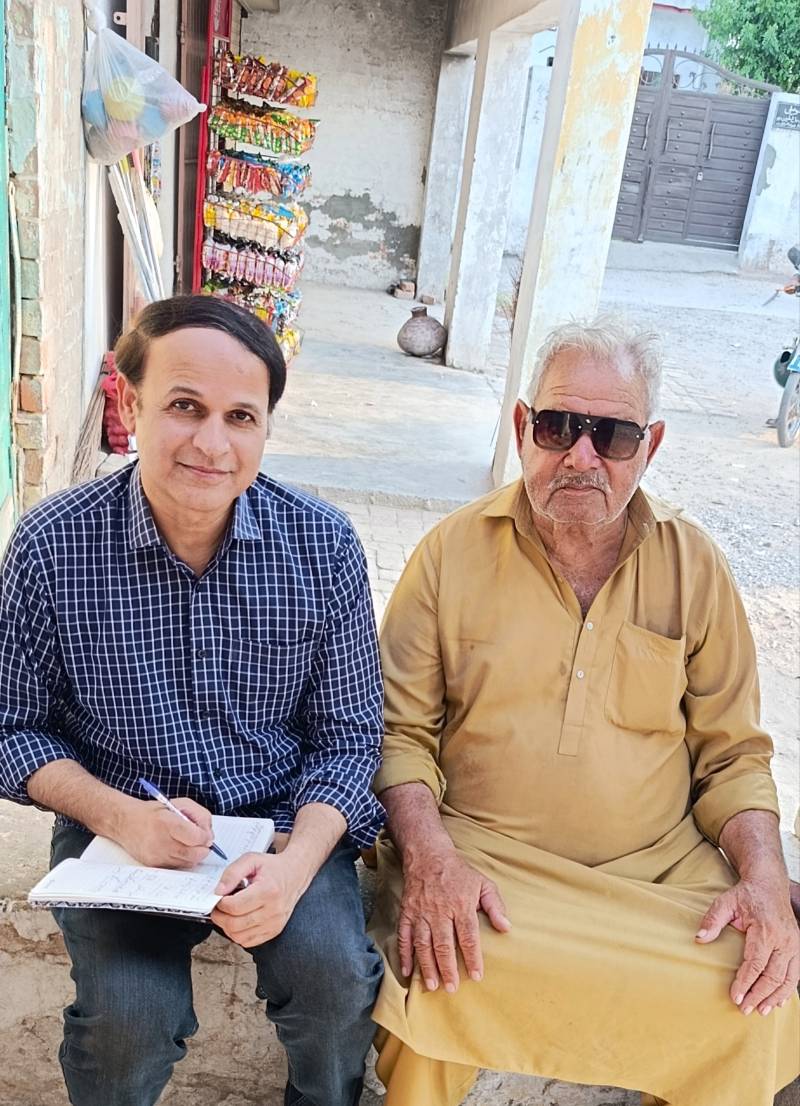
During my visit to Banda in May 2026, I met several people in the village and interviewed them. However, Malik Mushtaq Hussain Awan was more knowledgeable and shared information about the village's history and lost cultural heritage. He is 77 years old and knows the names of some Sikhs from Banda village. He also took me around the village to show me the old ponds, shrines, and mosques.
According to him, there was a Sikh gurdwara in the village. The choubaras of Hindus and Sikhs were the prominent features of Banda village. The Sikhs were more influential and powerful than the Hindus. The prominent Sikh notables of the pre-Partition era included Hari Singh, Jaswant Singh, Jeevan Singh, Sardar Vash, Nena Singh, and others. Malik Mushtaq Hussain Awan also remembers the name of one Hindu notable, Ramdas. The shops in the bazaar were owned by the Hindu and Sikh communities. According to Malik Shahzad Siddique, a journalist and writer from Banda village, there were choubaras on both sides of the village bazaar. It was one of the most famous bazaars in the surrounding area.
Ponds, Shrines, and the Social Fabric
There were several ponds and wells in the village. Ponds are important components of Banda village's cultural landscape. Most of the ponds and wells are now dry and unusable. One of the ponds, Bazaar Wali Ban, was the most famous and was located near the village's old bazaar. Another ban, known as Taya Wali Ban, lies east of Bazaar Wali Ban and is noted for its beautiful banyan tree. Banyan trees also overlook Bazaar Wali Ban.
Banyan trees are among the defining features of Pothohari villages, integral to both their physical landscape and social life. For generations, they have served as informal gathering places where villagers meet, exchange news, settle disputes, and discuss everyday matters. In Banda, this tradition continues to this day. Beneath the broad canopy of these old trees, residents still gather to converse, deliberate on community affairs, and strengthen the social bonds that have long sustained village life.
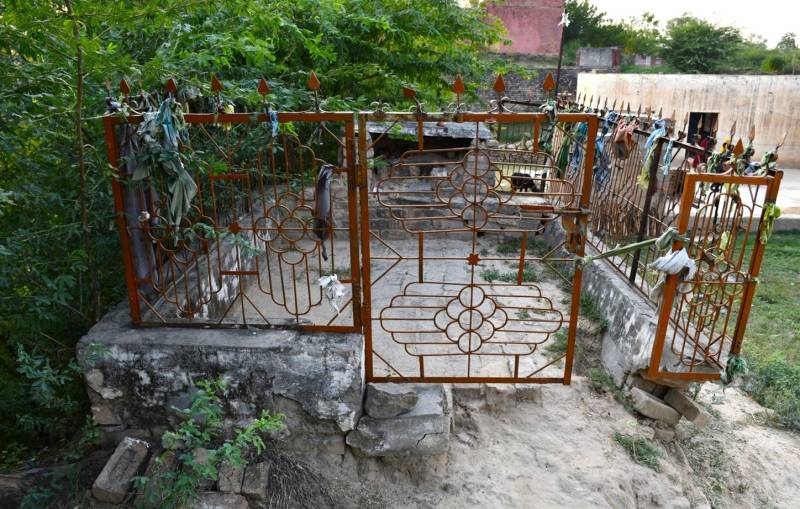
There was a separate pond (Ban) for Sikh women in Banda village during the pre-Partition era, known as Takiya Ban. Apart from ponds, the village also hosts a few shrines scattered throughout its landscape. Baba Khaki Shah Ki Baithak (shrine) is located east of Government Boys High School. His shrine has become one of the sacred spaces of Banda village. Another shrine is located in the village cemetery adjacent to Government Boys High School. The third shrine belongs to Mirza Diwan. Nobody in the village knows about him. It is not even known when he came to Banda village. The fourth shrine is located northeast of the village on the left bank of Wadala Nullah. This shrine belongs to Bunday Khan, also known as Banday Khan, after whom the village is named. According to Malik Mushtaq Hussain Awan, Baba Banday Khan is regarded as the common ancestor of the village's Awan community.
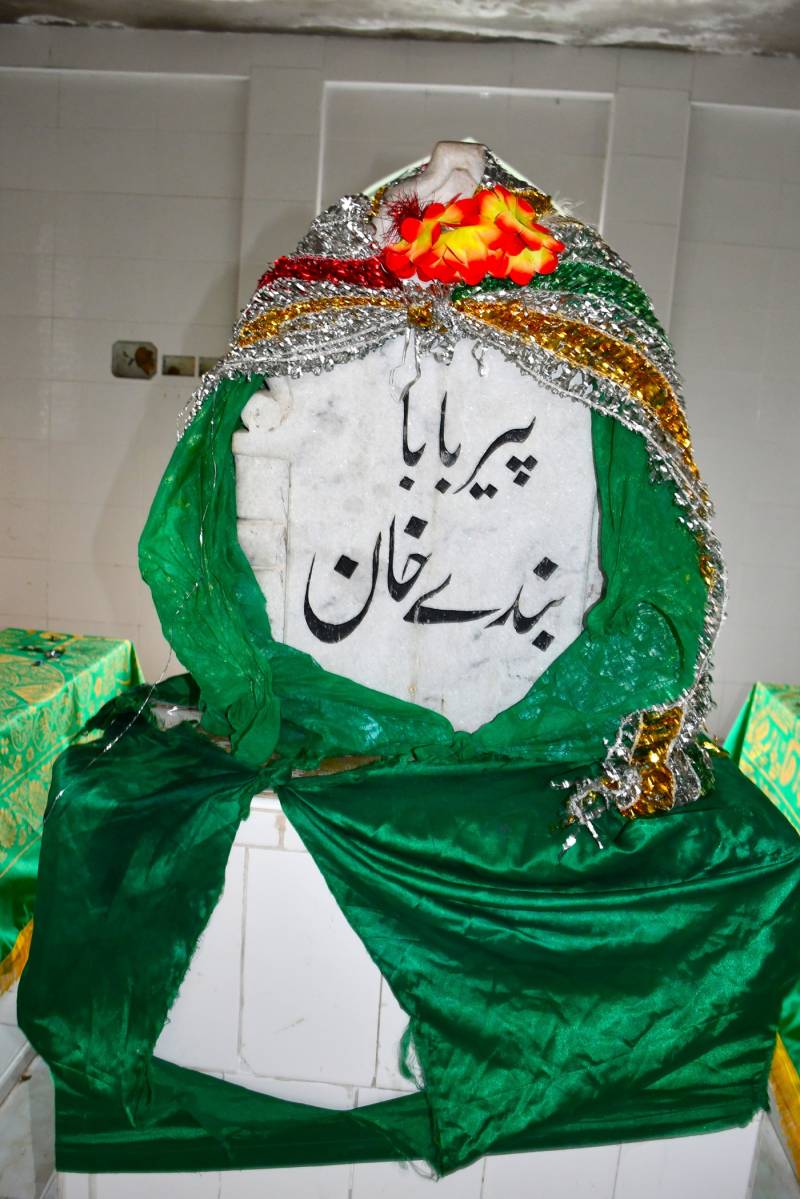
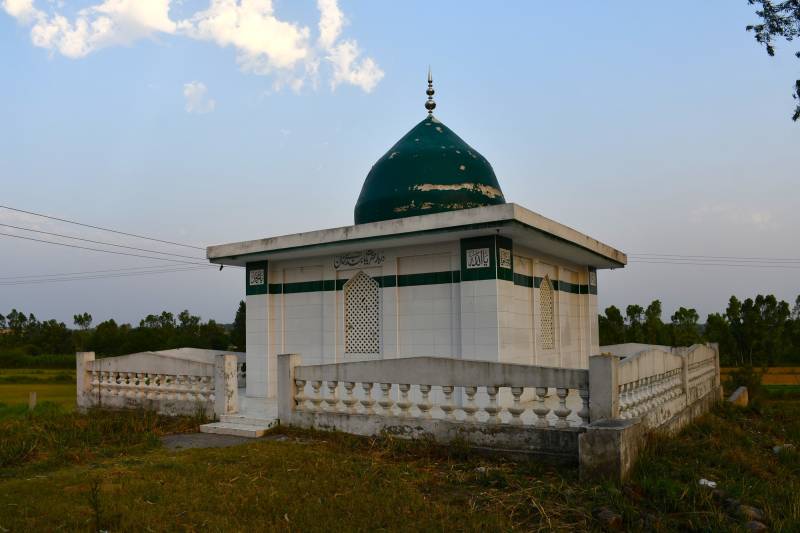
He is venerated by the Awan community and others. His shrine is located on the right bank of Wadala Kas. A tomb is built over his grave. There are three graves inside this tomb. The central grave belongs to Pir Baba Banday Khan, as inscribed on his grave. Nothing is known about the two other graves. The shrine of Baba Banday Khan is most frequented by the local community of Banda village. Even those who migrated from Banda village to other villages and towns visit and pay homage to Baba Banday Khan on special occasions. It has become the most popular shrine in the village. Sakhi Dhoda Khan's shrine is also located near Takiya Ban in Banda village.
Apart from shrines, there are three mosques in the village, with the Jamia mosque being the earliest, believed to have been built by Baba Banday Khan. It was a small mosque that later expanded. Today, it is the central mosque of Banda village, along with the second mosque, built in the colonial era. Both mosques have now been rebuilt.