

In Pakistan over the years we have seen commercial and residential structures like flats, houses, shopping plazas, restaurants, hotels, etc. being built without much planning or consideration for either the wellbeing and rights of citizens or for the environment.
A good example of this is the generally haphazard manner in which such construction has been done in the major cities, in particular in Karachi and Lahore. In most instances, there is no space for parking for vehicles of the people who are expected to visit the commercial establishments. The result is that such unplanned structures where the builders have not followed zoning rules and regulations often exacerbate existing problems which residents of cities like Karachi may face – like traffic jams and literally having no space to walk on the roadsides for pedestrians.
An example of this is a recent shopping mall that has been constructed in a space of less than a year. It is situated right before a flyover in Karachi and the area is known to be a traffic bottleneck. Allowing a shopping mall to be built in that location with the expected increased vehicular flow was a terrible idea and decision and will severely worsen an already bad traffic situation on what is a major road in Karachi.
This serious challenge to the quality of lives of citizens as a result of illegally built and badly planned buildings is not confined to only cities like Karachi but can be found all over the country, particularly in the country’s north where many such structures catering to tourists are built, often illegally and almost always with little or no planning.
There’s lots of money involved in such projects and in most instances the officials who have the power to approve such projects or to stop them from happening generally have a price
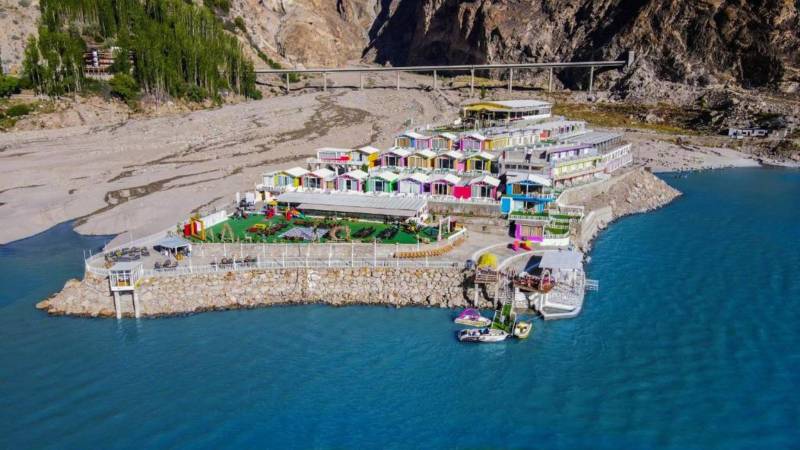
The case of the Luxus Hotel Resort in Hunza is a case in point. It was built some years ago and even at that time I wondered how could any government or municipal land-use regulating agency possibly allow a hotel to be built on the banks of a lake that was caused by a major earthquake.
The problem was that these questions were by and large not asked at that time, or even later. In fact, hotels like the Luxus Resort were romanticised and played up by the rising breed of travel vloggers, YouTubers and lifestyle influencers – of course, they did it because they were paid to do it, but no mainstream media publication or journalist raised questions surrounding it.
That is, not till a few weeks ago – when a British travel vlogger and YouTuber first posted a clip of the resort showing that raw sewage was being dumped directly into the lake. Only after that clip went viral did the local authorities in Hunza in Gilgit-Baltistan spring into action and sealed off part of the hotel. However, even then no one really asked questions – except a few on social media websites – as to who allowed this structure to be built on Attabad Lake in the first place, and why?
And then last week Mother Nature spoke. A flash flood cut off the approach road to the hotel which had several tourists staying there. Clips of a flash flood descending down the mountainside and moving towards the resort with residents and hotel staff either scampering inside or moving their vehicles towards the hotel structure (built on a slightly higher elevation) and away from the entrance.
These clips will show to all and sundry how such structures should never be allowed in such locations. This isn’t the only hotel built right on a lake up in the mountains and it’s unlikely that it will be the last one to be given official approval and sanction. That’s an unfortunate reality because there’s lots of money involved in such projects and in most instances the officials who have the power to approve such projects or to stop them from happening generally have a price which is well within the reach of builders, developers and investors. In fact, it would be fair to assume that this would usually be built into the cost of any such project.
I am currently in Nathiagali on a brief visit – a place I am immensely fond of and have been visiting regularly over the past 25–30 years, and the growth in unplanned structures and hotels has now reached such a stage that it is more or less destroying its charm and is well on its way to making it another Murree. Even the upper roads of the town, which in the past were away from the crowded bazaar area, are now prone to traffic jams and you see dozens of cars literally parked on the sides outside new hotels, again proof that the new structures did not have any allowance for visitors’ parking.
Like the municipal agencies in the larger cities or in Gilgit-Baltistan, the agency in Galyat, the Galyat Development Authority, is also in deep slumber. And it’s unlikely that such agencies are aware and/or willing to work towards safeguarding the interests of citizens.
As for the Luxus Resort in Hunza, it is unlikely to survive these developments. But the question remains: who will be held accountable in the Gilgit-Baltistan government who allowed this to be built in the first place?