

It took me sixty years to keep the promise, but finally I was there in his village Noor Shah, at a distance of 160 kilometres from Lahore. Google told me that it would take three hours to drive there in my car. I now realise that sixty years ago, it would have taken much longer, necessitating a few changes of transport too. We were twelve-year old kids in mid-1965 when we met for the first time. He lived in Multan at the time and I in Lahore. Having cleared our written exam for PAF Public School Sargodha and the interview, we had come to PAF Hospital in Lahore Cantt for our medical tests. We met, as did our fathers, and he told me that his ancestral village was Noor Shah close to Sahiwal, and he lived in Multan. "I will come and visit you," I said. "You must," he replied.
Luckily, we not only got selected for the prestigious school but also were allocated the same hostel and dormitory. We struck up a good friendship that included escaping at night to a nearby orchard to steal pillowcases-full of oranges, raiding the school canteen past midnight to steal cold drinks, biscuits and cigarettes and sneaking out to of the school to watch films in the local cinema halls. We smoked our first cigarettes together in the football field behind our hostel. We also made our first trip to watch a dancing girl on the Sargodha brothel street. Having been selected for PAF Academy in 1971, he completed his flying training and pursued his career, first as a fighter pilot and then flying for an airline. I got suspended from flying and joined PAF as Air Traffic Controller. He has been one of my closest friends over the last six decades – a period that amounts to 80% of our lifespan. Except for the initial ten years of our companionship, we have not worked or lived at the same place, yet have never lost touch with each other, and our families, too, are well acquainted.
In 1969, when in Matric and during one of the school holidays, I accompanied Saeed for a few days. We first went for a day to some rural place in Jhang where one of Saeed's relatives had reserved part of his land as 'shikargah' (hunting/gaming ground). Thereafter I spent two delightful days with Saeed's large family in Multan. Saeed's progressive father had moved his family from Noor Shah, which must have been a backwater in 1950s in terms of amenities, to the city for the sake of good education of his children. Seven decades later, the move has paid off as his grandchildren now live in four continents as engineers, doctors and technologists. They also continue to hold and farm their portions of agricultural lands.
The route to the village was easy. I drove from Lahore on Multan Road to Adda Gambar, in between Okara and Sahiwal, and turned left to Noor Shah about twenty kilometres away. Saeed has built his house a little outside the main village on the road to Sahiwal. Lahore-Multan road, of course, is wide and good but it was pleasantly surprising that the side roads in this part of Punjab, though narrow, are in nice state of maintenance. The road from Adda Gambar to the village, and then to Sahiwal-Samundri Road, that I followed on my return, is well kept with yellow lines marking their sides, and without potholes or speed breakers. The drivers coming from the opposite side would invariably slow down, keep to the edge of the road on their side and cross amicably. Such courteousness is found lacking in cities.
In terms of facilities, connectivity and awareness, villages of today are not like those of fifty years ago. Technology has changed people as well as the social environment. A realisation dawned this author's mind that internet, as the great equaliser, has eliminated some vital differences between living in a megalopolis or a remote village. I looked at the people with their smart phones in their hands and realised that they can listen to the same music that I listen to, watch the same movies that I do, access any social media that is accessible to me, read the same newspapers the world over that I do daily and download the same ancient books that I love to read. They can also access and order the same online products. They can be as knowledgeable as they choose to be. One sign of city effects is the presence of marriage halls; and there were four of them in that small town of about 20,000 population.
A sign of modernity is the presence of some mobile repairing mechanics, many furniture shops, a pizza-serving bakery, a solar inverter manufacturer (yes, even that), some petrol pumps and two bulk vegetable markets. What is lacking, and lacking badly, is good schools. The government school that I saw had a nice clean building but I doubt if good teachers are available there. Perhaps I can suggest to the well-educated and travelled Khagga family there to take a few complimentary lectures in mathematics, basic sciences and humanities in these schools.
Visual evidence and a little personal interaction suggests that villagers, at least in Noor Shah, are less religiously radicalised than the city-dwelling middle class. I saw no wild flowing beards, raised shalwars on men, niqabs on women or violent wall chalking. Though the Khaggas as peers are still respected, it was more – I thought to myself – as owners of lands than for their acclaimed Syed lineage. The reverence that I vividly recall seeing on the faces of his tenants in 1969 was missing now. While everyone came during the previous visit to greet a 17-year-old Saeed with a respectful touch on his knees, there was not a single individual now who gave a 72-year-old Saeed the same reverential courtesy. The world has changed indeed, in the previous six decades.
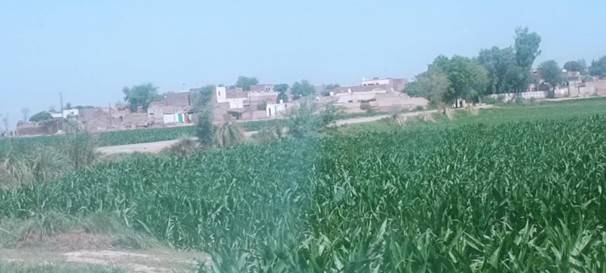
I have been a strong proponent of the Malthusian theory which states that the population growth will ultimately outpace the production of food, leading to under nourishment and famines. When Malthus forwarded his pessimistic theory 225 years ago (in 1798), it may have appeared that the population was inevitably outpacing the agricultural produce. This visit to the heartland of Pakistan’s agriculture gave me hope. Technology will ensure that the agricultural output remains ahead of population growth. Improved water use, disease-resistant and high-yield hybrid seeds, better fertilisers, advanced farm machinery and efficient storage systems have increased the crop yield by many times since the 18th century when Malthus was worrying his head. The fact is that high farm produce yields continue to make farming a low-income profession.
During my visit, the farmers were selling cucumbers for Rs 20, apple gourd (teendas) for Rs 15 and tomatoes for Rs 30 per kilogram. That is 10 to 15 kg per US$ 1. This is a ridiculously low price. In the absence of a government support price, the fresh wheat crop was selling for Rs 2,200 to 2,500 per 40 kg, below the input price of the farmers. The maize crop, as yet not ready, was also not faring well. While returning through Faisalabad, I found cucumbers selling in the city Bazaars, far from farming lands, for Rs 30/kg and a fresh crop of garlic for Rs 200/kg. It’s easy to calculate that the farmers of this produce would have received a pittance for their work. Therefore, there is no fear of the world running out of food. The cause for worry is – and shall remain – the distribution of food.
Saeed’s family name is Khagga, a semi-sacred family group. According to the Montgomery Gazetteer of 1900, “The Khaggas came to the district after the conquest of Multan by Ranjit Singh. They claim to be of Kureshi ancestry. The first Khagga was named Jalal-ud-Din, a disciple of Mahammad Iraqi. Khagga is a peculiar kind of fish and the name was given to Jalal-ud-Din by his spiritual teacher on the occasion of his rescuing a boat overtaken by a storm. Jalal’s tomb lies in Basti Daira graveyard in Multan. The Khaggas are mostly concentrated in Faisalabad, Bahawalpur, Vehari, Multan, Muzaffargarh, Khanewal, Sahiwal, Khanewal and Pakpattan districts. They have inhabited many villages but the some of the ones carrying the family name are Moza Ahmad Shah Khagga, Moza Akbar Shah and Moza Noor Shah Khagga in Sahiwal district, Moza Allam Shah Khagga in Faisalabad District, Chak Shah Khagga in Pakpattan District and Moza Shah Quddos Khagga in Vehari District.”
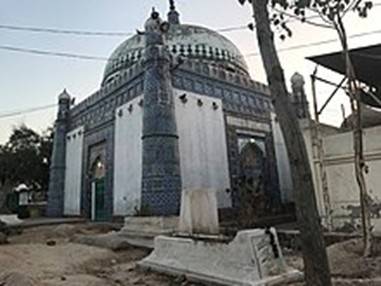
Saeed’s grandfather, three generations removed, was allotted these lands in the Sahiwal-Gogeira area by the British. During the War of Independence in 1857, a freedom fighter named Rai Ahmad Khan Kharral of Jhamra, a village on the right bank of the Ravi, 25 kilometres northeast of Noor Shah, organised a rebellion against the British. He operated with his force on both banks of the River, even attacking a jail in Gogeira, the district headquarter at that time at a distance of 8 km from Jhamra across the River. Kharral gathered a large force and found hiding places in the jungles along the Ravi. The British sought the help of local informers and allies to quell the uprising. One of them happened to be Saeed’s ancestor.
The British must have been pleased with his services, as he was allotted large tracts, hundreds of acres of river-front land that was relatively easy to farm in the pre-canal era by drawing water from the river and shallow wells. In the pre-canals era up to the end of the 19th century, the area was covered by forests, which had to be cleared for cultivation. The sub-soil water was and still is at shallow depths, conducive for drawing by the animal-driven waterwheel.
During my drive through the lands, the revolution wrought by solar energy was evident. Farmers are now no longer dependent on WAPDA electric power
This area is part of Neeli Bar, which consists of the land between the Multan-Lahore road and the Ravi, comprising towns of Pattoki, Renala, Okara, Sahiwal and Chichawatni. It forms the flood plain of the Ravi extending upto Ganji Bar, the relatively barren ridge running parallel to the river east of the Multan road. Neeli Bar has rich alluvial soil deposited by the river and is known for its productive dairy animals. Pattoki supplies plants to the nurseries of the entire country. Renala houses the well-known Mitchell’s fruit and dairy farms. Okara has large military dairy farms that produce milk, cheese and butter. Sahiwal is home to several food and dairy producers. As such, Neeli Bar is the better part of the food-producing areas in Pakistan.
A look at Google Maps shows a continuum in the form of a brown area extending over large spaces across many countries extending from the Atlantic shores of the eastern bulge of Africa, through Saudi Arabia, Iran, much of Pakistan, Indian Rajputana, Tibet and all the way to Mongolia, terminating a little inside the Sea of Japan. The only green colour that breaks this dead land is the Indo-Gangetic plains below the northern walls of the interlocked Hindukush, Karakoram and Himalayas ranges. Observing on a satellite image, Pakistan is mostly snow-covered mountains in the north, hills and plateaus in the east and mid north, and arid and semi-arid lands in the west, centre and the lower east. The only greenery seen is along the major or minor perennial rivers and seasonal streams. Broadly speaking, with one of the best agricultural and link canal networks in the world, our farmlands comprise Peshawar, Swat and Mardan valleys in KP, Rachna, Majhi and Bari Doabs in Punjab, and the lands on a narrow strip of land along the Indus from Dera Ghazi Khan to Hyderabad. Of these, the truly food basket lands are the farms between the Chenab in the north to the Sutlej in the South.
When the British built canals in early last century, they realised that the local population, mostly cattle herders, had neither the experience nor possessed the tools to tame the virgin lands of the canal colonies. They enticed peasants from East Punjab, who were experienced farmers, to settle here – with the promise that the land that they cultivated would be allotted to them. Some favourite families were also given “ghori pal murabba” or 25 acres each for raising horses, donkeys and mules to be used by the military in the cavalry and as pack animals.
One of these canals was Lower Bari Canal over the Ravi, emanating from Balloki Headworks, 60 linear km downstream of the Shahdara-Lahore road bridge. The canal irrigates vast areas in Pattoki, Renala Khurd, Okara and Sahiwal area. At 15 km northwest from Pattoki, a smaller canal by the name of Gogeira Distributary originates from this canal to irrigate lands including of Noor Shah. Now that the vast lands allotted to the Khagga family had a permanent source of water, Saeed's great-grandfather decided to have a permanent abode nearby. He built a few houses for his family and tenants. The dwellings came to be known after his own name. Since then, the village has become a sizeable town.
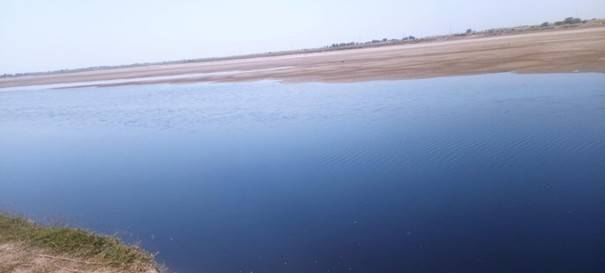
On the second day of our visit, we drove in a jeep to the Ravi, ten kilometres to the north. It was a pleasantly sunny early April day. From a distance, the river appeared like a thin wavy silver line that turned brackish on closer scrutiny. The wide river bed, completely parched in that dry time, is not under anyone’s title, but had been cultivated by local farmers for the Rabi crop. Most of this bed is under water during the Kharif crop season when India releases the excess river flow. As is a river’s wont, it meanders, and as one bank becomes a little higher due to soil deposits, the water moves to the other. During these course changes, it eats into surrounding lands. It had already eaten away many acres on the site where I stood, including some land belonging to my friend's family. A village stood on the other side of the river and a boat was anchored near the bank.
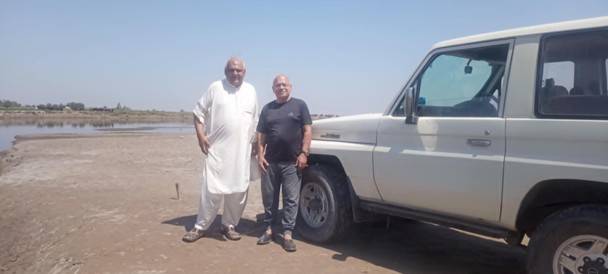
As noted above, the river had a tiny amount of water. The Ravi belongs to India under the Indus Water Treaty of 1960. Now the river is fed water from the Chenab, first through the Marala-Ravi canal upstream of Lahore, and secondly through Upper Chenab canal that also carries the water of monsoon streams of Nikki Degh, Degh and Bedh and merges with the river southwest of Sharaqpur. Thirdly, an addition of water is through the large Qadirabad-Balloki (HW) link canal and, fourthly, via the Trimmu-Sidhnai (HW) link canal. Noor Shah is located downstream of Balloki HW that channels all its water into Lower Bari Canal and Balloki-Sulaimanki Link canal, leaving the river dry. At Noor Shah, it only carries sewerage or industrial waste.
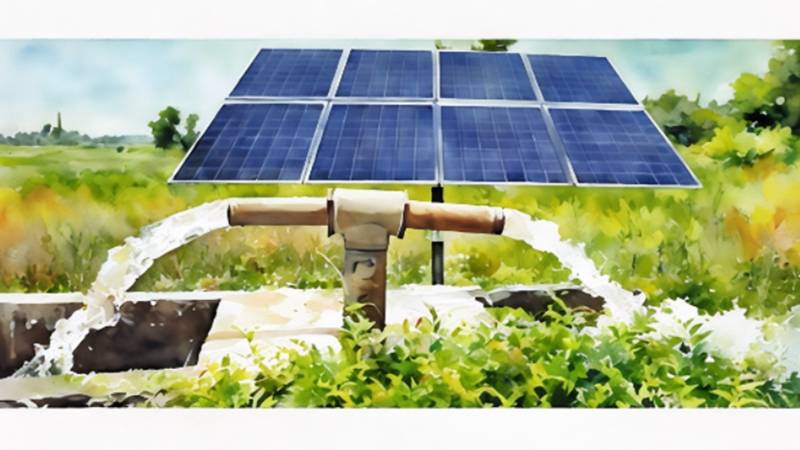
During my drive through the lands, the revolution wrought by solar energy was evident. Farmers are now no longer dependent on WAPDA electric power for the operation of their tube wells. Hybrid inverters ensure that the water is drawn throughout the day. A 3HP tube well requires only six solar panels of 585 wats each, with a system cost of no more than 600,000 rupees and an average operational life of fifteen years This author saw a number of solar tube wells running throughout the area, including one behind Saeed’s home, meeting his household, fish-farm and agricultural needs.
Saeed’s family has not lost touch with their lands. Just as Saeed came back to the village in his late sixties, his brother in law (Mr Mazhar Shah Khagga) and sister, too, came back having spent forty years in the US and Canada. We got invited by them for lunch and a tour of their farm. Mazhar took me around his orchards and farms spread over a few hundred acres. He, too, grew wheat, maize and fruit trees of guava, mango, loquat, peaches, etc. He raised sheep, cows and horses. He also had a vast collection of budgerigars, green parrots, chickens and peacocks. After a lifetime spent in the highly urbanised towns of North America, the couple clearly enjoyed the village life, though their children were well settled in the nations of their adoption and had no desire to come back. This is also true for Saeed, whose three children live in Lahore, London and Melbourne. Saeed’s elder brother, a cardiologist in Italy, also plans to come back to live in the village and look after his share of lands but his children, born and raised in Italy, wouldn’t leave the country of their birth. This branch of Khaggas would soon loose contact with their lands after holding them for nearly 200 years.
The people of Bari Doab are generally very superstitious. Though Sufi poetry is very popular here, yet, in practical life, a direct contact between the individual and the Creator is anathema to these simple people. This attitude gives rise to a healthy demand for peers and mausoleums. Most, if not all, rural dwellers of the region perform obeisance to someone they consider holy and who can approach the divine on their behalf. At the tombs, there is a phenomenal collection of donations by the caretakers; money and prestige that propels them in political field. It has, therefore, become a normal practice for the leading families of the region to trace their ancestry to the tribe of the Prophet (PBUH) or to some holy man in the Persian or Central Asian region.
The two days spent in the rural area of the Bari Doab were fruitful; not only in catching up with a lifelong friend but also in feeling the pulse of the food basket of the country.