

Monsoon rains have once again turned Punjab’s fertile plains into a sea of despair. Villages lie submerged, crops flattened, and families huddle under makeshift tarpaulins, clutching whatever they could salvage from the flood’s fury. The National Disaster Management Authority (NDMA) reports over 800 deaths nationwide as of late August 2025, with 1,200 injured and 30,000 displaced. In Punjab alone, the waters have swamped 1,500 villages, wiping out cotton and rice fields, drowning thousands of livestock, and reducing the year’s harvest to sludge.
The destruction is not confined to Punjab. Khyber Pakhtunkhwa (KPK) has declared emergencies in 10 districts, while Karachi reels under yet another episode of urban flooding. The tally of the affected population now exceeds 1.2 million.
The tragedy feels eerily familiar. The 2022 floods displaced 33 million people and inflicted $30–40 billion in losses, yet three years later the country seems caught in a cycle of déjà vu—clinging to the same flood-control dogmas that failed it before. The bitter irony is hard to miss: as waters rise higher each year, Pakistan’s leadership doubles down on dams and embankments, even as global funders shift their support towards nature-based resilience.
Leaders Bet on Concrete over Ecology
Prime Minister Shehbaz Sharif, after an aerial survey of Narowal’s drowned landscapes, renewed his call to fast-track mega projects like Diamer-Bhasha and Mohmand dams. “We must store water to hold back floods and secure agriculture,” he declared, presenting storage as a panacea for both irrigation and disaster management.
Punjab’s Chief Minister Maryam Nawaz Sharif, meeting flood victims in Rajanpur’s relief camps, echoed the same sentiment. She pledged PKR 1 million compensation for bereaved families and vowed to “build up” embankments. “We can’t let rivers wash away our future,” she insisted, handing out aid packages.
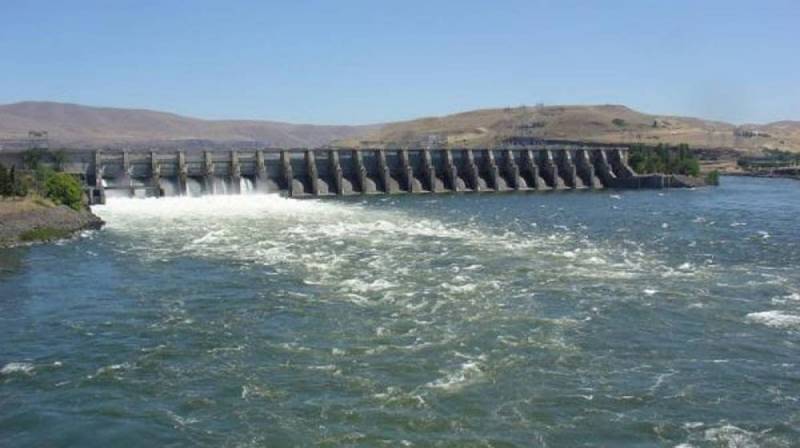
But this “concrete salvation” comes with a paradox. Experts argue that dams, rather than taming rivers, often exacerbate their rage. By trapping sediment, they starve downstream plains, erode deltas, and disrupt ecological flows. When overtopped, they unleash sudden, catastrophic surges. In Multan and Jalalpur Pirwala, unchecked urban sprawl on historic floodplains transformed manageable surges into ruinous torrents—an ironic outcome for a state committed to building barriers to “fence off” nature.
The state pours concrete into rivers, while communities left largely to fend for themselves turn to nature for protection
Adaptation: The Science-Backed Path
Hydrologists like Dr Hassan Abbas, a leading voice for free-flowing rivers, call for an urgent pivot. “Rivers aren’t foes to lock up; they’re ecosystems we must work with,” he stresses. Restoring wetlands and reconnecting floodplains, he explains, allows rivers to breathe—absorbing excess water, replenishing aquifers, and shielding against erosion. “We’ve boxed in rivers for decades, and now they are bursting out. Adaptation means giving them space, not choking them with concrete.”
Global precedents affirm his point. In the Netherlands, restored floodplains have cut flood damages by 30% while boosting biodiversity. In Sindh, mangrove replanting along the Indus Delta has reduced saltwater intrusion and cushioned storm surges. And in KPK, community-led early warning systems linked to weather apps have saved countless lives by giving villagers precious hours to evacuate.
These nature-based solutions are not only cheaper but also scalable. Yet in Pakistan, they remain sidelined, overshadowed by billion-dollar dam blueprints that appeal more to politics than science.
Green Taxonomy: A Doorway Half Open
Here lies another paradox. In early 2025, Pakistan’s federal cabinet proudly launched a Green Taxonomy—a framework to classify projects as “green,” “amber,” or “red” to attract climate finance. Backed by the World Bank and the State Bank of Pakistan, the taxonomy was hailed as a breakthrough, signalling Pakistan’s alignment with international standards.
But in practice, the government’s priorities tell a different story. While the taxonomy champions wetlands, reforestation, and community adaptation, officials still tout mega dams as “green” projects. “We’re pitching eco-friendly finance while clinging to carbon-heavy megastructures,” observes one environmental analyst. “This contradiction risks locking Pakistan out of the very funds it hopes to secure.”
The numbers are sobering. After the 2022 floods, donors pledged $9 billion in Geneva. By mid-2025, only $5 billion had materialised. The IMF released $1.4 billion in May for climate resilience, while the Asian Development Bank chipped in $3 million for emergency aid. Compared to the scale of Pakistan’s needs, these sums are little more than a drizzle in a desert.
International partners are clear: funding is tied to adaptation, not control. Wetland restoration, riverine buffers, and community resilience attract dollars. Concrete-heavy reservoirs do not. By chasing outdated fixes, Pakistan risks not only worsening its flood vulnerabilities but also forfeiting billions in lifelines from climate finance.
Communities Step Up Where Policy Falters
Ironically, some of the most effective solutions come from the ground up. In KPK, mobile-based alerts now warn farmers hours before flash floods strike. In Sindh, villagers replant mangroves to anchor shorelines against storms. NGOs like the Aga Khan Agency for Habitat promote “climate-smart” housing—elevated homes, flood-resistant crops, and micro-insurance schemes that cushion families against economic shocks.
These low-cost, high-impact efforts run on shoestring budgets while mega dams soak up billions. The paradox is stark: the state pours concrete into rivers, while communities left largely to fend for themselves turn to nature for protection.
Adaptation or Isolation: A National Choice
As waters slowly recede in Punjab, relief camps brim with families who have lost both shelter and livelihoods. Fields once green with rice and cotton are now lakes of silt and debris. Roads remain cut off, villages marooned.
Pakistan stands at a crossroads. One path clings to the illusion of control, walling rivers behind concrete and betting on dams for salvation. The other embraces ecological resilience—restoring wetlands, reviving the Indus Delta, empowering communities, and aligning with the global flow of climate finance.
The paradox is profound: will Pakistan chase concrete promises and risk isolation, or pivot to adaptation and unlock the funds it desperately needs?
For now, the rivers have spoken louder than leaders. They are reclaiming their forgotten paths, reminding us of an eternal truth: water will not be tamed. The choice before Pakistan is stark—fight the rivers and lose, or flow with them and survive.