

Eid-ul-Fitr, a major festival for the Muslim Ummah, was celebrated in Dhaka and across the country with due respect, religious fervour, and enthusiasm. After a month of abstinence and fasting, a festive atmosphere prevailed throughout the nation surrounding the Eid.
The Eid congregations were held in various mosques and Eidgah grounds across the country, including the capital. As always, the main congregation was held at the National Eidgah Ground adjacent to the High Court. The largest Eid congregation in the country took place at the historic Sholakia Eidgah Ground in Kishoreganj. Several Eid congregations were also held at the National Mosque Baitul Mukarram.
Special prayers were offered seeking peace, progress, and welfare for the country, its people, and the Muslim Ummah. Law enforcement agencies ensured tight security at the Eidgah and its surroundings.
On the Eid day, improved meals were served in various hospitals, orphanages, and prisons across the country. Special programs were broadcast on radio and television.
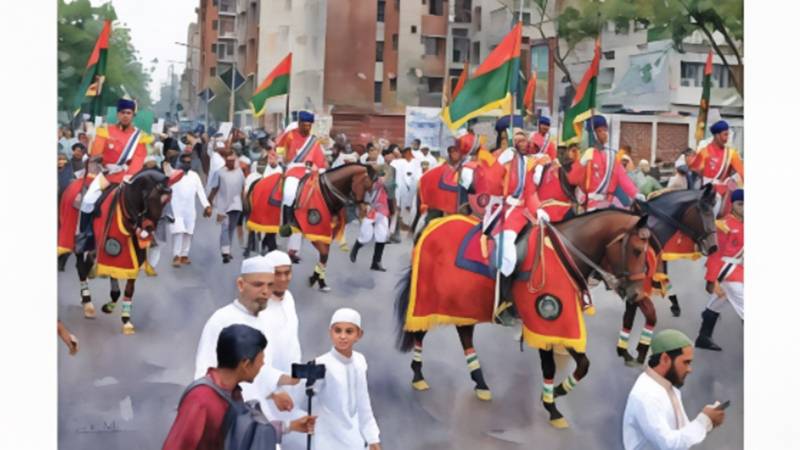
Today, Dhaka’s Eid procession remains a dazzling display of devotion and community spirit. Starting from Old Dhaka landmarks like Ahsan Manzil or Baitul Mukarram Mosque, participants march through streets adorned with flags and banners
Dhaka's Eid procession: a Mughal tradition
In Dhaka, Bangladesh's capital, this celebration includes the unique historical Eid procession, deeply rooted in the city's Mughal heritage.
The origins of Dhaka's Eid procession trace back to the Mughal era, when the city flourished as a key administrative and cultural hub. Under Mughal rule, festivals like Eid were celebrated with grandeur. The tradition began as royal parades led by emperors, featuring soldiers, musicians, dancers, and decorated animals like elephants and camels. These events symbolised both religious devotion and cultural extravagance.
The Naib Nazims of Dhaka institutionalised this tradition during their residence at Nimtoli Palace in the late 18th century. The processions became public spectacles, showcasing Dhaka’s vibrant culture and attracting people from all walks of life.
Modern-day symbol of unity and tradition
Today, Dhaka’s Eid procession remains a dazzling display of devotion and community spirit. Starting from Old Dhaka landmarks like Ahsan Manzil or Baitul Mukarram Mosque, participants march through streets adorned with flags and banners. Traditional music fills the air as people dressed in festive attire celebrate with songs and prayers.
While the scale of the procession has evolved, its essence remains intact—celebrating unity and cultural heritage.
The Eid procession is more than just a festive event; it represents Dhaka’s diversity and shared cultural identity. It bridges social divides, bringing together people from all backgrounds to honour both religious values and Mughal-era traditions.
This celebration also serves as a reminder of Dhaka’s rich history, preserving its Mughal legacy while adapting to modern times.
Despite its significance, the procession faces challenges such as urbanisation and traffic congestion. Efforts by cultural organisations and local authorities aim to preserve its authenticity while ensuring accessibility for future generations.
Dhaka’s Eid procession is a living testament to the city’s Mughal past—a vibrant celebration that intertwines religion, culture, and history. As this tradition continues to thrive, it reinforces Dhaka’s identity as a city that honors its heritage while embracing change.
During the Eid holidays, many people went to their village homes with their families. However, those who stay in Dhaka flock to the capital’s entertainment canters to enjoy the holiday from Eid day onwards.
This year, as usual, Children and teenagers were in high spirits and excitement. Their parents visited various places in the city with them.
As a result, the children's park experienced special pressure from Eid day until yesterday.
The Bangladesh National Zoo had record new numbers of visitors. People of different ages spent enjoyable time watching the various activities of the animals.
In addition, various parks in the capital were bustling with entertainment enthusiasts. The Dhaka University campus and Suhrawardy Udyan saw gatherings of people of different ages. Many students from Dhaka celebrated Eid reunions, with some reminiscing about past days.