

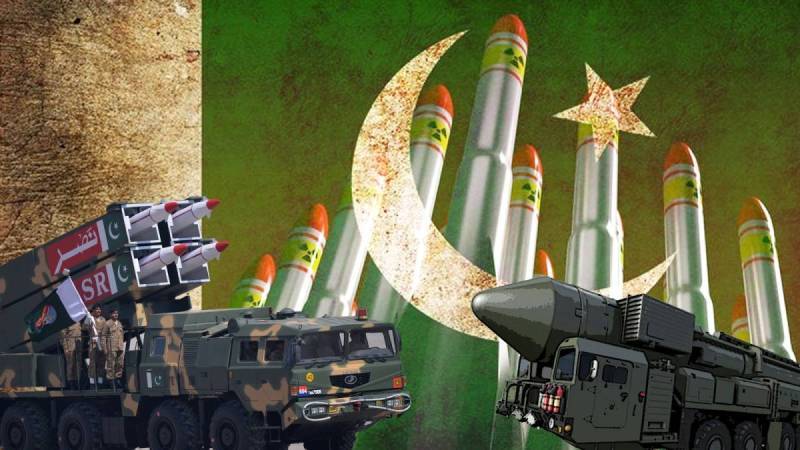
Vipin Narang and Pranay Vaddi write in their recent Foreign Affairs article How to Survive the Nuclear Age, “U.S. intelligence agencies have concluded that the Pakistani military is developing an ICBM that could reach the continental United States.” Officials from the United States have been making such allegations for some time, and in December 2024, four Pakistani entities were sanctioned by the United States for their alleged contribution to Pakistan’s ballistic missile programme.
On the other hand, Washington has been providing India access to the latest military technologies, which is contributing to the advancement of its missile defence system. This discriminatory attitude of the U.S. towards Pakistan stems from the latter’s close ties with China, the strategic adversary of the United States, rather than from any real threat.
However, the claim that Pakistan is developing intercontinental ballistic missiles does not stand on firm ground. Firstly, the Government of Pakistan has denied the development of long-range ballistic missiles, and the Foreign Office has labelled the sanctions on Pakistani firms as discriminatory and a threat to both regional and international peace and stability. Secondly, Pakistan’s nuclear doctrine is exclusively India-centric. Pakistan conducted its nuclear tests in 1998 only after India’s nuclear weapons testing. Furthermore, the Shaheen-III missile, with a range of 2,750 km, is designed to reach India’s far-off islands — not Israel, as is falsely claimed.
Though Pakistan, with the assistance of its close ally China, has been striving to develop its military technologies to counterbalance its arch-rival India — which enjoys conventional military superiority over Pakistan — it has no plans to threaten other countries, including the United States, and invite more enemies to its doorstep.
Pakistan must approach this issue with great strategic precision if it is to avoid being grouped with so-called rogue states such as Iran and North Korea
On the contrary, the United States has a history of creating imaginary enemies. At the start of the 21st century, to justify the toppling of Saddam Hussein’s regime, it promoted the narrative that Iraq was producing weapons of mass destruction that posed an existential threat to America. When the United Nations refused to support this misadventure, the U.S., under President George W. Bush, attacked Iraq unilaterally in 2003. The result was global condemnation, humiliation for the United States, and a failed state for the poor Iraqi people. Despite the withdrawal of U.S. forces from Iraq in 2011, the country has still not recovered from the devastation.
A second example is Iran. Washington and Tehran have been adversaries since the Islamic Revolution of 1979. Since then, the United States has made extensive efforts to isolate Iran economically and diplomatically, consistently labelling it a rogue state which, if it developed nuclear weapons, would threaten global peace. However, the reality is that the Islamic Republic of Iran no longer serves U.S. interests as it did under the liberal regime of Shah Reza Pahlavi, and it poses a challenge to the existence of the genocidal Israeli state.
Using allegations of nuclear weapons development as a pretext, Israel and the United States have recently attacked Iran’s nuclear facilities in an attempt to dismantle its nuclear programme. Iran, however, continues to deny any intention of acquiring nuclear weapons and insists that its uranium enrichment efforts are for peaceful purposes.
Despite the United States deploying a bunker buster — the most powerful non-nuclear bomb — to target Iran’s nuclear facilities, it failed to inflict serious damage. However, it succeeded in further destabilising an already volatile region.
The purpose of citing the cases of Iraq and Iran is to highlight the underlying motive behind U.S. accusations against Pakistan regarding ICBM development. In my opinion, the United States is making such statements to lay the groundwork for a possible future plan to target Pakistan — in case relations between the two countries deteriorate. While no such attack is imminent, it remains a possibility as the global geopolitical landscape undergoes a significant transformation and states reassess their positions in the emerging world order.
Moreover, Washington remains uncomfortable with Pakistan’s possession of nuclear weapons. A few years ago, it even labelled Pakistan an irresponsible nuclear state. Pakistan’s nuclear arsenal has always been a source of concern for the United States. As Daniel S. Markey writes in his book No Exit from Pakistan, “Pakistan’s rapidly growing population, nuclear arsenal, and relationship with China and India will continue to force it upon America’s geostrategic map in new and important ways over the coming decades.”
Therefore, Pakistan must approach this issue with great strategic precision if it is to avoid being grouped with so-called rogue states such as Iran and North Korea.