

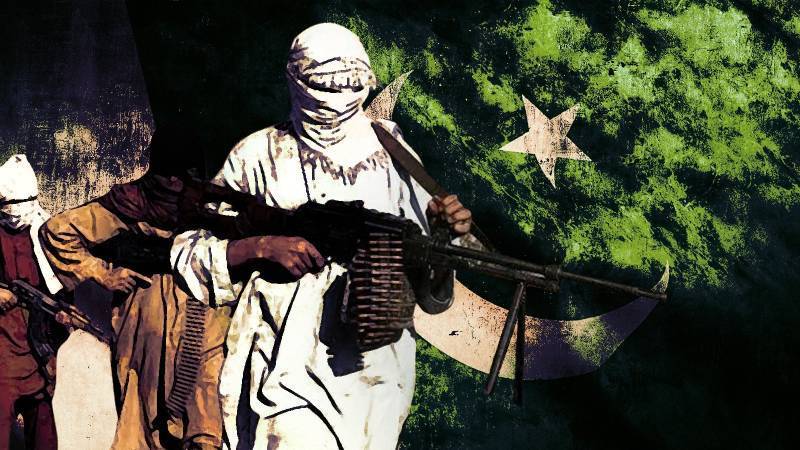
When the Taliban seized control of Kabul in August 2021, Pakistan was among the few nations that greeted the event with cautious optimism. Many in Islamabad’s power corridors believed that after two decades of bloodshed and instability, the Taliban’s return would finally secure Pakistan’s western frontier. The narrative was simple: a friendly, ideologically aligned government next door would stabilise the border, curtail India’s influence in Afghanistan, and allow Pakistan to refocus on its internal challenges.
Four years later, that optimism has evaporated. Relations between Islamabad and Kabul are at their lowest point since 2001. Border skirmishes have become frequent, trade routes have been disrupted, and mutual accusations dominate diplomatic exchanges. The Taliban’s refusal to act against the Tehreek-e-Taliban Pakistan (TTP) has turned hope into hostility. What was once seen as a strategic victory has now become a serious national security dilemma.
In the early days of the Taliban’s return, Pakistani officials and analysts believed that shared faith, ethnicity, and history between the two nations would translate into political and security cooperation. But the reality proved otherwise. Having fought for years to reclaim sovereignty, the Taliban were in no mood to appear subservient to Pakistan. They viewed Islamabad’s expectations as interference, while Pakistan saw Kabul’s inaction against the TTP as betrayal.
The TTP issue remains the core irritant. Despite repeated assurances from Afghan leaders, the group continues to operate from Afghan soil, launching attacks inside Pakistan’s tribal regions and even in urban centres. The Taliban’s justification that the TTP is an internal Pakistani issue rings hollow when the group’s leadership is visibly present across the border. This defiance has forced Pakistan to rethink its entire Afghan policy.
At the heart of the issue lies a clash of priorities. The Taliban’s focus is on consolidating their power and gaining international legitimacy. Pakistan’s concern is national security and the prevention of cross-border terrorism. Both goals are incompatible unless there is mutual political will and trust, neither of which currently exists.
The resurgence of large-scale militant activity could once again destabilise its western provinces and undo years of counterterrorism gains
Pakistan’s approach towards Afghanistan has long been defined by strategic ambiguity. On one hand, Islamabad advocates regional peace and non-interference; on the other, it continues to view Afghanistan through a security-centric lens, often attempting to influence Kabul’s policies to align with its own strategic interests.
This contradiction has undermined Pakistan’s credibility and limited its diplomatic manoeuvrability. Islamabad wants a stable Afghanistan, but also one that remains within its sphere of influence. It supports border management and trade, yet maintains an unpredictable policy mix of coercion and accommodation. The fencing of the Durand Line, the closure of border crossings, and deportation drives have further deepened resentment in Kabul.
Even within Pakistan, there is no unified stance. The civilian leadership often speaks of “brotherly relations” and regional cooperation, while the security establishment remains wary of the Taliban’s long-term intentions. This internal policy divide has weakened Pakistan’s ability to negotiate from a position of strength. Instead of a coherent strategy, Pakistan has adopted a reactive posture, responding to incidents rather than shaping outcomes.
While Pakistan and the Taliban remain entangled in mutual distrust, a third player has emerged in the region: ISIS-Khorasan. The group has staged several high-profile attacks in Afghanistan and maintains a hostile stance toward both the Taliban and Pakistan. Its growing influence in eastern Afghanistan, particularly in Nangarhar and Kunar, poses a direct challenge to regional security.
ISIS-K’s presence has complicated Pakistan’s security calculus. If the Taliban cannot or will not contain this threat, Pakistan risks facing renewed cross-border terrorism. The resurgence of large-scale militant activity could once again destabilise its western provinces and undo years of counterterrorism gains.
Moreover, ISIS-K’s anti-Pakistan propaganda portrays Islamabad as an ally of the United States, a narrative that dangerously resonates within extremist circles. The more Pakistan cooperates with Western powers under the banner of counterterrorism, the greater the risk of becoming a target for transnational jihadist groups.
The Afghan issue, once viewed as a matter of strategy, has now become a test of Pakistan’s diplomatic maturity
There are increasing signs that Washington is once again engaging Islamabad on regional security issues. The United States, still wary of Afghanistan’s instability, has expressed interest in intelligence sharing and counterterrorism coordination, particularly against ISIS-K. On the surface, this cooperation seems logical. But for Pakistan, it evokes uncomfortable memories of the post-9/11 era, when the country became the frontline ally in a war that drained its economy and fractured its society.
Today’s Pakistan is far weaker, economically and politically, than it was in 2001. Any renewed alignment with Washington against militant networks in Afghanistan could reignite domestic extremism and compromise Pakistan’s sovereignty. The United States’ strategic interests are limited to preventing Afghanistan from becoming a global terror base once again. Pakistan, however, must live with the consequences of regional instability every day.
This difference in stakes is crucial. Washington can afford to disengage when convenient, but Islamabad cannot. Yet, given Pakistan’s financial dependence on international institutions and Western diplomacy, the temptation to “cooperate” under pressure remains strong.
Perhaps the most painful realisation for Islamabad is that its long-standing assumption of “influence” over the Taliban was misplaced. The Taliban government has repeatedly rejected Pakistan’s suggestions, criticised its border management, and even accused Islamabad of following Western dictates. The tone of Afghan media and official statements reflects a sense of defiance that Pakistan did not anticipate.
At the same time, Pakistan’s internal political divisions have weakened its foreign policy coherence. Without a stable domestic consensus, Islamabad cannot effectively project or protect its regional interests. The Afghan issue, once viewed as a matter of strategy, has now become a test of Pakistan’s diplomatic maturity.
Pakistan stands at a crossroads. It can either repeat the mistakes of the past, allowing external actors and short-term interests to dictate its policy, or chart an independent, pragmatic course based on regional stability and internal security. The choice is not easy, but it is necessary.
First, Pakistan must abandon the illusion of controlling Afghan politics. The Taliban are not proxies; they are independent actors driven by their own ideological and national goals. Any sustainable relationship must be built on respect, dialogue, and clearly defined boundaries.
Second, Islamabad should strengthen coordination with regional partners such as China, Iran, and the Central Asian states to develop a collective security framework that limits the influence of non-state actors. A multilateral approach, rather than dependence on Western powers, would provide both legitimacy and balance.
Third, Pakistan must invest in its internal stability. Economic recovery, social resilience, and political unity are the best defences against external threats. Without internal strength, no foreign policy can succeed.
Finally, Pakistan must resist the temptation to become a participant in another “war on terror.” The last one cost the country over seventy thousand lives and billions in economic damage. This time, the focus should be on diplomacy, intelligence cooperation, and border management, not military intervention.
The Afghan border is more than a geopolitical fault line; it is a mirror reflecting Pakistan’s recurring struggle between dependence and autonomy. The lesson of history is clear: foreign wars bring temporary alliances but permanent scars. Pakistan must choose self-reliance over subservience, dialogue over domination, and peace over perpetual warfare.
If the country can learn from its past, it may finally break free from the cycle of misplaced expectations and external entanglements. But if it continues down the same path, the western frontier will once again become a battlefield of old mistakes, and Pakistan will bear the cost alone.