

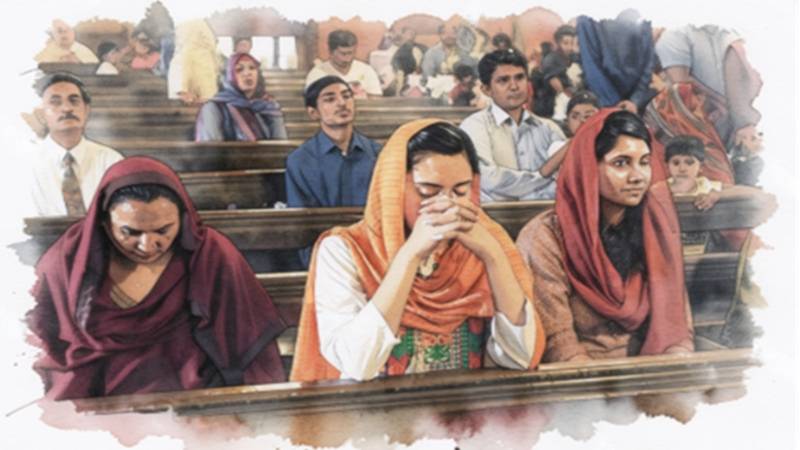
As humans, we all tend to be vessels to a varied collection of sayings, narratives, and perspectives. Such recollections become a part of us, or rather, they shape us into who we ultimately are. Every human being, dead or alive, despite the differences in their upbringing or living, has a story to tell, either by themselves or through the words of their loved ones. However, only a small proportion of our society is able to put forward their voices and make their story known to others.
Pakistan came into being as an objective reality of Muhammad Ali Jinnah’s dream of a land where all Muslims and ethnoreligious minorities could live in peace, without facing the kind of neglect and abuse that the Muslims were faced with in the subcontinent. Some of you after reading this bit right now will think that this dream was put into action and is still alive through our ways of living in Pakistan, along with the constitutional framework and policies that have been put into place over the years.
On the other hand, some might read this and have a completely different perspective of things, arguing that the implementation of the said dream was manipulated and corrupted, not because the dream itself was corrupted in the first place, but because, as always, we acted upon our (realism-rooted) trait of pride and self-interest; neglecting the needs, rights, and entire existence of everyone who wasn’t the exact same copy of us, just because it meant that we were bound to gain from all this in one way or another. Now, the question is, which of these realities exists and prevails without a doubt in Pakistan?
The answer to it lies in analysing facts that construct the prevailing reality, rather than taking an overdramatic stance that’s completely driven by emotions and sentiments instead of pure logic.
According to the national census data and findings of international organisations, approximately 4% of Pakistan’s population comprises religious minorities, whereas 9.8% comprises ethnic minorities. In line with this, Article 36 of the Constitution of Pakistan mandates the state to safeguard the legitimate rights and interests of all such minorities in the country. While this has provided a constitutional guarantee of integration and equitable participation in national governance and public administration by forming a basis for certain sociopolitical policies being in place, the lack of sufficient implementation and accountability is what creates the problem altogether, alongside structural constraints across various domains that result in the marginalisation of minorities in Pakistan.
Evidence of this can be witnessed from the way in which quota implementation issues prevail. Although a job quota of 5% has been instilled in place by the government across provincial and federal bureaucracies to ensure economic inclusion, a large proportion of these reserved seats remain vacant, while the majority of the positions that are filled by minorities remain concentrated in low-tier jobs. This is something that is evident from multiple human rights monitoring reports, as well as through observation of our surroundings overall.
While Article 36 provides a constitutional guarantee of equitable participation, the lack of sufficient implementation and accountability is what creates structural hurdles
As a student of one of Islamabad’s well-established universities, throughout the past three years at the institute, I have only come across two students who belong to a religious minority group within Pakistan. Is it because pursuing an undergraduate degree isn’t a need or want of individuals belonging to minority groups? Or is it because a major proportion of such groups have been confined to a specific sub-class socio-politically over the years due to the persistent existence of systemic structural constraints?
Certain groups are economically confined to low-paying, informal, or hazardous work, not because they chose to do so, but because they were forced to, due to the lack of options to earn a living and for their basic survival.
Similarly, even though an attempt to ensure minorities' representation in the National Assembly and Provincial Assemblies has been made through reserved seats, critics argue that this system limits grassroots political agency, as representatives are often selected by mainstream political party leadership rather than through the votes of minority groups directly. Alongside economic constraints, the political representation of minorities has remained a contentious issue as well. Despite the system shifting back to joint electorates, the broader structural frameworks have often pushed the voices of minorities to the periphery.
Moreover, institutional constraints have played a role in such barriers being accepted as mere norms that cannot be changed, no matter how rotten their cores are. This is due to the fact that, despite bodies such as the National Commission for Minorities being established solely aiming to safeguard rights, they lack the legal and legislative authority and power to substantially enforce prominent and consistent change.
Now moving onto the most important yet deliberately ignored crux of the whole matter in the name of being “too controversial” to even talk about, i.e., the repeated misuse of blasphemy laws in Pakistan. Over the years, we’ve all heard about multiple cases where the blasphemy laws (laid down in the Pakistan Penal Code) were misused, and doing so resulted in deaths and injury of the innocent.
We’ve all heard of instances varying from a mob attacking a woman for wearing a piece of clothing with Urdu poetry in the name of blasphemy, to an innocent university student being killed because of such misinterpretation and emotions being prioritised over facts, to the dozens of cases of atrocities we hear about and ignore every year on the occasion of Eid ul Adha. The easy access to one claiming an act as being blasphemous in nature, and widespread action being taken as an immediate consequence, without accounting for and verifying the facts first, is what prevails as the most consistent and prevailing issue. This also reflects the lack of profound structural mechanisms being in place.
Allegations of blasphemy often result in severe socio-economic consequences for minority groups and communities in Pakistan, and they further build upon their vulnerabilities. The frequent misuse of these laws results in widespread mob violence and community displacement, which ultimately contributes to the destabilisation of minorities’ livelihoods and economic standings.
Such misuses of laws have further led to the marginalisation of these communities in Pakistan, by making them afraid to open up and take a stand for themselves in the first place, in fears that with just a single chant, their entire existence can come crashing down. Such problems and behavioural patterns are not confined to suburbs; they exist all over the country. Even in developed cities with an educated majority such as Islamabad, religious minorities have been hesitant to open up on camera about the problems that they’re being faced with, in fear of being recognised and targeted in any, and all possible ways. This isn’t just a mere saying; it is a fact that has been observed through first-hand in-field experiences. This proves how structural inequality and the marginalisation of religious and ethnic minorities prevail in Pakistan, in terms of their rights, safety and wellbeing, power, and socio-economic status. Political stability and development cannot be achieved under any circumstances while sidelining this trajectory.
A saying that almost all of us have heard over the years has been to “not question such things, because of it being a controversial topic, that could put you in danger.”
My question to you is: if even in the 21st century, while being part of a woke generation, and after realising how negatively all these structural and legal constraints have been impacting all those around us alongside being a hindrance to political and economic development, are we not supposed to highlight and ensure such structures are ratified and amended? If not us, then who will take action? And when? Will these voices remain sidelined and unheard? Will they remain marginalised across the sociopolitical and economic realms?