

In the early 1980s, if one had stood on the shores of Shenzhen and looked inland, the view would have been unremarkable—modest fishing hamlets, rice paddies, the slow rhythms of rural life. Today, that same stretch of land hums with the electric pulse of modernity: skyscrapers pierce the sky, innovation parks spread across districts, and global giants like Huawei and Tencent call the city home. Shenzhen is not merely a symbol of China's ascent—it is one of its clearest declarations that poverty, stagnation, and underdevelopment are not immutable conditions.
For a country like Pakistan, long gripped by economic underperformance and political volatility, this transformation should stir more than awe—it should provoke introspection.
Both China and Pakistan emerged from the shadows of colonial entanglement and internal trauma around the same time. In the late 1970s, China was, by nearly every metric, one of the poorest countries on earth. Eight in ten Chinese citizens lived in extreme poverty; its infrastructure was brittle, its industries fledgling, its people exhausted by ideological purges. And yet, what followed was one of the most extraordinary economic turnarounds in modern history—an engineered metamorphosis that lifted more than 800 million people out of poverty and positioned China as the world’s second-largest economy.
The man who set the gears in motion was Deng Xiaoping. With a blend of ideological flexibility and fierce pragmatism, Deng launched the policy of Reform and Opening-Up in 1978. Crucially, this was not a capitulation to Western capitalism. It was a uniquely Chinese synthesis—what Deng called “socialism with Chinese characteristics.” Special Economic Zones were carved into the country’s south-eastern coastlines, where foreign capital could enter with minimal interference. The state relaxed its grip on agriculture, allowing farmers to retain and sell their surplus. Later, it funnelled investment into massive infrastructure projects—roads, ports, power plants—and expanded access to education and vocational training.
This was not an overnight miracle. It was a decades-long project of state discipline, policy continuity, and data-driven adjustment. And it was not without pain: inequality widened, corruption metastasised, the environment suffered. But the system, for all its authoritarian controls, was ruthlessly focused. Goals were tracked. Progress was quantified. And through it all, the leadership understood something that Pakistan’s political class has yet to internalise: transformation requires time, and time requires stability.
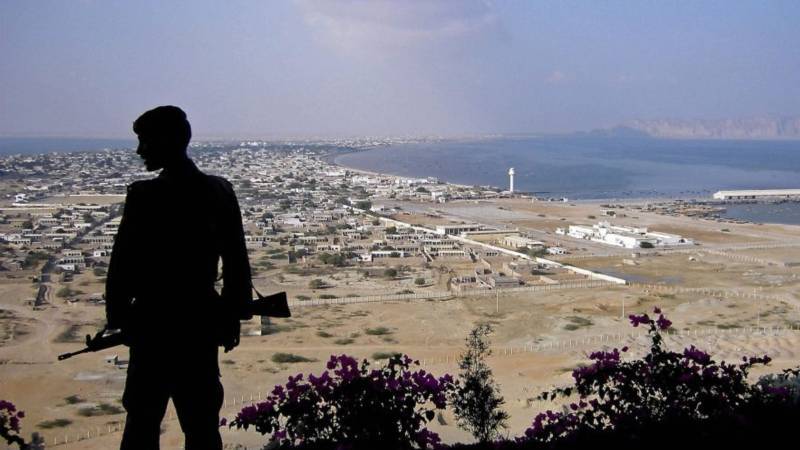
If a small coastal town in southern China can transform into a world-class innovation hub in four decades, why not Gwadar?
Pakistan’s economic story, by contrast, has been one of false starts and frequent reversals. Our agriculture remains trapped in outdated structures, our exports languish in low-value sectors, and our industrial base struggles to compete. Inflation eats away at wages. Debt swells. And while nearly two-thirds of our population is under 30, that demographic dividend risks becoming a demographic reckoning.
Part of the problem is structural—weak institutions, shallow capital markets, inconsistent regulation. But at the heart of the issue lies a more corrosive force: political polarisation. Where China had the authoritarian calm to plan across decades, Pakistan stumbles every few years into fresh political tumult. Successive governments undo the policies of their predecessors not out of ideological opposition, but out of political spite. Bureaucrats are rotated like playing cards. Planning commissions change course midstream. What we lack is not talent or ideas, but continuity of purpose.
It’s worth noting that in one domain—military-industrial collaboration—Pakistan has shown what is possible when projects are shielded from political interference. The JF-17 fighter jet programme, for example, has endured across administrations, benefitting from centralised oversight, stable funding, and technocratic continuity. But economic reform is more diffuse. It touches everything: land tenure, education, energy pricing, taxation. It requires not just policy but public buy-in, not just leadership but institutional endurance.
Still, China’s model offers valuable guidance.
We must begin, as China did, with agriculture. Our rural population is not a burden—it is our latent strength. Land reforms, better irrigation, access to finance, and secure market linkages could unleash broad-based growth and begin the process of poverty alleviation from the roots up.
Next must come the difficult task of rethinking exports. We cannot continue to rely on textiles, rice, and remittances. Pakistan must climb the value chain—into IT services, agro-processing, light engineering, and precision manufacturing. The SEZs being developed under the China–Pakistan Economic Corridor are a start, but unless they are managed with transparency and professionalism, they risk becoming white elephants.
And above all, we must invest in human capital. China did not become a tech superpower by accident—it educated its people relentlessly, trained its workforce, and created incentives for innovation. Pakistan’s schools and universities are producing degrees, not capabilities. That gap must close—urgently and comprehensively.
The irony is that Pakistan already possesses many of the tools required to govern better. Our national ID database, NADRA, and the Ehsaas social welfare platform are powerful instruments. But tools are only as effective as the hands that wield them. Governance must become data-driven, not rumour-driven; policies must be judged by outcomes, not optics.
Yet none of this is possible in a climate of perpetual political warfare.
If we are to learn anything from China’s economic reinvention, it must be this: growth demands focus, and focus requires political maturity. No country can build for the future while tearing down its scaffolding every election cycle. There must be, at a minimum, a national consensus on core economic priorities—education, investment, taxation, and infrastructure. These must be above party lines, above personal ambitions, above the noise of the news cycle.
China is not a perfect model. Nor should it be blindly emulated. But its trajectory reveals a basic truth: poverty is not destiny, and backwardness is not fate. Shenzhen’s rise from obscurity to global prominence is not merely an economic tale—it is a story of vision, discipline, and resolve.
If a small coastal town in southern China can transform into a world-class innovation hub in four decades, why not Gwadar?
The map is not the territory. Pakistan is not China. But it need not remain stuck. We already know what needs to be done. The only question that remains is: do we have the will to do it—together, and for long enough to matter?