

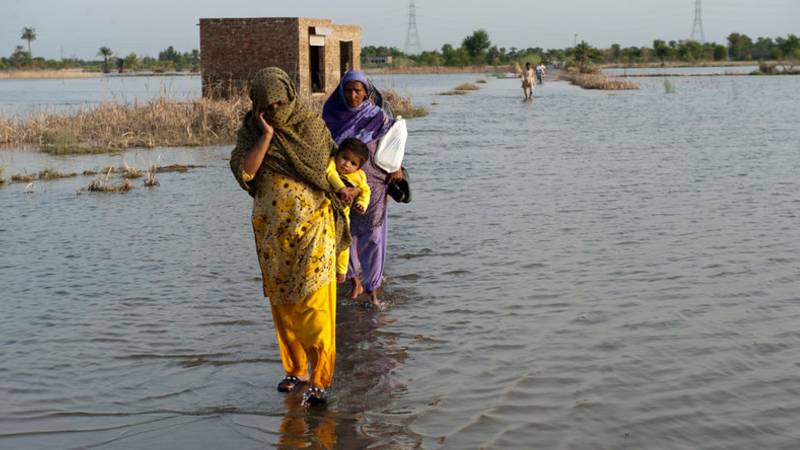
It’s a story of Ayesha, a young mother in the rugged valleys of Gilgit-Baltistan, northern Pakistan. One fateful night in August 2025, the sky unleashed a torrent of rain, swelling a glacial lake high above her village. As the ice dam burst in a glacial lake outburst flood (GLOF), walls of water and debris roared down the mountainside, sweeping away homes, bridges, and dreams.
Ayesha clutched her children, fleeing to higher ground just in time, but her neighbour's family wasn't so lucky. This isn't just a story - it's one of hundreds from Pakistan's 2025 floods, where over 1,000 lives were lost to monsoon fury amplified by climate change.
Behind these tragedies lie invisible forces: rising temperatures, melting ancient glaciers, erratic rains drowning farmlands. Yet, in the heart of this chaos, we find the essence of climate disaster risk - not cold statistics, but the fragile thread of human survival.
This article unravels that thread, explaining risk in simple terms, how we measure it, and ways to lessen its blow. We'll journey through Pakistan's lens, zooming into the northern highlands and Punjab's fertile plains, where people like Ayesha are rewriting their future with quiet courage.
What is climate disaster risk?
At its core, climate disaster risk is the chance that a weather event - fuelled by our warming planet - will harm people, their homes, or livelihoods. Think of it as a storm cloud gathering over a village: the cloud is the hazard, like floods, droughts, or heatwaves.
But risk isn't just the storm; it's how that storm collides with our lives. In humanistic terms, it's the fear in a farmer's eyes as rivers swell, or the grief of a child losing school to landslides.
Climate change supercharges these hazards - warmer air holds more moisture, leading to fiercer rains; melting ice triggers sudden floods. For everyday folks, risk means uncertainty: Will tomorrow bring bounty or ruin?
Globally, it claims lives and displaces millions, but in places like Pakistan - ranked among the world's most vulnerable nations - it's a daily shadow. Understanding this isn't about blame; it's about empathy, about seeing the human faces behind the headlines and empowering them to stand taller.
Exposure isn't chosen lightly; it's often born of necessity, like families in northern Pakistan building near glaciers for water
What is climate risk assessment?
To grasp risk, we turn to risk assessment, a compassionate toolkit for communities to map dangers before they strike. It's like a family huddle before a long journey: What roads might flood? Who needs extra care? Experts break it down into three pillars: exposure, sensitivity, and adaptive capacity. Together, they paint a picture of vulnerability - not as weakness, but as a call to protect the most tender among us.
Exposure
Exposure is the "who and what" in harm's way. It's the number of people, homes, or farms sitting in the path of a hazard. Picture a bustling market on Punjab's riverbanks: thousands are exposed to the Indus River floods because that's where the fertile soil lies.
Exposure isn't chosen lightly; it's often born of necessity, like families in northern Pakistan building near glaciers for water. In 2025, intense monsoons exposed over 12,500 homes across Pakistan to destruction, turning safe havens into traps. Assessing it means counting heads and hearts: How many children play by that swollen stream? Tools like satellite maps help, but the real insight comes from listening - village meetings where elders share stories of past floods.
Sensitivity
Next, sensitivity measures how much damage a hit can cause. It's the skin's fragility: A sturdy brick house weathers a storm better than a mud hut. For people, it's about health, income, or food security.
A drought-sensitive farmer in Punjab, reliant on rain-fed wheat, starves quickly than one with irrigation. In northern areas, remote herders sensitive to avalanches lose livestock - and with it, their cultural lifeline.
Sensitivity amplifies pain; a 2025 World Bank assessment highlighted how Pakistan's poor health infrastructure makes communities hypersensitive to flood-borne diseases like cholera. It's heartbreakingly human: elders with frail bones, women juggling childcare amid chaos. By surveying households - asking, "What breaks first in your home?" - we uncover these soft spots, not to judge, but to shield.
Adaptive Capacity
Finally, adaptive capacity is our inner strength - the "how we bounce back." It's the skills, resources, and support that turn victims into survivors. A community with early warning apps dodges a GLOF; schools teaching climate-smart farming build drought-proof lives. In Pakistan, adaptive capacity varies: urban Punjab might access government aid faster than isolated northern villages. Yet, it's the quiet heroes - women's cooperatives sharing seeds, youth planting mangroves - who embody it.
Low capacity isn't laziness; it's often inequality's scar, like limited education or funds. Assessments weigh this by asking: Do families have savings? Community networks? In a 2024 study on smallholder farmers, adaptive capacity was key to flood survival, with those in cooperatives faring twice as well.
Resilience isn't surviving the flood; it's dancing in the rain that follows
Risk, then, emerges where exposure meets high sensitivity and low adaptive capacity, like a perfect storm of vulnerability. But knowledge is the first shield. By blending these elements, communities craft plans: Relocate exposed schools? Train sensitive groups in first aid? Boost capacity with micro-loans? It's not maths; it's mercy in action.
What is climate risk reduction?
From assessment flows risk reduction, the art of dodging the blow. It's proactive love: building dams to tame rivers, restoring forests to anchor soil. In simple terms, reduce hazards (plant trees to curb erosion), shrink exposure (zone building away from floodplains), and toughen sensitivity (elevate homes on stilts). Pakistan's National Disaster Management Authority (NDMA) leads here, mapping risks nationwide.
What is resilience building?
Yet, reduction alone isn't enough; it pairs with resilience building, the soul of recovery. Resilience is a village rising from ashes, stronger, woven tighter. It's diverse crops against drought, mental health support post-trauma, or solar pumps for water-scarce days. Humanistically, it's celebrating stories: the elder teaching grandkids traditional irrigation, fostering hope. Building it means investing in people - education, equitable aid - turning scars into wisdom. Globally, resilient communities recover 30% faster; in Pakistan, it's the difference between despair and dawn.
A Case Study of Northern Areas of Pakistan
Now, let's ground this in Pakistan's beating heart. This nation, cradling the world's third-largest glacier system, feels the climate's fist hardest. From 2022's mega-floods to 2025's relentless monsoons, disasters strike every two months, a "national emergency" per experts. Northern areas like Gilgit-Baltistan and Khyber Pakhtunkhwa (KP) bear the brunt of mountain mayhem.
Here, exposure is sky-high: Over 7,000 glaciers feed rivers, but melting ones birth deadly GLOFs. In June 2025, a GLOF in Gilgit-Baltistan killed nine and buried roads under mud, exposing 200,000 to isolation. Sensitivity runs deep - remote herders lose yaks to avalanches, their livelihoods as fragile as prayer flags in the wind. Adaptive capacity? It's growing, thanks to localised early warning systems, just recall the story of a shepherd who saved lives in KP by alerting via a mobile button. Risk reduction shines in reforestation drives, countering deforestation that worsens floods. Resilience blooms in community funds, where locals pool resources for rebuilding, echoing the unbreakable spirit of mountain folk.
A Case Study of Punjab
Contrast this with Punjab, Pakistan's breadbasket, home to 128 million souls. Here, exposure sprawls across vast farmlands and cities hugging the Chenab and Jhelum rivers. The 2025 floods submerged 1.8 million acres of rice and cotton, displacing millions and shattering fiscal dreams.
Sensitivity bites hardest in agriculture: monsoon blessings turned curses, with droughts in 2023–24 yielding to 2025 deluges, leaving smallholders destitute. Urban Lahore's poor, in flood-prone slums, face disease spikes, their sensitivity a mix of poverty and pollution.
Yet, adaptive capacity stirs: Punjab's irrigation canals, a colonial gift, are now climate-proofed with sensors. Risk reduction includes embankment reinforcements, while resilience builds through farmer cooperatives adopting drought-resistant seeds. In 2025, these efforts cushioned blows, with communities like those in Faisalabad sharing pumps and knowledge, proving Punjab's plains hold resilient roots.
Pakistan's story weaves these threads: northern peaks teach us glacial grace under pressure; Punjab's fields, the rhythm of renewal. But challenges persist, funding gaps, policy silos, yet hope glimmers in youth-led initiatives and international pacts like the Paris Agreement. Ayesha's village now has a warning tower; Punjab's women lead seed banks. These aren't fixes; they're lifelines.
In short, climate disaster risk isn't fate - it's a shared story we can rewrite. By assessing exposure with care, easing sensitivity with solidarity, and nurturing adaptive capacity like a family garden, we reduce risks and build resilience. For Pakistanis, it's about reclaiming joy from the jaws of storms. Let's listen to their voices, act with their hearts. Because in the end, resilience isn't surviving the flood; it's dancing in the rain that follows.