

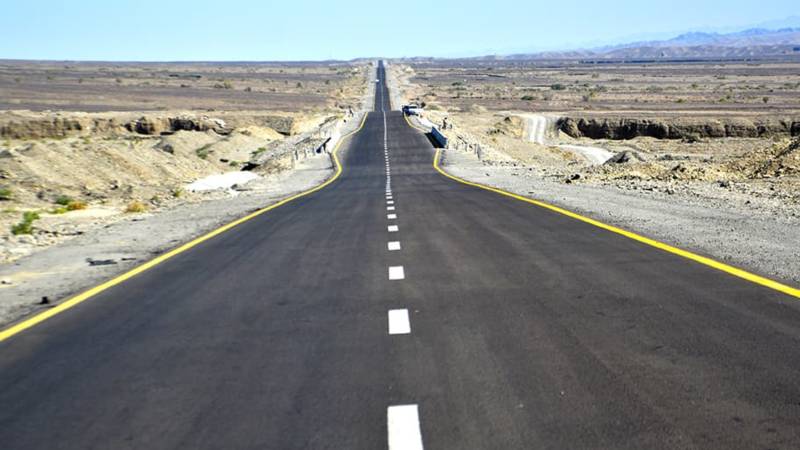
Last week, the federal government approved over a dozen major development projects totaling an impressive Rs1.3 trillion. Among them was the greenlighting of a new federally-funded motorway in Punjab — the Lahore-Sahiwal-Bahawalnagar Motorway. Spanning 295 kilometers, the project will cost national exchequer Rs436 billion.
While new motorways can play a vital role in improving connectivity and boosting regional economies, the absence of similar projects in underdeveloped regions like Balochistan raises important questions about how national resources are being distributed. For a province still waiting for its first motorway, the contrast highlights a broader issue of regional development priorities that merit closer attention.
The new Lahore-Sahiwal-Bahawalnagar motorway must have merits of its own and will benefit the people in South Punjab. However, it begins and ends within Punjab. And yet, it’s being funded by the federal government, despite the fact that the newly signed National Fiscal Pact, pushed by the IMF, explicitly discourages such projects that do not benefit multiple provinces or regions. This violation of the national fiscal pact is not a good way to move forward with the government with the IMF.
Talking about this proposed motorway, Public Policy Analyst Rafiullah Kakar said that this project is a textbook case of how Pakistan’s structure benefits Punjab at the cost of others. “This motorway is being built literally within 100 kilometers of the existing motorway M3 and runs parallel to N5 at a staggering cost of Rs465 billion. This will be financed through a federal loan,” he pointed out. His words speak volumes. This is not just about road-building. It’s about federal priorities, and those priorities seem to ignore smaller provinces.
What makes this all the more problematic is the fact that even within the logic of economic efficiency, the choices being made do not make sense. The North-South Motorway corridor remains incomplete because the crucial section linking Sukkur, Hyderabad, and Karachi has not been built. That is a major economic artery. Finishing this motorway would help link Pakistan’s industrial hub to the national network, making transportation faster, safer, and more efficient for the entire country.
Punjab, with its population weight and political dominance, continues to pull federal resources in its direction, other provinces, especially Balochistan, are expected to wait their turn, a turn that never seems to come
But instead of prioritising this incomplete and nationally important section, the federal government has gone ahead with another motorway project within Punjab. What possible logic justifies this decision, other than the overwhelming political and bureaucratic dominance of Punjab in the federal structure?
Meanwhile, in Balochistan, there is no motorway at all. Not a single kilometer of motorway exists in the largest province of Pakistan by area. There is a single lane highway in south of Balochistan called M8, however, it is not a motorway by any stretch of imagination. It is just a normal highway in Balochistan, which has been deceptively named M8.
Moreover, Balochistan also suffers from dangerous road conditions that kill more people than terrorism. According to the Pakistan Bureau of Statistics (PBS), between 2013 and 2023, highway accidents in Balochistan claimed 3,797 lives. In the same period, suicide attacks killed 2,238 people. That means the single-lane highways, poorly built, overloaded, and left uncared for, are the deadliest threat to the people of Balochistan.
The most infamous of these is the Quetta-Karachi highway. Known locally as the “Killer Highway,” it has claimed thousands of lives. Successive governments have promised to dualise it, but progress has been glacial at best. The project was started by the PDM government in 2022 and broken into three components, covering a total of 790 kilometers at a total cost of Rs 222 billion. But only Rs34 billion have been released so far, up until June 2025. The federal government is releasing funds for this project in smaller amounts every year. At this rate, it would take over 13 years to complete. Thirteen years. That’s an entire generation of road users at risk of death or injury just because they happen to live in Balochistan.
Some may argue that building motorways in Balochistan does not make financial sense, that the population is sparse, and traffic volumes do not justify the cost. However, this argument completely ignores the principles of equitable development. The point of public investment is not just to go where there’s already money and traffic, it’s also to lift up the areas that have been left behind. Infrastructure brings development. It creates jobs, improves safety, and connects people. If motorways are only built where they are already "justified," the cycle of underdevelopment will never be broken.
Balochistan has already been shortchanged in one of the biggest infrastructure schemes in Pakistan’s history; the China-Pakistan Economic Corridor (CPEC). Out of the $25.4 billion in total CPEC funding, only $3.2 billion has been utilised in completed and under-construction projects in Balochistan. A large chunk of that – $1.9 billion – went to the Hub coal power plant, which is not even focused on local development. Gwadar, touted as the crown jewel of CPEC, got just $890 million and the highway projects, were worth $410 million. More importantly, CPEC did not bring a single motorway to Balochistan. Perhaps the biggest failure of CPEC is that it could not contribute to major infrastructure development in Balochistan.
The power dynamics at play here are hard to ignore. Punjab, with its population weight and political dominance, continues to pull federal resources in its direction, other provinces, especially Balochistan, are expected to wait their turn, a turn that never seems to come. When decisions like these are made, it becomes clear that development in Pakistan is not guided by need or justice, but by power.
If we truly want to build a more balanced, fair, and united country, we need to change this. Motorways are not just about cars and cargo. They are about lifelines to safety, opportunity, and dignity. Balochistan has waited long enough. It’s time the federal government looked beyond Punjab and realised that the rest of the country exists too — and needs motorways.