

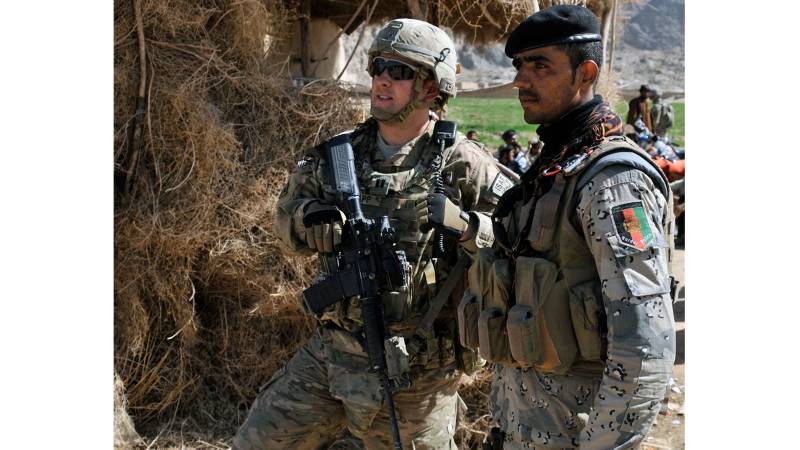
“We had a twisted culture in which killing earned you respect, as if shooting Afghans was the ultimate proof that you were competent. These decisions to pull the trigger were the final steps of our part in a strategy that was doomed before I even deployed.”
(Thomas Gibbons-Neff, a former US Marine – New York Times, 23 July, 2026)
Five years ago, on the Ides of August in 2021, the Taliban captured Kabul, triggering the worst US withdrawal in history. The US withdrawal from Vietnam in April 1975 paled by comparison. Instead of witnessing a few US helicopters lifting off the roof of the American embassy in Saigon, the world witnessed massive US transport planes flying out of Kabul with hundreds on board. In a sure sign of desperation, a few people hung from the bottom of the planes and soon fell to their death.
The Afghan War ended in total humiliation for the world’s sole Great Power. In October 2001, the US had attacked Afghanistan to remove the Taliban from power, since it accused them of sheltering the mastermind of 9/11, Osama bin Laden. The Taliban were deposed in just two months. The US could have declared the mission accomplished and left early in 2002.
Initially, the stated objective was to hunt down Osama. That objective escalated to reconstructing Afghanistan into a western-style democracy. Both objectives proved to be far more difficult than the US had imagined. Despite its overwhelming military superiority on the ground and in the air, it failed to eliminate the Taliban or to hunt down Osama. The Taliban simply disappeared into the rural areas, and those who chose to live in the urban areas, just merged into the local population, as the Viet Cong had done in South Vietnam.
Ten years later, in May 2011, the US carried out an air raid in Abbottabad that killed Osama. President Obama could not stop bragging “We killed Osama” in every speech that he gave in the months that followed. He also started to talk about a troop withdrawal, knowing that by 2014, only 38% of Americans supported the war, compared to the 90% who supported it after 9/11. But he failed to fulfil his promise.
He was oblivious to the ground realities in Afghanistan. Osama’s killing enraged the Taliban. They mounted a guerilla campaign against the US, just as they had done against the Soviets after they invaded Afghanistan in December 1979.
The US did not lose the war in Afghanistan because it was defeated in conventional military battles. In fact, the US and its allies won almost every major military engagement against the Taliban. That’s exactly how the US had lost Vietnam. It won every battle but still lost the war. Insurgents do not have to defeat a stronger army militarily. They only need to survive long enough for the stronger side to lose the political will to continue. The Taliban accepted heavy casualties while believing they could outlast foreign forces.
The only beneficiaries of the Afghan War were US defense contractors and their local subcontractors along with the warlords
All the puppet regimes that the US installed in Kabul struggled with corruption, factionalism, and limited legitimacy outside major cities. Many Afghans viewed local officials as ineffective or corrupt. This undermined public confidence and made it harder to sustain government control.
The US spent over $80 billion training and equipping the Afghan National Defense and Security Forces, but those forces depended heavily on US air power, logistics, intelligence, maintenance, and financial support. Once the US began pulling its troops out in August 2021, the Afghan military collapsed like a house of cards.
As US troops departed, the Taliban captured provincial capitals much faster than expected. Many Afghan military units surrendered or negotiated local agreements rather than fight. The climax came in August 2021, when the Taliban entered Kabul with relatively little resistance, ending the Islamic Republic of Afghanistan.
Many books have been written by scholars and retired military officers on the Afghan debacle. Five themes stand out. One, the US failed because it never understood Afghan culture, politics or history. Second, it focused on fighting insurgents, without understanding the circumstances which converted a normal Afghan into an insurgent. Third, corruption within the Afghan government undermined US efforts. Fourth, Afghanistan demonstrated the limits of American military power and the dangers of attempting to reshape foreign societies through force. And fifth, the US confused defeating terrorists with remaking Afghanistan into a democratic state.
In 2021, Carter Malkasian penned The American War in Afghanistan. He was fluent in Pashto and was deployed in Afghanistan several times at both the provincial and district levels. He served as senior advisor to the military commander in Afghanistan and later to the Chairman of the Joint Chiefs of Staff yielded a unique set of insights. His book highlights three critical areas for understanding U.S. operations and errors in Afghanistan. First, improper cultural understanding of Afghanistan and the region. Second, avoidable national security policy mistakes. And third, blunders in decision making by senior leaders.
He points to the American tendency to conflate the Taliban with al Qaeda, especially in the period of 2001–2005, as a major mistake. The US also showed an inability to understand and address Pakistan’s historical, cultural, and geopolitical position in a nuanced fashion resulted in creating a permanent sanctuary for the Taliban outside of Afghanistan and a state provider of security force assistance for the Taliban’s resistance fighters within Afghanistan.
The Americans failed to understand that the Taliban were prepared to fight a long, protracted guerilla war. This failure was inexcusable, since the Americans had seen firsthand how the Afghans had demonstrated this specialty against the Soviets in the 1980s. The US must also have known that in the previous century, the Afghans had used this strategy to evict the forces of imperial Britain. Their skills to wage war against much greater armies had been honed over millennia, dating back to the invasion of Alexander the Great. The guerilla warfare skills are ingrained in the Afghan DNA. They had only failed once, against Genghis Khan, the great invader from Mongolia.
When hammered by the US military, the Taliban simply yielded power, but they did not die, either ideologically, politically or physically. Thousands of Taliban fighters probably died from the American onslaught from the land and the air, and many more were probably maimed. But a large number simply changed clothes and melted into the villages.
This was an eerie repeat of what the Viet Cong had done decades earlier when fighting the Americans in the Vietnam War. They would meld into the local population during the daytime, attack at night and disappear into the tunnels.
As the Afghanistan War dragged on, the tide of battle began to turn against the Americans. It was no longer safe for US infantry to patrol the streets of Kabul on foot. They would patrol the city in armored Humvees, unable to come out for fear of being shot. To relieve themselves during the patrols, they wore adult-sized diapers. In city after city, in village after village, the Americans found it increasingly hard to tell friend from foe. The hunters had become the hunted.
When the US ran out of hard targets to decimate with air strikes, they began resorting to drone attacks to hunt down the leaders of the Taliban. This required precise, on-the-ground intelligence, which was often absent. The air strikes and drone attacks ended up killing hundreds and then thousands of civilians, including people attending weddings, pregnant women and school children. This turned Afghan sentiment against the Americans, who were not seen as liberators but conquerors.
Emboldened, the Taliban began to resort to suicide bombings in the major Afghan cities. Worse, they facilitated the birth of a sibling in Pakistan. Suicide bombings began occurring there in large numbers, often killing large numbers of civilians during religious services, and at weddings. They hit a naval base in Karachi and later hit the Army Public School in Peshawar, killing 141 children and teachers.
Once again, America was stuck in a quagmire of its own making, recalling the nineteenth century dictum of Field Marshal Helmuth von Moltke’s: no war plan survives the first 24 hours of contact with the enemy.
For every innocent person killed by the US, 10 new enemies were created. The US could not win the counterinsurgency by killing Afghans, just as the Soviets had lost their Afghan War despite killing nearly one million Afghans.
Craig Whitlock, in his book, The Afghanistan Papers, provides a hair-raising account of how the US failed. It is based on interviews with former participants in the war.
A month after 9/11, President George W. Bush was asked how long the US would stay in Afghanistan. He said for a year or two. Years later, a State Department official admitted, “We went into the war reflexively, without knowing what we were trying to achieve.” Six months into the Afghan war, bin Laden was still on the loose, but the US had already begun plans to invade Iraq, ostensibly to prevent it from using its alleged Weapons of Mass Destruction. The Iraq War would prove to be a major dilution of focus from the Afghanistan War.
Whitlock says, “The US never understood what motivated its enemies to fight.” Two years into the war, Defense Secretary Rumsfeld had noted, “I have no visibility on who the bad guys are. We are woefully deficient in human intelligence.” His successor, Robert Gates, said: “We didn’t know jack shit about al-Qaeda.” Those are damning confessions.
Generals Petraeus and McChrystal, imported from the Iraq War, came to Afghanistan, wanting to be seen as “cerebral, multitasking, workaholic supermen.” Yet they fell into the same trap and failed. They understood neither the culture nor the terrain of Afghanistan and failed to bond with the Afghans. It was not even clear whether the US was “fighting a war, engaging in a peacekeeping operation, leading a training mission, or doing something else.”
The US spent $143 billion on reconstruction, aid programs and on Afghan security forces. This was the largest amount the US had spent anywhere since the Second World War, even exceeding the money spent on the Marshall Plan.
Where did the money go? It disappeared down the rabbit hole of corruption. For example, if the US paid a million dollars to an Afghan contractor to build a bridge, he would say his brother was in the Taliban and would blow it up unless he was also given a million. The US paid the contractor another million dollars to make sure the Taliban would be kept at bay. It did not bother to check whether the brother even existed.
The only beneficiaries of the Afghan War were US defense contractors and their local subcontractors along with the warlords. The US knew the warlords were corrupt but befriended them in the hope they would help destroy the Taliban. This further alienated the US from the ordinary Afghans.
The only general who spoke the truth, David McKiernan, was fired. He admitted the US was in a tough fight and said the “idea that that it might get worse before it gets better is certainly a possibility.” Of course, it never got better.
Just before the Iraq War broke out, I had expressed my doubts about how the US was fighting terrorism. In a piece entitled, “Is the US fighting terrorism with the wrong weapons, which was published in Security Dialogue, March 2003. I wrote, “overwhelming military supremacy is of limited application when fighting a war among the shadows.” I drew an analogy with fighting narcotics trafficking. Just banning narcotics is not sufficient. One should educate the users about the harmful effects of drugs. Even General Musharraf, who had offered unstinted cooperation to the US in its war on terror, compared terrorism to a tree: one can pluck off its leaves, or even cut off its branches, but the tree will grow them back unless one cuts off its roots.
My advice to the US was to focus on the root cause of terrorism and address the underlying grievances that lead people to carry out suicide bombings. I wrote, “It should find a way to communicate with these people. It may never be able to convince the likes of Osama bin Laden, but it is fairly probable that it would be able to reach large numbers of their existing and future followers. It would then be able to reach large numbers of their existing and future followers. It would then be able to develop political solutions that would draw people away from a path where they are willing to sacrifice their own lives in order to take the lives of others. Only then will the demand for terrorism diminish.”
Of course, my advice fell on deaf ears. The war in Afghanistan continued for another 18 years and ended in a defeat that was far more ignominious for the US than the defeat it had suffered in Vietnam. The responsibility for carrying on with a needless and senseless war cannot be laid at the door of a single president. Not one or two but four US presidents engaged in the war, two of whom were Republicans and two were Democrats. On most issues, the Republicans and the Democrats disagree, often vociferously. But when it comes to war, they stand united. That was also the case in the Vietnam War, which went on during the tenure of two Democrat Presidents and one Republican President.
The US public was repeatedly misled about why the Afghanistan War was being fought and how it was progressing. The tired “Self Defense” argument was invoked every time a poll showed that a majority of Americans wanted the US to end the war.
As an economist, what weighs heavily on my mind is the opportunity cost of the $2 trillion that were spent on killing Afghans and occupying their country. Those hard-earned taxpayer dollars, on average $100 billion a year, would have been far better spent on improving the quality of life of the 40 million Americans who live in poverty, go to bed hungry, and have no access to medical care. Some of them live on the street, in good or bad weather. It is well known that high rates of poverty lead to high rates of crime in urban areas. Furthermore, the physical infrastructure in the US is decaying – bridges, roads, power lines, water lines and sewage lines and most definitely needs an upgrade. It resembles the infrastructure of a Third World country.
It would have been so much better for American citizens if $2 trillion of their taxpayer funds would have been spent on fixing these domestic problems, instead of fighting – and losing -- a war located halfway around the globe.